
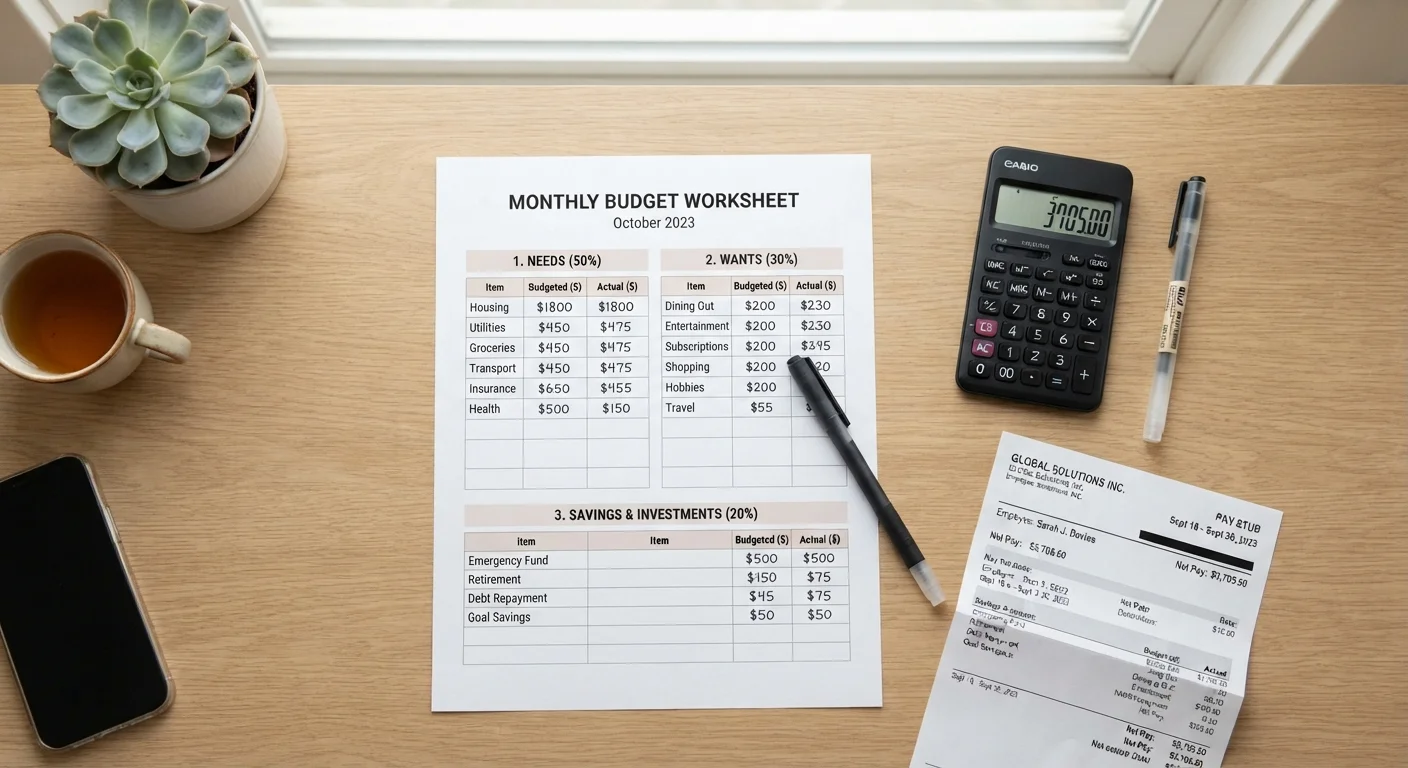
What the Three Buckets Actually Mean
The 50/30/20 rule starts with one number: your monthly take-home pay. That's what lands in your bank account after federal and state taxes are withheld. Everything flows from there.
50% - Needs: Half of your take-home pay is earmarked for true essentials. Think rent or mortgage, electricity, water, groceries, health insurance premiums, car payments, and the minimum payments on any debt you carry. A simple test: if skipping it would put your housing, health, or employment at risk, it's a need.
30% - Wants: This bucket covers spending that improves your life but isn't strictly required. Dining out, streaming subscriptions, gym memberships, weekend trips, clothing beyond basics, and entertainment all fall here. These aren't bad expenses - they're the part of your budget that makes life enjoyable. The 50/30/20 rule simply keeps them in check by giving them a defined ceiling.
20% - Savings and Debt Repayment: The final fifth of your income goes toward your financial future. That means building an emergency fund, contributing to a retirement account like a 401(k) or IRA, and making extra payments on debt beyond the minimums. This bucket is the one that changes your long-term financial picture. For more on building that cushion, see where to begin when money is tight.
Automate Your 20% First
Set up an automatic transfer to your savings account on the same day your paycheck arrives. When the 20% moves before you have a chance to spend it, the rest of your budgeting decisions become much easier. You're working with what's left, not trying to save whatever remains at the end of the month.
How to Apply It in Practice
Start by confirming your actual monthly take-home income. If you're paid biweekly, multiply one paycheck by 26 and divide by 12. Then calculate what each percentage looks like in dollars.
For example, if your take-home pay is $4,000 a month:
- Needs ceiling: $2,000
- Wants ceiling: $1,200
- Savings target: $800
Next, list your recurring monthly expenses and assign each one to a bucket. A budget setup checklist can help you pull together all the figures before you start. Once every expense has a home, total each bucket and compare it to your targets.
If a bucket is over, look for specific line items to cut before adjusting the percentages themselves. Common over-budget areas: housing (exceeds 30% of income alone for many renters), food delivery, and recurring subscriptions that quietly compound.
54%
Average share of income spent on necessities
According to the U.S. Bureau of Labor Statistics Consumer Expenditure Survey, American households on average spend more than half their income on housing, transportation, and food combined.
~40%
Americans without emergency savings
Federal Reserve surveys have consistently found that roughly 4 in 10 Americans would struggle to cover an unexpected $400 expense without borrowing, underscoring the value of the 20% savings target.
30%+
Of income spent on housing by many renters
The U.S. Department of Housing and Urban Development defines housing as a cost burden when it exceeds 30% of gross income - a threshold many renters currently exceed, squeezing the needs bucket from the start.
When the Percentages Don't Fit - and What to Do
The 50/30/20 rule is a guideline, not a law. A few real-world situations push back against the standard splits.
High cost-of-living areas: In cities like San Francisco or New York, rent alone can consume 40-50% of a modest income. If needs genuinely exceed 50%, shrink the wants bucket first before touching savings. Preserving that 20% protects you from debt spiraling back up.
Low income: When take-home pay barely covers essentials, 20% savings may not be realistic right away. Starting at 5% or 10% and increasing gradually is far more sustainable than trying to hit a target that leaves you short on groceries.
Aggressive debt payoff goals: If you want to accelerate debt repayment, consider temporarily shifting percentages to something like 50/20/30 - shrinking wants and expanding the savings-and-debt bucket. The framework is flexible by design.
The 50/30/20 rule works best as an entry point, not a permanent prescription. For a deeper look at how it stacks up against more detailed systems, the 50/30/20 vs. zero-based budgeting comparison walks through both approaches side by side. And if you find yourself wrestling with whether a specific purchase is a need or a want, a three-tier spending framework can help you decide.
This article is for general informational and educational purposes only and is not personalized financial advice. Consult a qualified financial professional for guidance specific to your situation.