
Why These Myths Do Real Damage
Budgeting misconceptions aren't just harmless misunderstandings - they stop people from taking a step that could genuinely improve their financial lives. When someone believes budgeting means total deprivation, or that it only works for people with stable six-figure salaries, they never start. And not starting has a real cost: missed savings, untracked spending, and financial stress that compounds over time.
The myths below are common, persistent, and worth naming directly. Because once you can see a belief for what it is - a misconception, not a fact - it loses some of its power to hold you back.
Myth
Budgeting means I have to give up everything fun and live like a monk.
Fact
A budget is a plan for your money - and that plan can absolutely include spending on things you enjoy.
This is probably the biggest misconception that stops people cold. The word "budget" carries a lot of baggage - deprivation, spreadsheets, guilt. But a budget is simply a written record of what comes in and what goes out, with some intentional choices about where the money goes.
When you build a budget yourself, you decide the categories. If coffee or streaming services matter to you, you can keep them - just consciously. The goal isn't to punish yourself; it's to make sure your spending lines up with what you actually value. See what a monthly budget actually is for a fuller picture of how this works in practice.
Myth
I don't make enough money to bother with a budget.
Fact
People with lower incomes often benefit most from budgeting because there's less room for error.
This myth has it exactly backwards. When money is tight, knowing exactly where every dollar goes isn't optional - it's essential. A budget helps you see clearly whether you have enough to cover bills, and it can surface small spending leaks that are quietly making things harder.
Budgeting also helps you plan for irregular expenses - car repairs, medical copays, back-to-school costs - so they don't derail you completely. Income level doesn't determine whether budgeting works; it determines how much flexibility you have to work with. Both situations call for a plan.
Myth
My income is irregular, so budgeting won't work for me.
Fact
Variable income makes budgeting harder, but it also makes it more valuable - specific methods are designed for exactly this situation.
Freelancers, hourly workers, gig workers, and anyone with seasonal income often feel like budgeting was designed for salaried people with predictable paychecks. That's understandable, but it's not accurate.
One common approach for variable earners is to budget from your lowest expected monthly income, treating anything above that as a bonus earmarked for savings or debt. Another method is zero-based budgeting, where you assign every dollar a job after each paycheck rather than once a month. The system has to flex - but so does any good plan.
Myth
I need special software or a complicated spreadsheet to budget properly.
Fact
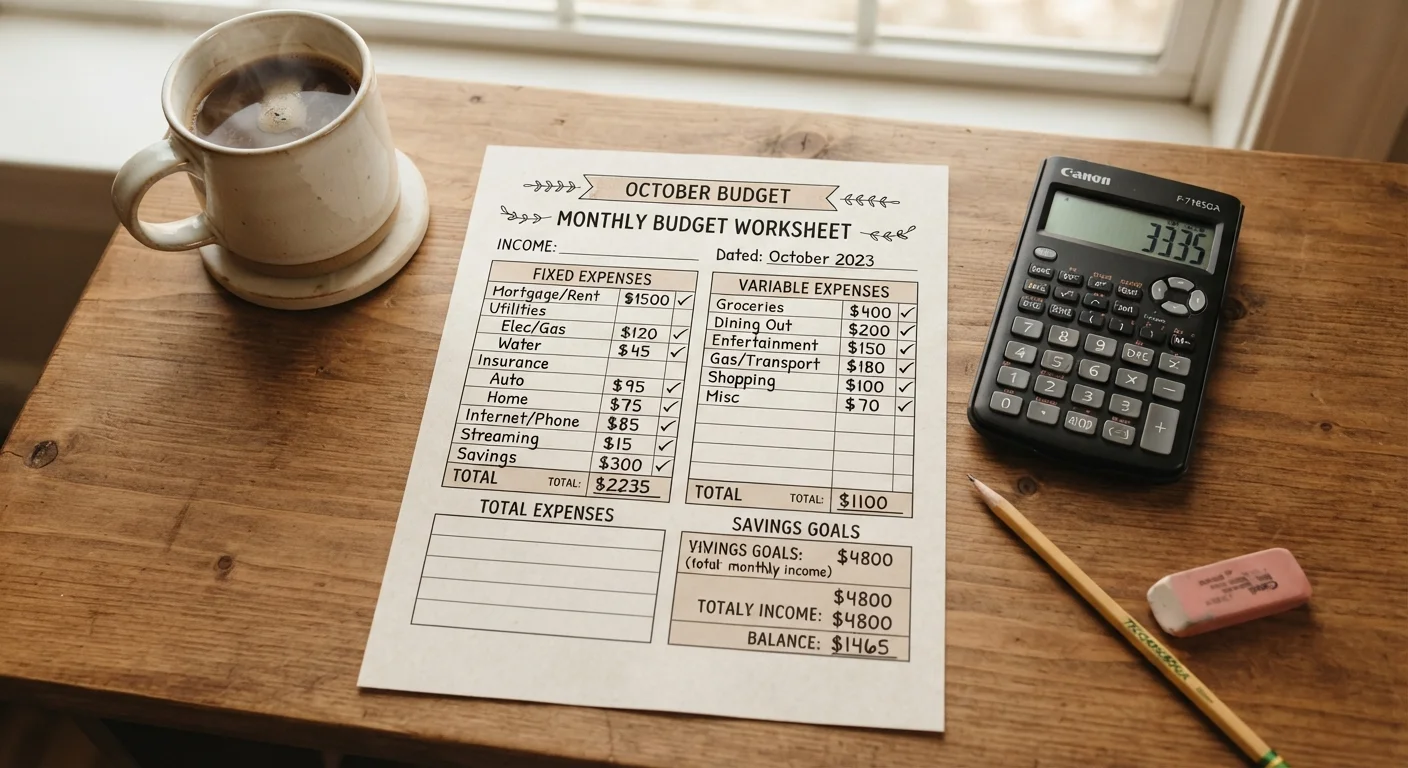
A piece of paper and a pen is a completely valid budgeting tool - complexity isn't what makes a budget work.
Apps, spreadsheets, and budgeting software can be genuinely helpful. But they're tools, not requirements. The fundamentals of budgeting - knowing your income, listing your expenses, and making sure the math works - can be done in a notebook in under 20 minutes.
If technology feels like a barrier, skip it. Start simple. The key budgeting terms every beginner should know are minimal. Once you're comfortable with the basics, you can layer in tools if you want to - but they'll never be a substitute for actually engaging with your numbers.
Myth
If I blow the budget one month, I've failed and should just quit.
Fact
Every budget requires adjustments - going over in one area is feedback, not failure.
This all-or-nothing thinking is one of the most reliable ways to never build a lasting money habit. Life doesn't cooperate perfectly with any plan. Unexpected expenses happen. Estimates are off. You forget about the annual subscription that hits in March.
The response to a rough month isn't to abandon the budget - it's to look at what happened, adjust the numbers, and keep going. Research on habit formation consistently shows that recovery after a slip matters far more than the slip itself. Why budgets fall apart in month two digs into exactly this pattern and how to avoid it.
This article is for general informational purposes only and does not constitute personalized financial advice. Consider speaking with a qualified financial professional about your individual situation.
What Starting Actually Looks Like
None of these myths require a complicated rebuttal - they just require a more accurate picture of what budgeting actually involves. It's not a rigid rulebook. It's a simple habit of paying attention to your money before it's already gone.
~40%
Americans without a working budget
Surveys conducted by the National Financial Educators Council and similar organizations consistently find that a large share of U.S. adults don't follow a budget, often citing complexity or perceived irrelevance as reasons.
1 in 3
Adults report feeling financially stressed
The American Psychological Association's annual Stress in America surveys have repeatedly found that money is among the top sources of stress for U.S. adults across income levels.
If you've been putting off starting because one of these myths felt too true, that's understandable. But the version of budgeting you've been avoiding probably isn't the version that actually exists. The plain-English walkthrough for complete beginners shows what a first real budget looks like - and it's far more manageable than most people expect.
Once you're past the starting line, habits are what keep things moving. The principles behind every budget that works long-term are fewer and simpler than you might think - and they apply regardless of income level, lifestyle, or which format you use.