
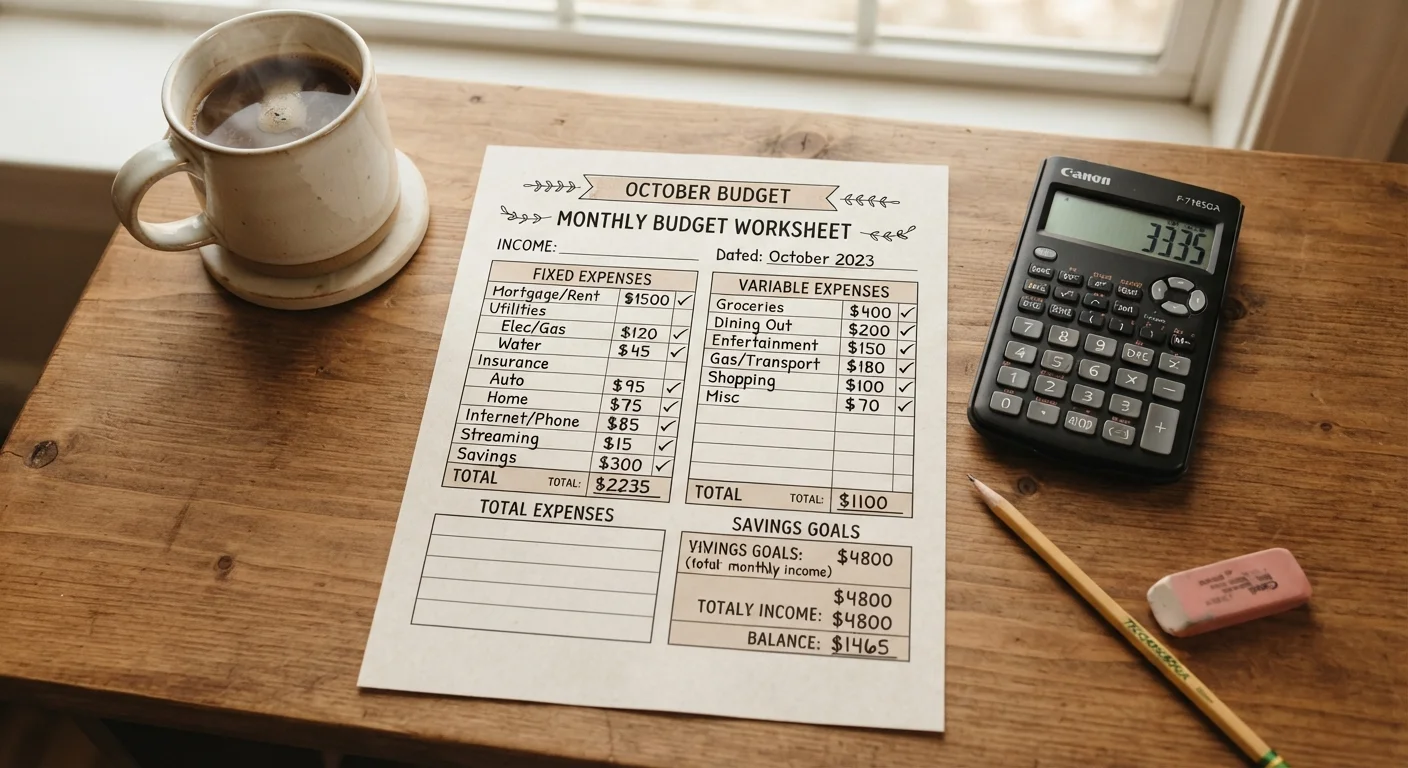
Why These Two Categories Are the Foundation of Budgeting
Before you can budget effectively, you need to understand how your money actually leaves your account. Not every dollar behaves the same way. Some costs show up on the same date for the same amount every single month. Others vary wildly depending on how you live your life. That's the core distinction between fixed and variable expenses - and it shapes every decision you make in a budget.
Start by auditing where your money actually goes. Tracking your spending before you build a budget gives you the raw material you need to sort expenses into categories accurately. Without that foundation, you're guessing.
Once you have a clear picture of your spending, sorting it into fixed and variable columns is one of the most clarifying exercises in personal finance. You'll immediately see which costs are non-negotiable this month and which ones you actually have some control over.
~33%
Share of income Americans spend on housing
According to the U.S. Bureau of Labor Statistics Consumer Expenditure Survey, housing consistently represents the largest fixed expense category for most American households.
60%+
Adults living paycheck to paycheck
Multiple surveys from financial research firms in recent years have found a majority of U.S. adults report having little buffer between income and monthly expenses, underscoring why categorizing costs matters.
Fixed Expenses: The Costs You Can Set Your Clock By
Fixed expenses are bills that arrive for the same amount on a predictable schedule. Your mortgage or rent payment is the classic example. So is a car loan, a student loan payment, or a fixed-rate insurance premium. These numbers don't change unless you actively renegotiate them, refinance, or cancel the service.
Because fixed expenses are predictable, they're actually the easiest part of a budget to plan around. You write them down once, and barring any major life change, they stay put. That reliability is useful - but it also means you have less flexibility if your income drops or you need to free up cash quickly.
Reducing a fixed expense usually takes time and effort: refinancing a loan, moving to a cheaper apartment, or canceling a subscription service. The payoff can be significant, though. Lowering a major fixed cost - like securing a lower insurance premium or refinancing to a better mortgage rate - creates breathing room that shows up every single month going forward. For more on managing shared fixed costs, see how couples approach dividing fixed household bills.
Variable Expenses: Where Your Day-to-Day Choices Live
Variable expenses change from month to month. Groceries, gas, restaurant meals, clothing, entertainment, and household supplies all fall into this category. The amount you spend depends on your behavior - what you buy, how often, and at what price point.
This is where most budgets have the most room to flex. You can't easily lower your rent by $200 this week, but you can choose to cook at home more often, cancel a streaming service, or delay a non-essential purchase. Variable expenses respond to your decisions in real time, which makes them both the most challenging category to predict and the most powerful lever you have.
The trick is setting realistic targets rather than aspirational ones. If you've been spending $600 a month on groceries, budgeting $200 is likely to fail and discourage you. Use your actual spending history to set a starting point, then make deliberate, gradual adjustments. If irregular or one-time costs keep catching you off guard, planning for irregular expenses in advance can prevent those budget busters from derailing your progress.
Use Three Months of Data to Set Variable Targets
Pull up your last three bank or credit card statements and average out each variable spending category. This gives you a realistic baseline that reflects your actual habits - not an idealized version of them. Starting from real numbers makes your budget far more likely to stick.
Putting Both Categories to Work in Your Budget
A functional budget lists all your fixed expenses first - those are your non-negotiables. Subtract them from your take-home income and what's left is what you have to work with for variable spending, savings, and debt repayment. That remaining amount tells you a lot about how much flexibility you actually have.
From there, you assign spending targets to each variable category based on your history and priorities. This structure is the backbone of common budgeting methods like the 50/30/20 rule or zero-based budgeting. The labels differ, but the logic is the same: know what's fixed, manage what's variable. If your income fluctuates month to month, budgeting with a variable paycheck requires extra attention to which costs you must cover no matter what.
For a broader grounding in the vocabulary that makes budgeting easier to navigate, a plain-language guide to common budgeting terms is worth bookmarking as a reference.
This article is for general informational and educational purposes only and does not constitute personalized financial advice. Consult a qualified financial professional for guidance specific to your situation.