
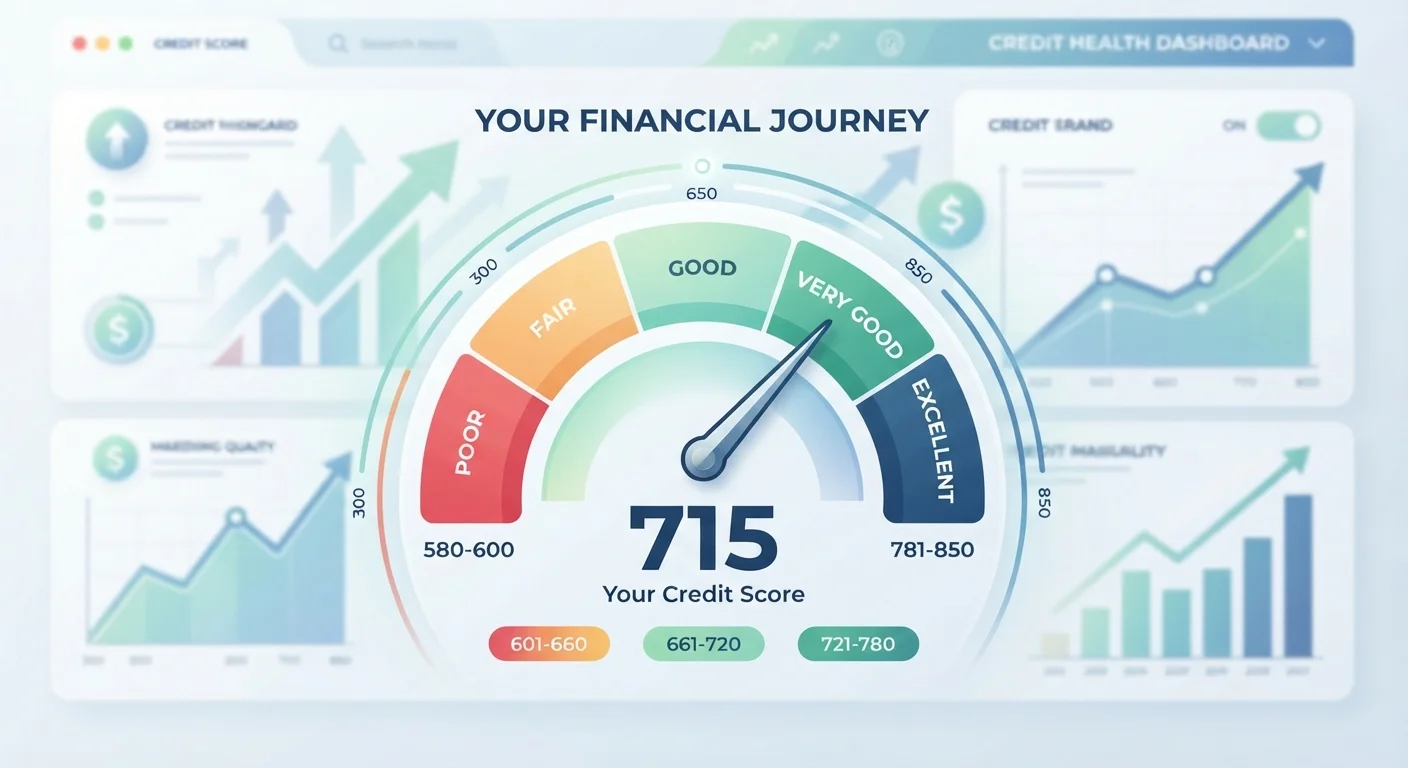
Why Your Credit Score Is Built on Five Pillars
Your credit score isn't a mystery — it's a formula. The most widely used scoring models, including FICO, consistently rely on five core categories to calculate your score. Each category carries a different weight, meaning some habits matter more than others. Understanding what those five factors are — and how much each one counts — is the fastest way to focus your energy in the right place.
Keep in mind: this article provides general financial education, not personalized financial advice. For guidance tailored to your specific situation, consider speaking with a licensed credit counselor or financial adviser.
| Payment History Weight | 35% of FICO score (FICO scoring model) |
| Credit Utilization Weight | 30% of FICO score (FICO scoring model) |
| Length of Credit History Weight | 15% of FICO score (FICO scoring model) |
| Credit Mix Weight | 10% of FICO score (FICO scoring model) |
| New Credit Inquiries Weight | 10% of FICO score (FICO scoring model) |
| Recommended Utilization Threshold | Below 30% (General financial guidance; lower is typically better) |
| Hard Inquiry Lifespan on Report | Up to 2 years (Fair Credit Reporting Act (FCRA)) |
The Five Factors, Explained
1. Payment History — 35%
This is the single biggest factor in your score. Lenders want to know: do you pay what you owe, on time? A missed or late payment — even by 30 days — can cause a meaningful drop. The good news is that a consistent record of on-time payments rebuilds trust over time. Set up autopay for at least the minimum due to protect this category.
2. Credit Utilization — 30%
Utilization measures how much of your available revolving credit you're currently using. If your total credit limit is $10,000 and your balance is $3,000, your utilization is 30%. Most financial guidance suggests keeping this below 30%, with lower being generally better. This factor responds quickly — paying down balances can improve your score within a billing cycle. See our full guide on credit utilization for a deeper look at how this ratio works.
3. Length of Credit History — 15%
Older accounts signal experience managing credit over time. This category considers the age of your oldest account, your newest account, and the average age of all accounts. Closing old cards can shorten your average history and nudge your score down — even if those cards carry no balance.
4. Credit Mix — 10%
Lenders like to see that you can responsibly manage different types of credit — revolving accounts (like credit cards) alongside installment loans (like auto loans or mortgages). You don't need to take on debt just to diversify; this factor carries less weight and shouldn't drive major borrowing decisions.
5. New Credit Inquiries — 10%
Every time you apply for new credit, lenders typically run a hard inquiry on your report. Each inquiry can trim your score slightly. Multiple applications in a short window — outside of rate-shopping for a mortgage or auto loan — can signal financial stress to lenders. Space out new credit applications when possible.
Credit Utilization Ratio
The percentage of your total available revolving credit that you're currently using. It's calculated by dividing your total credit card balances by your total credit limits.
Hard Inquiry
A formal review of your credit report triggered when you apply for new credit. Unlike soft inquiries, hard inquiries can have a small, temporary negative effect on your score.
Revolving Credit
A type of credit with a flexible balance you can borrow against repeatedly up to a set limit, such as a credit card or home equity line of credit.
Installment Loan
A loan repaid in fixed, scheduled payments over a set term — such as a mortgage, car loan, or student loan. It differs from revolving credit because the credit limit doesn't reset after payments.
Credit Mix
The variety of credit types in your report, including credit cards, installment loans, and other accounts. Lenders view a diverse mix as a sign of experienced credit management.
How to Use This Knowledge Practically
Knowing which factors weigh the most tells you where to start. Payment history and utilization together make up roughly 65% of most scoring models — so paying on time and keeping balances low will do more for your score than almost anything else.
The remaining 35% rewards patience. Length of history improves automatically as accounts age. Credit mix generally takes care of itself through normal financial life. And new inquiries fade from your report within two years, with their impact diminishing well before that.
For practical, day-to-day habits that reinforce all five of these factors, our article on credit habits that support a healthy score over time lays out simple, consistent behaviors that genuinely move the needle.
One last note: the score number you see may vary depending on where you check it. Different platforms use different scoring models and data pull dates. Our piece on why your credit score varies across platforms explains why those differences exist and which scores lenders are most likely to use.
This article is for general informational and educational purposes only and does not constitute personalized financial or credit advice. Consult a qualified financial professional for guidance specific to your situation.