
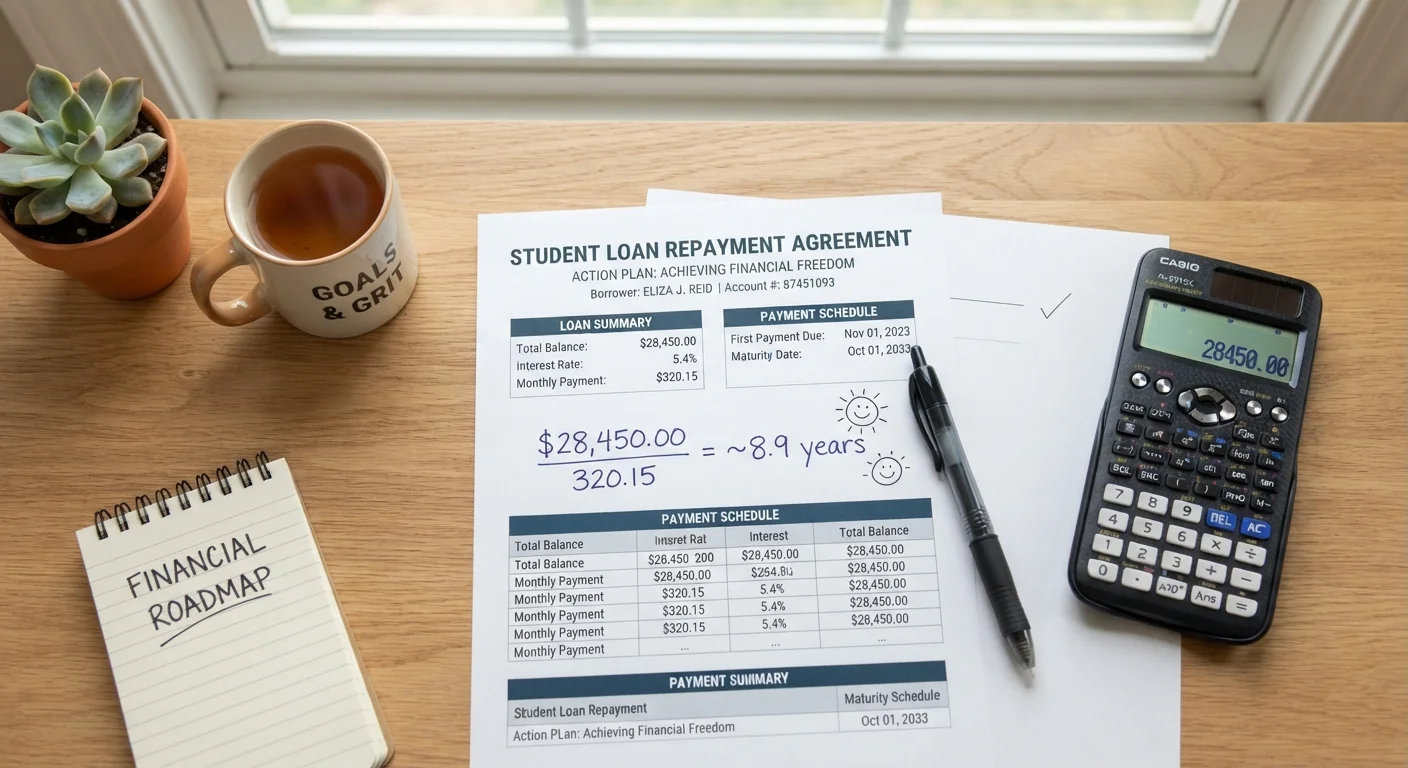
Why Your Repayment Plan Choice Matters
Federal student loan repayment isn't one-size-fits-all. The plan you choose shapes your monthly payment, the total interest you'll pay over the life of the loan, and whether you're eligible for forgiveness programs. Picking the wrong plan isn't a permanent mistake - you can switch - but understanding your options upfront puts you in a stronger position.
All federal repayment plans are managed through the U.S. Department of Education and its loan servicers. Unlike private loans, federal loans come with built-in flexibility that can protect you if your finances change. This article breaks down the main plan types so you can compare them clearly.
If you're also managing other debts alongside your student loans, it's worth reading about debt payoff strategies like the snowball and avalanche methods to see how repayment sequencing might fit into your broader plan.
The Main Federal Repayment Plan Types
Federal repayment plans fall into three broad categories. Here's how they compare:
| Standard Plan | Graduated Plan | Income-Driven (IDR) Plans | |
|---|---|---|---|
| Repayment term | 10 years | 10 years | 20-25 years |
| Monthly payment | Fixed, higher | Starts low, increases every 2 years | Based on income, can be very low |
| Total interest paid | Lowest | Moderate | Highest (longer term) |
| Loan forgiveness option | No | No | Yes, after 20-25 years |
| Best suited for | Stable income, low debt-to-income ratio | Early-career, expects income growth | Low income relative to loan balance |
| PSLF eligible | No | No | Yes (with qualifying employer) |
Standard Repayment Plan
This is the default plan. Payments are fixed over a 10-year term. Because you pay consistently and the loan is retired quickly, you pay the least total interest of any plan. The trade-off: monthly payments are higher than other options, which can strain a tight budget.
Graduated Repayment Plan
Payments start lower and increase every two years, also over a 10-year term. You'll pay more total interest than on the Standard plan, but the early relief can help if you're just starting out in your career and expect your salary to grow.
Income-Driven Repayment (IDR) Plans
IDR plans - which include options such as SAVE, PAYE, IBR, and ICR - set your payment as a percentage of your discretionary income, generally ranging from 5% to 20% depending on the specific plan and loan type. Repayment terms extend to 20 or 25 years, and any remaining balance may be forgiven at the end. These plans can dramatically lower monthly payments, but you'll pay more interest overall and the forgiven amount could be treated as taxable income under current federal tax rules.
Use the Federal Loan Simulator First
Before enrolling in any repayment plan, use the free Loan Simulator at studentaid.gov. It pulls your actual loan data and shows estimated monthly payments and total costs across all available plans. This takes about five minutes and gives you a concrete, personalized comparison to work from - no guessing required.
Key Trade-Offs to Weigh
Every plan involves a real cost-benefit trade-off. Lower monthly payments almost always mean more interest paid over time. Longer repayment terms increase total cost but can free up cash for other financial goals. Here's what to keep in mind:
- Total interest cost: The Standard plan minimizes this. IDR plans maximize it - sometimes significantly - due to the longer term.
- Monthly cash flow: IDR plans can reduce payments to near zero for very low earners, which matters if you're in financial hardship.
- Loan forgiveness eligibility: Only IDR plans (and the Public Service Loan Forgiveness program, which pairs with IDR) lead to forgiveness of remaining balances. Standard and Graduated plans do not.
- Tax implications: Forgiven balances under most IDR plans may be counted as taxable income in the year of forgiveness, which could result in a significant tax bill. Consult a qualified tax professional about how this might affect your situation.
If consolidating your student debt is something you're considering, our overview of how debt consolidation works and what to watch out for covers the mechanics and risks worth understanding first.
How to Choose the Right Plan for Your Situation
The right plan depends on your specific financial picture. A few practical starting points:
- Calculate your numbers. The Federal Student Aid website (studentaid.gov) offers a Loan Simulator tool that estimates your payment and total cost under each plan using your actual loan data.
- Consider your income stability. If your income is low or unpredictable, IDR plans offer a safety net. If your income is stable and sufficient, the Standard plan saves money.
- Think about your career path. Public service employees working toward Public Service Loan Forgiveness (PSLF) should enroll in a qualifying IDR plan - the Standard plan does not lead to PSLF forgiveness.
- Revisit your plan when life changes. Marriage, a new job, or a change in family size can affect IDR payment calculations. You can recertify your income annually and switch plans if your needs shift.
This article is for general informational purposes only and does not constitute personalized financial or legal advice. Student loan rules, plan availability, and tax treatment of forgiven debt can change. Consult a qualified financial adviser or student loan counselor for guidance tailored to your circumstances.