
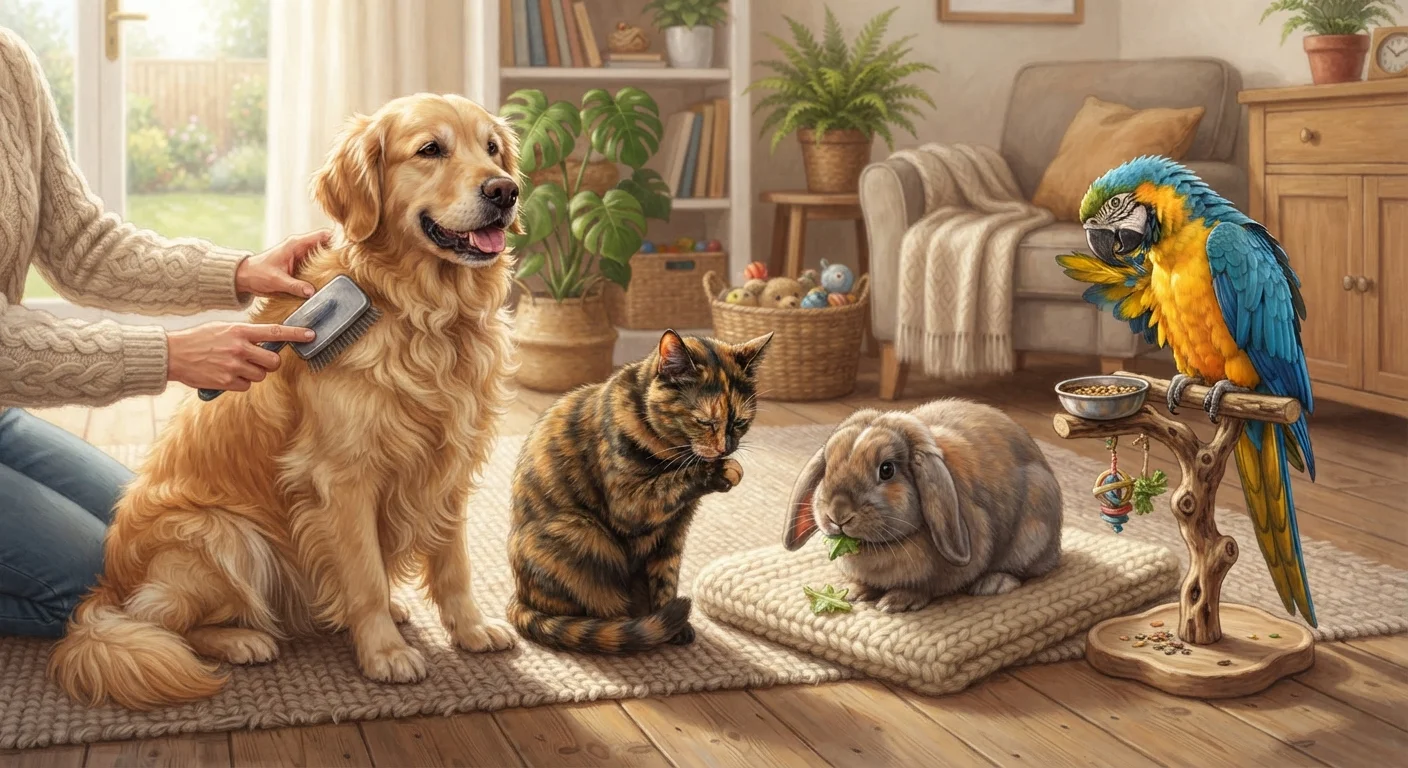
Why Grooming Needs Differ So Much Between Pets
Grooming isn't one-size-fits-all — and that surprises a lot of first-time pet owners. A golden retriever's double coat, a rabbit's delicate skin, and a parakeet's feathers all have completely different requirements. Getting this wrong can cause matting, skin irritation, stress, or even injury.
The good news: once you understand your specific pet's baseline needs, home grooming becomes a manageable part of your routine. For a broader look at structuring daily care, see building a daily care routine. This guide breaks down the essentials by pet type so you can start with confidence.
| Dogs | Cats | Rabbits | Birds | |
|---|---|---|---|---|
| Brushing frequency | Daily to weekly (breed-dependent) | 1–2x weekly (longhair: daily) | Weekly (longhair: daily) | Not typically needed |
| Bathing at home | Every 4–6 weeks | Rarely necessary | Almost never — avoid | Misting only |
| Nail trimming | Every 3–4 weeks | Every 2–3 weeks | Every 4–6 weeks | Vet/groomer recommended |
| Ear care | Weekly checks (floppy breeds) | Monthly checks | Monthly checks | Not applicable |
| Dental care at home | Several times per week | Several times per week | Hay diet supports teeth | Not applicable |
| Professional grooming needed | Often (long/double coats) | Rarely | Occasionally | For nails and wing clips |
Dogs: The Most Variable Grooming Demands
Dogs vary more in grooming needs than any other common pet. A short-coated beagle needs a weekly brush and monthly nail trim. A poodle mix or Bernese mountain dog may need daily brushing and professional grooming every six to eight weeks to prevent painful matting.
Core at-home tasks for dogs:
- Brushing: Short coats — once weekly. Long or double coats — three to seven times per week.
- Bathing: Every four to six weeks on average, or when dirty. Over-bathing strips natural oils.
- Nail trimming: Every three to four weeks. Long nails can alter gait and cause joint stress.
- Ear checks: Weekly for floppy-eared breeds prone to moisture buildup and infection.
- Teeth: Aim for brushing several times a week. See what good dental care looks like for more detail.
If your dog is scratching more than usual, grooming alone may not be the answer — excessive scratching can signal allergies or parasites worth a vet visit.
Start Grooming Early and Go Slow
Puppies and kittens introduced to brushing, nail trims, and handling early in life are far more cooperative as adults. Keep early sessions very short — just a minute or two — and pair them with calm praise. Even adult pets can learn to tolerate grooming with patient, gradual desensitization. Never force a session if your pet is showing signs of significant stress.
Cats: Mostly Self-Sufficient, But Not Entirely
Cats are meticulous self-groomers, which means their at-home needs are lighter — but not zero. Longhaired breeds like Maine Coons and Persians mat easily and need daily brushing. Shorthaired cats generally do fine with a brush once or twice a week, which also reduces hairballs.
Core at-home tasks for cats:
- Brushing: Shorthair — one to two times weekly. Longhair — daily.
- Nail trimming: Every two to three weeks. Use cat-specific clippers and avoid the quick (the pink vein inside the nail).
- Ear checks: Monthly — look for dark debris or unusual odor, which may indicate mites or infection.
- Bathing: Rarely necessary; most healthy cats manage without it. Exceptions include hairless breeds or medical situations.
Dental care is frequently overlooked in cats. Regular brushing and annual veterinary dental checks are part of good long-term health maintenance.
Rabbits: Gentle Handling Is Everything
Rabbits are clean animals that groom themselves much like cats — but they need human help during shedding seasons, which can be intense. Crucially, rabbits should almost never be bathed. Wet fur dries slowly, and the stress of bathing can be genuinely dangerous for them.
Core at-home tasks for rabbits:
- Brushing: Short-haired breeds — weekly. Long-haired breeds (like Angoras) — daily to prevent wool block, a life-threatening digestive condition caused by ingesting excess fur.
- Nail trimming: Every four to six weeks. Rabbit nails curve and can snag on surfaces if left too long.
- Spot cleaning: Use a damp cloth to clean soiled areas rather than full baths.
- Scent gland cleaning: Rabbits have scent glands near their tail that can accumulate waxy buildup. This can be done at home carefully, but many owners prefer to have a vet or rabbit-savvy groomer handle it.
Always support a rabbit's hindquarters when lifting — their skeletons are fragile, and kicking during improper handling can cause spinal injury.
Birds: Feathers, Beaks, and Nails — Know the Limits
Birds are the most specialized pet on this list, and their grooming is largely about monitoring and light maintenance rather than active intervention. Many bird species will naturally maintain their feathers through preening. Your job is to support that — and to know when something is off.
Core at-home tasks for birds:
- Misting: Many birds enjoy a light mist from a clean spray bottle — it supports feather health and mimics natural rain bathing. Frequency depends on species; parrots often enjoy it two to three times weekly.
- Nail trimming: Done by a vet or experienced groomer in most cases. Home trimming is possible but risky without proper training, as bird nails have a quick that bleeds easily.
- Beak maintenance: A healthy bird's beak wears down naturally. Overgrowth, cracking, or unusual texture are signs to discuss with an avian vet.
- Wing clipping: A personal and safety decision that should always be done by a professional.
Feather plucking is a behavioral or health signal — not a grooming issue you can solve at home. If you notice it, consult an avian veterinarian promptly. For more on recognizing health concerns across pet types, the Pet Health & Wellness hub is a useful starting point.
Tasks That Always Belong to a Professional
Regardless of pet type, some grooming tasks carry enough risk that they should be left to trained groomers or veterinarians:
- Anal gland expression (dogs): Impacted glands are painful and can become infected. A vet or groomer should handle this.
- Deep ear cleaning: Surface checks are fine at home, but flushing or treating an infected ear canal requires professional care.
- Severe matting: Attempting to cut or de-mat severely knotted fur at home risks cutting skin, which is hidden beneath the mat.
- Tooth extractions or scaling: Home brushing is preventive — actual dental work happens at the vet under anesthesia.
- Any wound or skin condition discovered during grooming: Stop grooming and contact your vet if you find lumps, sores, or unusual discharge.
Getting comfortable with your pet's baseline appearance early on makes it much easier to spot when something changes. Regular at-home grooming is one of the best ways to catch health issues before they become serious.
This article is for general informational purposes only and is not a substitute for professional veterinary advice. Always consult a licensed veterinarian for concerns about your specific pet's health or grooming needs.