
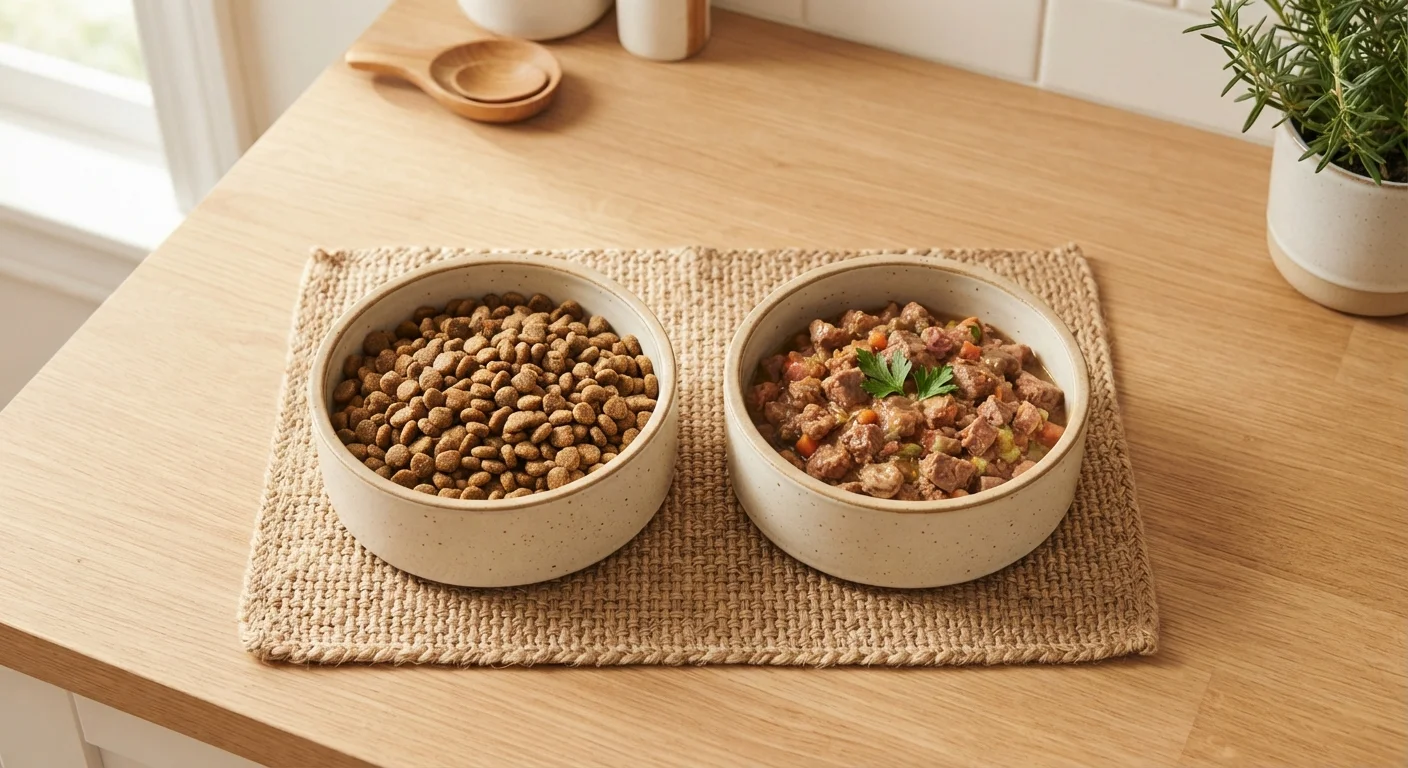
What Actually Differs Between Dry and Wet Pet Food
At their core, dry and wet pet foods are designed to deliver complete or complementary nutrition — but they do so very differently. Understanding those differences helps you make a more confident choice for your animal.
Dry food (kibble) is made by combining ingredients — often protein meals, grains or legumes, fats, and vitamins — and then extruding them under heat and pressure into shelf-stable pellets. The low moisture content (typically 6–10%) is what gives kibble its long shelf life and easy storage. Most dry formulas are also calorie-dense, meaning smaller portions deliver more energy.
Wet food begins with fresh or rehydrated ingredients sealed in cans or pouches, which are then heat-processed for safety. Moisture content typically ranges from 70–78%, which is much closer to what animals would consume through whole prey in the wild. That high water content also means wet food is less calorie-dense by volume — your pet may eat a larger portion for the same caloric intake.
| Criterion | Dry Food (Kibble) | Wet Food (Canned/Pouched) |
|---|---|---|
| Moisture content | 6–10% | 70–78% |
| Shelf life (unopened) | 12–18 months | 2–5 years (canned) |
| Cost per serving | Generally lower | Generally higher |
| Caloric density | High — smaller portions | Lower — larger portions |
| Dental texture benefit | Some scraping action | Minimal |
| Palatability for picky pets | Variable | Generally higher |
| Ease of storage | Very easy — sealed bag | Refrigerate once opened |
| Hydration support | Low | High |
Both formats are subject to nutritional standards set by bodies such as the Association of American Feed Control Officials (AAFCO), which establishes nutrient profiles for complete pet foods sold in the United States. Look for an AAFCO nutritional adequacy statement on any food you choose.
Health Considerations: Where Each Format Shines
The nutritional gap between dry and wet food matters most in a few specific health areas. Knowing where each format helps — and where it falls short — makes it easier to match food type to your pet's actual needs.
Hydration
Cats in particular evolved as desert animals and have a low natural thirst drive. Relying solely on dry food can leave many cats chronically under-hydrated. Wet food is widely recognized by veterinary professionals as a practical way to boost daily fluid intake. If your pet eats primarily kibble, a reliable fresh water supply is essential — see our guide to daily pet hydration for practical tips on building that habit.
Dental Health
Dry food is often cited as helping reduce tartar buildup through the mechanical scraping action of chewing. However, veterinary dental specialists note that kibble alone is not a substitute for proper dental care — regular tooth brushing and professional cleanings still matter. Wet food does not provide that scraping effect, so pets eating primarily wet diets may need closer dental monitoring.
Weight Management
Because wet food is less calorie-dense, it can help pets feel fuller on fewer calories — a potential advantage for animals prone to weight gain. Dry food's higher caloric density means accurate measuring is especially important to avoid overfeeding.
Palatability for Picky or Unwell Pets
Wet food's stronger aroma and softer texture often appeals to picky eaters and pets recovering from illness or dental procedures. Senior pets with reduced appetite may eat more reliably when offered wet food.
70–78%
Moisture content in typical wet pet food
Compared to just 6–10% in dry kibble, making wet food a meaningful source of daily fluid intake for pets.
~60%
Of U.S. households that own at least one pet
According to the American Pet Products Association's general industry surveys, pet ownership is widespread, making nutrition choices a significant public health topic.
For a broader look at your pet's overall wellness, the Pet Health & Wellness hub covers recognizing, preventing, and managing common health issues.
Practical Tips for Everyday Feeding
Most veterinarians and animal nutritionists agree there is no single right answer — what matters is finding a routine that fits your pet's health needs, your budget, and your daily schedule.
- Consider a mixed approach: Many owners use dry kibble as the daily base (for cost and convenience) and add wet food once a day or several times per week for hydration and variety. This is a common, well-accepted strategy for cats and dogs.
- Transition gradually: When switching food types or formulas, blend the old and new food over 7–10 days to avoid digestive upset.
- Store food properly: Opened wet food should be refrigerated and used within 24–48 hours. Dry kibble should be kept sealed and away from heat and humidity to maintain freshness.
- Watch portion sizes: Follow feeding guidelines on the label as a starting point, then adjust based on your pet's body condition — you should be able to feel (but not see) ribs easily on a healthy dog or cat.
- Factor food into your daily routine: Consistent feeding times support digestion and behavioral predictability. See how to build a daily care routine for guidance on scheduling meals alongside other care activities.
If you're curious about alternative feeding approaches, it's worth reading about common myths around raw pet diets before making any major changes.
This article provides general educational information about pet nutrition and is not a substitute for personalized veterinary advice. Always consult a licensed veterinarian before making significant changes to your pet's diet, especially if your animal has an existing health condition.