Why Water Is Non-Negotiable for Your Pet's Health
Water is the single most important nutrient in your pet's diet — more critical, even, than protein or fat. It plays a direct role in virtually every biological process: digestion, nutrient absorption, joint lubrication, waste elimination, and temperature control. When water intake falls short, these systems don't simply slow down — they can be damaged.
Unlike food, which pets can go without for a day or two without immediate harm, water deprivation becomes dangerous within hours, particularly in hot conditions or for animals already managing a health condition. For new pet owners, understanding this distinction helps set the right daily priority: fresh water first, every day, without exception.
Hydration also supports overall pet health and wellness in ways that aren't always visible. For example, adequate water intake helps the kidneys flush toxins efficiently — and chronic low-level dehydration over months or years is a known contributor to kidney disease in cats especially.
~70%
Water content of an adult cat or dog's body
Veterinary physiology references consistently cite water as comprising approximately 60–70% of healthy adult body weight in companion animals.
2–3%
Dehydration level that begins to impair function
General veterinary guidance indicates that even mild dehydration at this level can affect energy levels and kidney efficiency in dogs and cats.
Top 3
Ranking of kidney disease among cat health conditions
Chronic kidney disease is consistently reported as one of the most common causes of illness and death in older cats, with low water intake cited as a contributing risk factor.
Recognizing Dehydration Before It Becomes Serious
Dehydration in pets can be subtle at first. By the time a pet seems obviously unwell, the condition may already be moderate. Learning to spot early signs gives you time to act before the situation escalates.
The most practical at-home check is the skin turgor test: gently pinch the loose skin at the back of your pet's neck, then release it. In a well-hydrated animal, the skin snaps back immediately. If it returns slowly or holds a tent shape, dehydration may be a concern. Healthy gums should feel moist and slick — dry or tacky gums are another warning sign.
Other indicators include: sunken or dull eyes, reduced or dark-colored urination, unusual lethargy, and loss of appetite. If your pet shows any combination of these signs, this is a situation for your veterinarian — not a wait-and-see moment. Severe dehydration may require intravenous fluids and supportive care that can only be provided in a clinical setting.
This article is for general informational purposes only and is not a substitute for veterinary advice. Always consult a qualified veterinarian about your individual pet's health needs.
Building a Simple, Reliable Water Routine
Consistency is everything in pet care. A predictable hydration routine takes less than two minutes a day and significantly reduces health risk over your pet's lifetime. Here's how to set one up effectively:
- Rinse and refill daily. Empty the bowl completely, rinse it, and add fresh water every morning. Stale or dirty water deters drinking, especially in cats.
- Wash bowls regularly. Bacteria and biofilm accumulate quickly, particularly in plastic bowls. Stainless steel or ceramic bowls are easier to sanitize and less prone to bacterial growth.
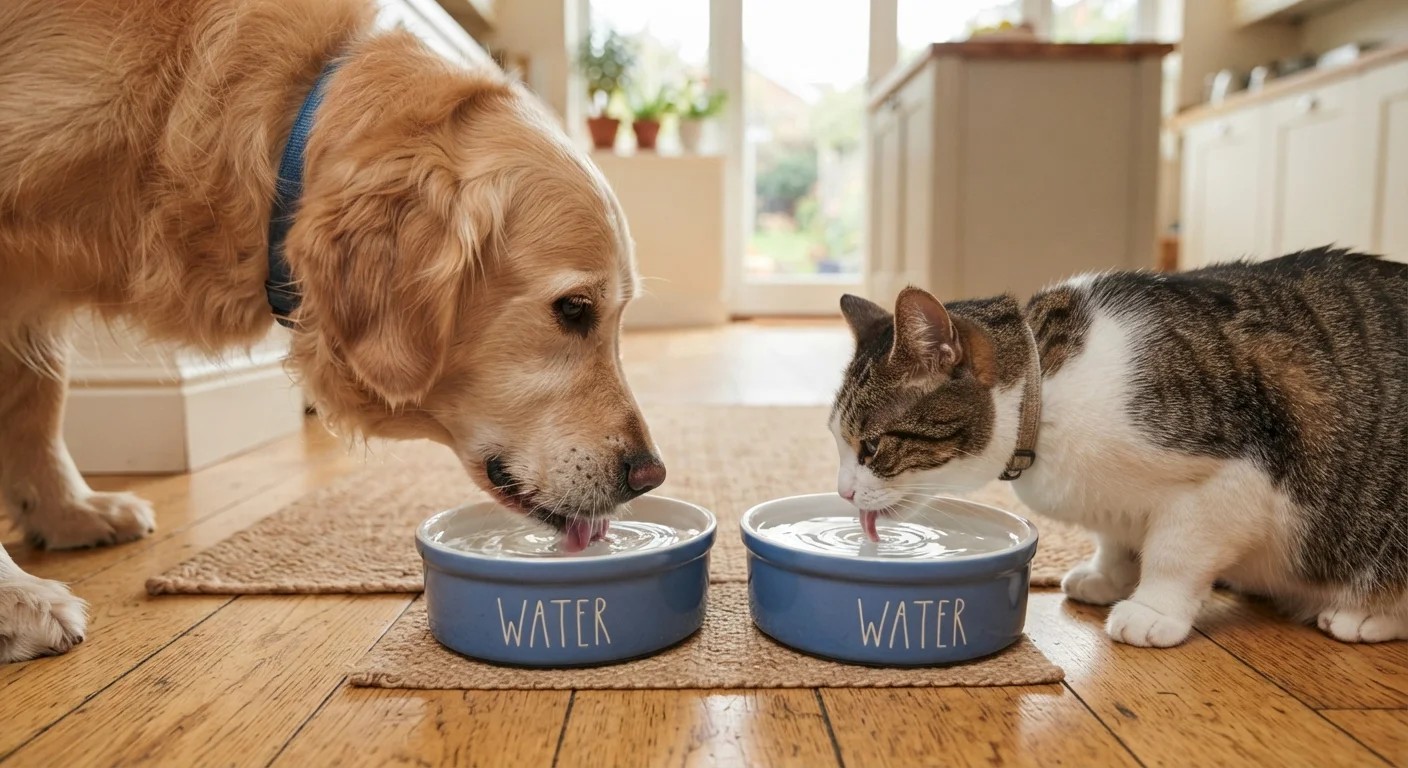
- Use multiple water stations. Placing bowls in more than one location — especially in multi-story homes or multi-pet households — encourages more frequent drinking.
- Consider a pet fountain for cats. Moving water naturally attracts cats who otherwise ignore still bowls. Fountains also filter and oxygenate water, keeping it fresher longer.
- Monitor intake over time. If your pet suddenly starts drinking significantly more or less than usual, mention it at your next vet visit. Dramatic changes in thirst can indicate conditions like diabetes or kidney disease.
Fitting water changes into your existing schedule — right alongside morning feeding, for example — makes it automatic. See our daily pet care routine guide for help structuring the rest of your pet's day.
Make Water Changes Part of Your Morning Feed
Linking your pet's water refresh to something you already do — like filling their food bowl — makes it far easier to stay consistent. Take 60 seconds each morning to dump, rinse, and refill. Over weeks and months, that habit becomes second nature and significantly lowers your pet's risk of chronic dehydration.
Special Considerations for Cats, Senior Pets, and Sick Animals
Not all pets have the same hydration needs, and some require extra attention.
Cats are famously reluctant drinkers. They evolved in arid environments and have a lower thirst drive than dogs, meaning they often don't seek water until mildly dehydrated. This biological quirk is a major reason chronic kidney disease is so prevalent in cats. Feeding wet food, offering multiple water sources, and using a fountain can all help compensate for this tendency.
Senior pets may drink less due to reduced mobility or cognitive changes, even when they need more water to support aging kidneys. If your older dog or cat seems to be drinking less, bring water bowls closer to where they rest so access is easy. The guide to senior pet health needs covers this and other age-related changes in more detail.
Ill or recovering pets may need encouragement to drink, or in some cases may require fluids administered by a veterinarian. Always follow your vet's specific instructions during illness or recovery — do not attempt to estimate fluid needs at home without professional guidance.