Why Raw Feeding Sparks So Much Debate
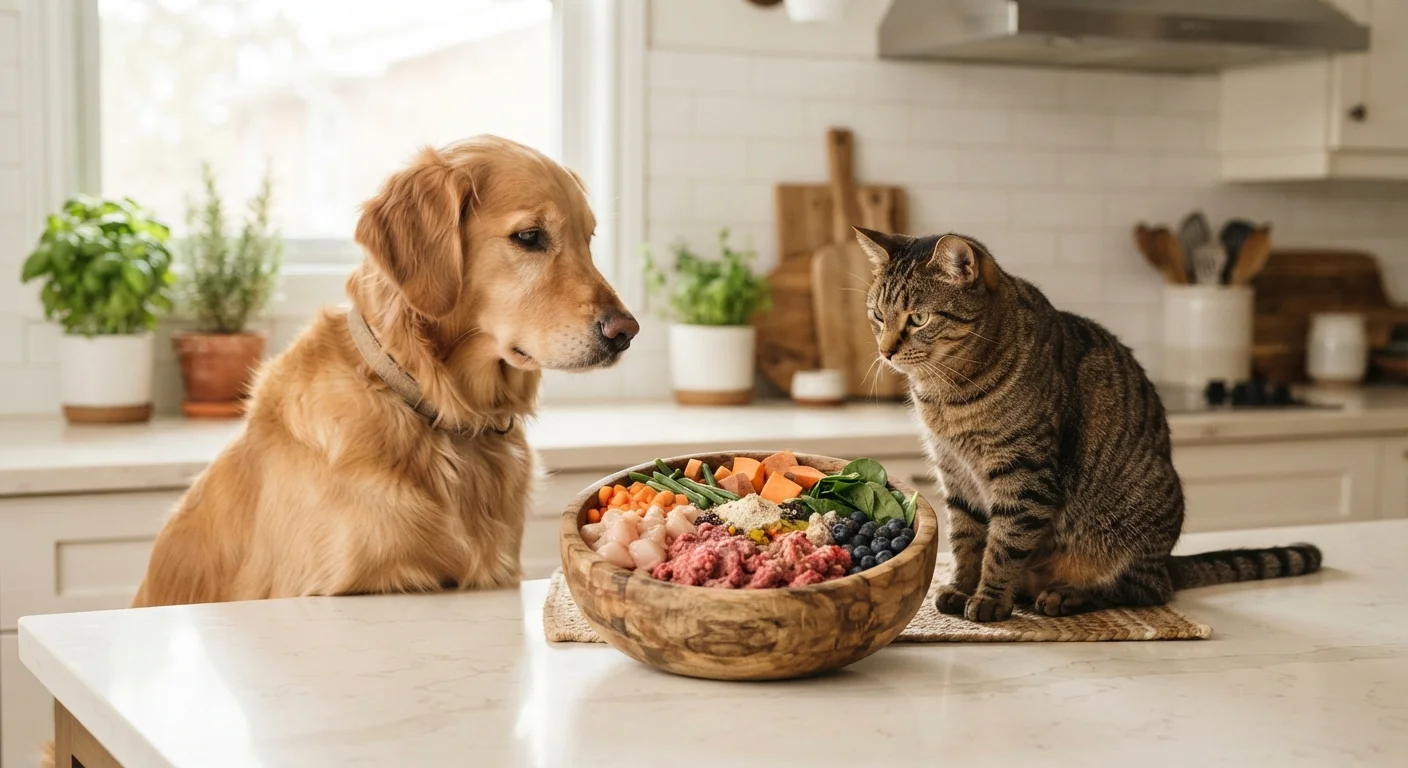
Raw diets for dogs and cats — typically built around uncooked meat, bones, and organs — have grown steadily in popularity. Advocates often frame raw feeding as a return to what pets were "meant" to eat. Critics, including many veterinary organizations, raise concerns about nutritional balance and food safety.
The truth sits somewhere more nuanced than either camp often acknowledges. Separating genuine evidence from wishful thinking matters, especially for pet owners making daily decisions about their animals' health. For a broader look at pet food misconceptions, see common pet food beliefs examined.
Myth
Raw diets are completely natural and therefore inherently safe for pets.
Fact
Raw meat can carry pathogens like Salmonella, Listeria, and E. coli that pose health risks to both pets and the people in the household.
"Natural" does not automatically mean safe. Domestic dogs and cats live in homes alongside children, elderly people, and immunocompromised individuals — all of whom face elevated risk from foodborne bacteria shed in pet feces or spread across kitchen surfaces. Multiple veterinary and public health bodies have flagged this as a concrete, not theoretical, concern.
Myth
Pets' digestive systems are designed to handle raw meat without issue, just like wolves or wild cats.
Fact
Thousands of years of domestication have shifted dogs' and cats' physiology in ways that make direct comparisons to wild relatives an oversimplification.
Dogs in particular have evolved alongside humans and show genetic adaptations — including changes in starch digestion — that their wolf ancestors lack. Wild animals also experience significant disease, shorter lifespans, and nutritional stress. "Wild" is not a synonym for optimal health, and using wild behavior as a template for domestic pet care has meaningful limits.
Myth
A raw diet automatically provides complete, balanced nutrition.
Fact
Many raw diets — especially home-prepared ones — have documented nutritional imbalances, including deficiencies in calcium, vitamin D, and other essential nutrients.
Feeding raw muscle meat alone skews the calcium-to-phosphorus ratio in ways that can damage bone development over time, especially in young animals. Achieving a nutritionally complete raw diet requires careful formulation, often with the help of a veterinary nutritionist. Simply rotating protein sources does not guarantee balance.
Myth
Cooking destroys all the nutritional value in pet food, making raw always superior.
Fact
Cooking does alter some nutrients, but commercially processed pet foods are formulated to meet established nutritional standards after cooking.
Heat-sensitive nutrients lost in processing are typically added back during manufacturing. Regulatory standards — such as those set by the Association of American Feed Control Officials (AAFCO) — require that finished pet foods meet defined nutrient profiles. No blanket claim that cooked food is nutritionally inferior to raw is supported by current evidence.
Myth
Pets that eat raw diets never get sick from their food.
Fact
Pets can and do develop illness from pathogens present in raw meat, and published case reports document foodborne infections in raw-fed animals.
A pet showing no visible symptoms can still shed dangerous bacteria, creating a silent transmission risk within the household. Proper food handling — dedicated utensils, thorough surface cleaning, careful waste disposal — can reduce risk but cannot eliminate it entirely. This is an area where the safety bar must be set by household context, not just by the pet's apparent health.
What the Evidence Actually Says
Research on raw pet diets is still developing, and honest experts acknowledge important gaps. Several veterinary bodies — including the American Veterinary Medical Association — have published position statements expressing concern about raw animal-source proteins, citing pathogen risks to both pets and the humans who handle their food.
Household Members Face Risk Too
The food-safety concern with raw diets extends beyond the pet. Handling raw meat and cleaning up after a pet that eats it can expose household members — especially young children, pregnant individuals, and those with weakened immune systems — to harmful bacteria. If anyone in your home falls into a higher-risk group, discuss this explicitly with both your veterinarian and a human healthcare provider before starting a raw diet.
Nutritional completeness is a separate, equally important concern. Studies have found that a significant proportion of home-prepared raw diets, and even some commercial raw products, do not meet established nutrient profiles for dogs or cats. Deficiencies in calcium, phosphorus, and key vitamins can cause long-term harm that may not be visible until damage is done.
If you're navigating feeding decisions more broadly, common pet feeding mistakes is worth reading alongside this article. And for a direct comparison of other diet formats, dry food vs. wet food offers useful context.
~60%
of home-prepared raw diets with nutrient imbalances
A peer-reviewed analysis of home-prepared pet diets found that the majority did not meet AAFCO nutrient guidelines for at least one key nutrient.
Multiple species
of pathogens detected in commercial raw pet food
Studies published in veterinary journals have detected Salmonella, Listeria, and E. coli in tested samples of commercially available raw pet food products.
This article is for general informational purposes only and does not constitute veterinary or medical advice. Always consult a licensed veterinarian before making significant changes to your pet's diet.