
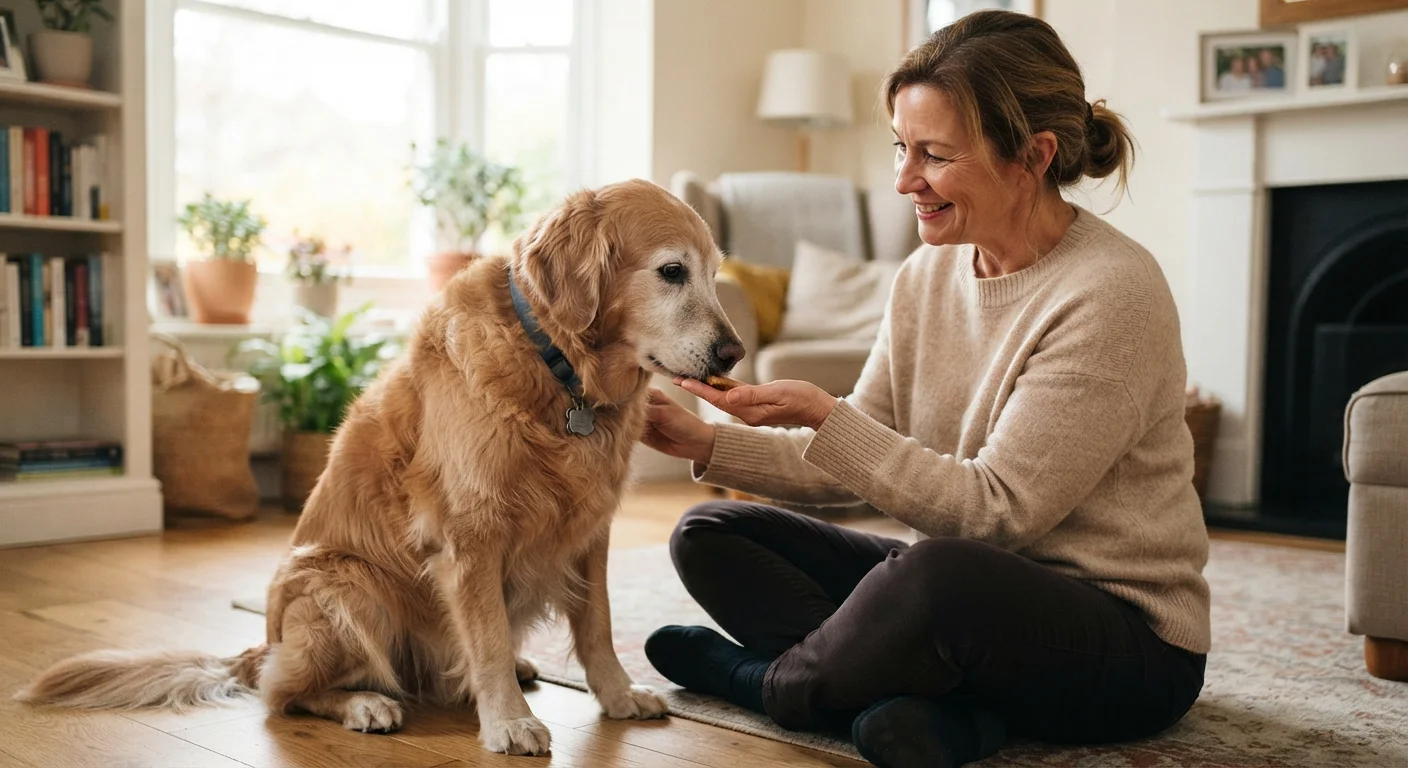
The 'Old Dog' Myth — And Why It Persists
The idea that older pets are set in their ways is one of the most common misconceptions in animal training. While it's true that age brings physical and cognitive changes, research in animal behavior consistently shows that adult and senior animals retain the capacity to form new associations and learn new behaviors throughout their lives.
What actually changes with age isn't the ability to learn — it's the conditions under which learning happens most effectively. A 10-year-old dog or a 12-year-old cat may need more repetition, more physical accommodation, and a slower rollout of new skills. But the underlying mechanism of reward-based learning remains intact.
Understanding this distinction matters because unrealistic pessimism can lead owners to give up too early, while unrealistic optimism can cause frustration when progress is slower than expected. For a broader look at how training principles apply across species and life stages, see our overview of training techniques for household pets.
Rescue and Rehomed Senior Pets
Older pets adopted from shelters may arrive with gaps in their training history or with habits formed in very different environments. This doesn't make them harder to train — but it does mean early sessions should focus on building trust and learning what motivates the individual animal before introducing formal skills. Patience in the first few weeks pays long-term dividends.
How Aging Actually Affects Trainability
Before adjusting your training approach, it helps to understand what's physically and cognitively changing in your pet. Common age-related factors that influence training include:
- Sensory decline: Reduced hearing or vision can make your pet less responsive to cues they once reacted to reliably. This doesn't mean they're ignoring you — they may simply not perceive the signal as clearly.
- Joint pain and reduced mobility: Asking an arthritic dog to sit or lie down repeatedly can cause discomfort. Physical limitations should shape which behaviors you practice and how often.
- Slower processing: Older pets may need more time between a cue and a response. Rushing the interaction or repeating cues rapidly can increase confusion.
- Lower stamina: Senior animals tire more quickly, both physically and mentally. Training sessions that energize a young animal may exhaust an older one.
Before starting a new training program with a senior pet, a veterinary checkup is a practical first step. Pain, hearing loss, or early cognitive changes can look like stubbornness or disinterest, and a vet can help identify what's actually going on. Our guide to how aging changes your pet's health needs covers this in more detail.
~41%
Senior dogs showing signs of cognitive decline by age 14
Research published in veterinary behavior literature suggests cognitive dysfunction syndrome affects a significant portion of dogs in their early-to-mid teens, underscoring the value of early behavioral engagement.
5–10 min
Recommended maximum session length for senior pets
Certified animal behaviorists and veterinary professionals broadly recommend keeping training sessions brief for older animals to prevent mental fatigue and maintain positive associations.
Proven Practices for Training Older Pets
These approaches reflect what behavioral science and experienced trainers consistently recommend for working with adult and senior animals:
Keep training sessions short — five to ten minutes maximum.
Senior pets fatigue mentally and physically faster than younger animals. Longer sessions can lead to frustration, disengagement, or discomfort, which actively undermines learning. Short, frequent sessions spread across the day maintain attention and build habits more reliably.
Adapt your cues to account for sensory changes.
An older dog with hearing loss won't respond to voice cues the way it once did — but it can still learn hand signals, gentle vibrations, or visual prompts. Switching cue types prevents the false conclusion that the animal is being uncooperative.
Always use positive reinforcement, and keep rewards high-value.
Reward-based training is effective at every life stage, but with older pets it becomes even more important to make the reward genuinely motivating. Punishment-based methods increase stress and can worsen anxiety in senior animals whose emotional regulation may already be more fragile.
Modify physical requirements to accommodate mobility limits.
Asking a dog with arthritis to repeatedly sit, lie down, or jump defeats the purpose of low-stress training. Adapting or skipping physically demanding behaviors protects your pet's comfort and keeps sessions positive.
Build on existing behaviors before introducing brand-new ones.
Older pets already have a library of learned behaviors and associations. Starting from what they know — rather than beginning entirely from scratch — accelerates progress and reduces the cognitive load of learning something unfamiliar.
Maintain a predictable training environment.
Consistency in location, timing, and routine helps older pets anticipate and settle into training sessions. Unpredictable environments introduce distractions that younger animals may filter out more easily but that can derail senior animals.
Quick Wins You Can Start Today
You don't need a formal program to begin making progress with an older pet. These immediate actions can start building positive momentum:
For guidance on introducing new experiences without stress — especially relevant when retraining older animals adopted later in life — see our article on socializing a new pet without overwhelming them.
This article is for general informational and educational purposes only. Always consult a qualified veterinarian for guidance specific to your pet's health, mobility, and individual needs before beginning a new training program.