What Each Journey Actually Looks Like
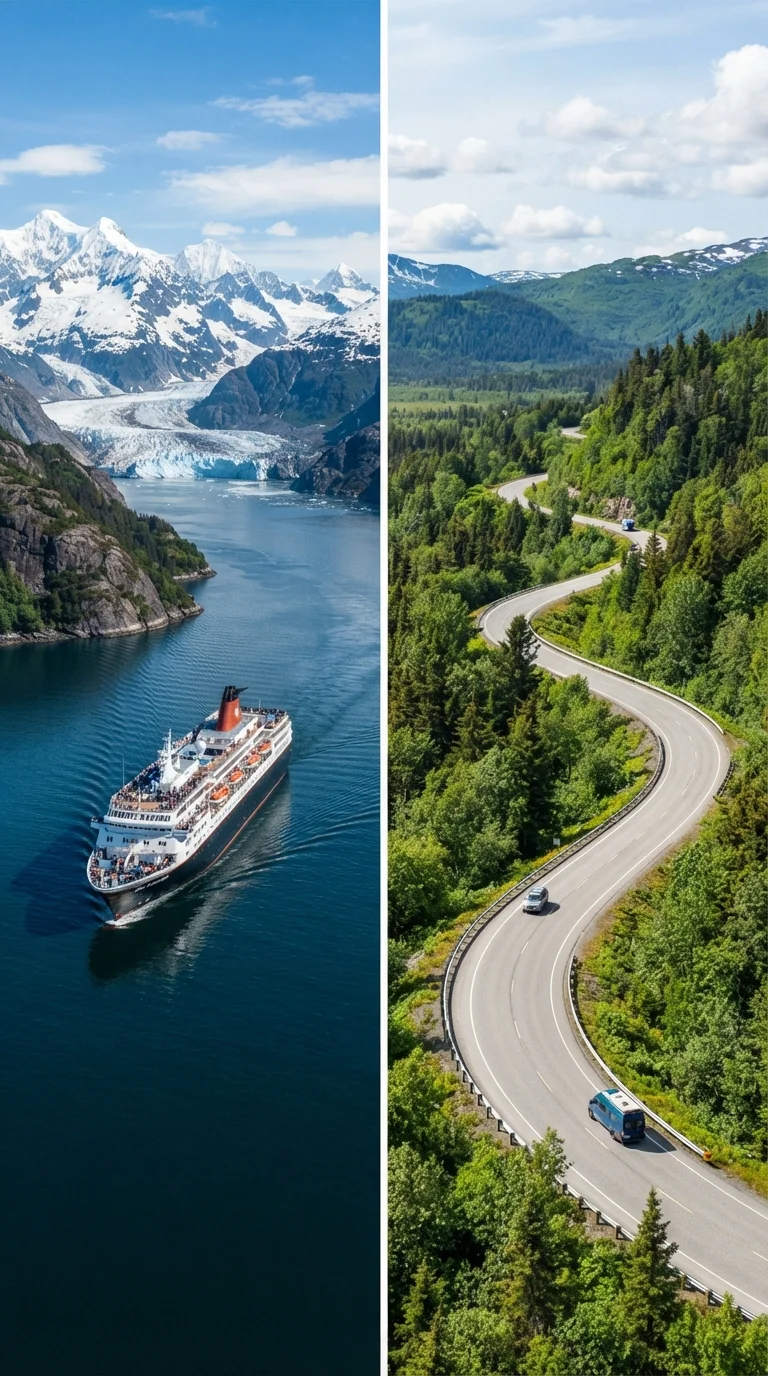
An Alaska cruise typically follows the Inside Passage — a protected waterway hugging the southeast coastline through ports like Juneau, Ketchikan, Skagway, and sometimes Glacier Bay. You board in Seattle or Vancouver, and the ship handles navigation, lodging, and most meals. Days alternate between sailing through fjords and docking in port towns for a few hours of exploration.
An Alaska road trip, by contrast, usually starts in Anchorage or Fairbanks and fans out from there. The Parks Highway connecting Anchorage to Denali National Park is a classic backbone route. From there, you might push east on the Richardson Highway or venture south on the Seward Highway toward Kenai Fjords. You control the pace, the stops, and the detours — including ones no cruise port ever touches.
Think of it this way: the cruise reveals coastal Alaska in widescreen; the road trip hands you the keys to the interior. If you're weighing other adventure-format decisions, our look at city breaks versus road trips in the American West explores a similar trade-off in a different region.
Wildlife, Scenery, and Access
Both formats deliver breathtaking wildlife encounters, but the animals differ. Cruise passengers frequently spot humpback whales, orcas, sea lions, and bald eagles from the ship deck or shore excursions. Tidewater glaciers — massive walls of blue ice calving into the sea — are a cruise highlight almost impossible to replicate on land.
Road trippers, meanwhile, have a real shot at grizzly bears, caribou, moose, Dall sheep, and wolves, especially along the road corridors through Denali. The Park Road inside Denali is actually restricted to private vehicles beyond mile 15 — but bus tours depart daily and put you deep into one of North America's most pristine wilderness corridors.
| Alaska Cruise | Alaska Road Trip | |
|---|---|---|
| Primary scenery | Fjords, glaciers, coastal towns | Mountains, tundra, boreal forest |
| Wildlife highlights | Whales, sea lions, eagles | Bears, moose, caribou, wolves |
| Planning effort | Low — ship handles logistics | High — you own every decision |
| Cost structure | Bundled upfront fare | Variable, pay-as-you-go |
| Flexibility | Fixed itinerary and ports | Fully adjustable route and pace |
| Access to interior | None — coastal only | Full — Denali, Fairbanks, Kenai |
| Best season | June–August | Late May–early September |
Scenically, the cruise wins on glaciers and fjords; the road trip wins on mountains, tundra, and raw scale. Denali (North America's tallest peak at roughly 20,310 feet) is only reachable overland.
Cost, Comfort, and Logistics
Cruise pricing is largely bundled — your cabin, entertainment, and most food are covered in one fare, which can range widely depending on ship, cabin category, and sailing length. Budget for port excursions separately; those can add up quickly. Overall, a 7-night Inside Passage cruise for one person might run anywhere from under $1,000 to several thousand dollars depending on timing and cabin type.
Road trip costs are more variable. Renting a car or campervan, fuel (Alaska gas prices tend to run higher than the lower 48), campgrounds or hotels, and food all add up incrementally. A two-week self-drive can cost $2,000–$5,000+ per person depending on your lodging choices. That said, you have more control over where money goes.
Plan for Remote Conditions on the Road
On some Alaska highway stretches, gas stations can be 50–100 miles apart. Keep a full tank whenever possible, carry a paper map as a backup, and let someone know your planned route. Cell coverage is limited in many interior areas, so download offline maps before you leave.
Logistically, cruises require far less planning. Road trips demand more preparation — particularly understanding road conditions, gas station spacing, and wildlife safety. Some Alaska routes involve gravel roads, limited cell service, and long stretches between services. If you want a detailed framework for organizing an overland trip, our guide to planning a well-structured American road trip walks through every layer of preparation.
Seasonality and Practical Timing
Both experiences are most accessible from late May through early September. Cruise season in the Inside Passage peaks in July, when days are long and weather is most stable. Road trippers benefit from Alaska's famous summer daylight — up to 20+ hours near the solstice — which allows for extended driving days and late-evening hikes.
Outside that window, conditions shift dramatically. Cruise itineraries largely disappear after September. Many interior roads remain drivable year-round, but winter driving in Alaska demands serious preparation and experience with icy conditions. Always verify current road and weather conditions through official Alaska DOT sources before departure, and confirm any entry, ferry, or park reservation requirements through official government channels well ahead of your trip.
Ultimately, neither journey is a compromise — they're just different Alaska experiences. Choosing between them comes down to whether you'd rather watch a glacier calve from a ship railing or pull over on an empty highway because a moose just walked across the road.