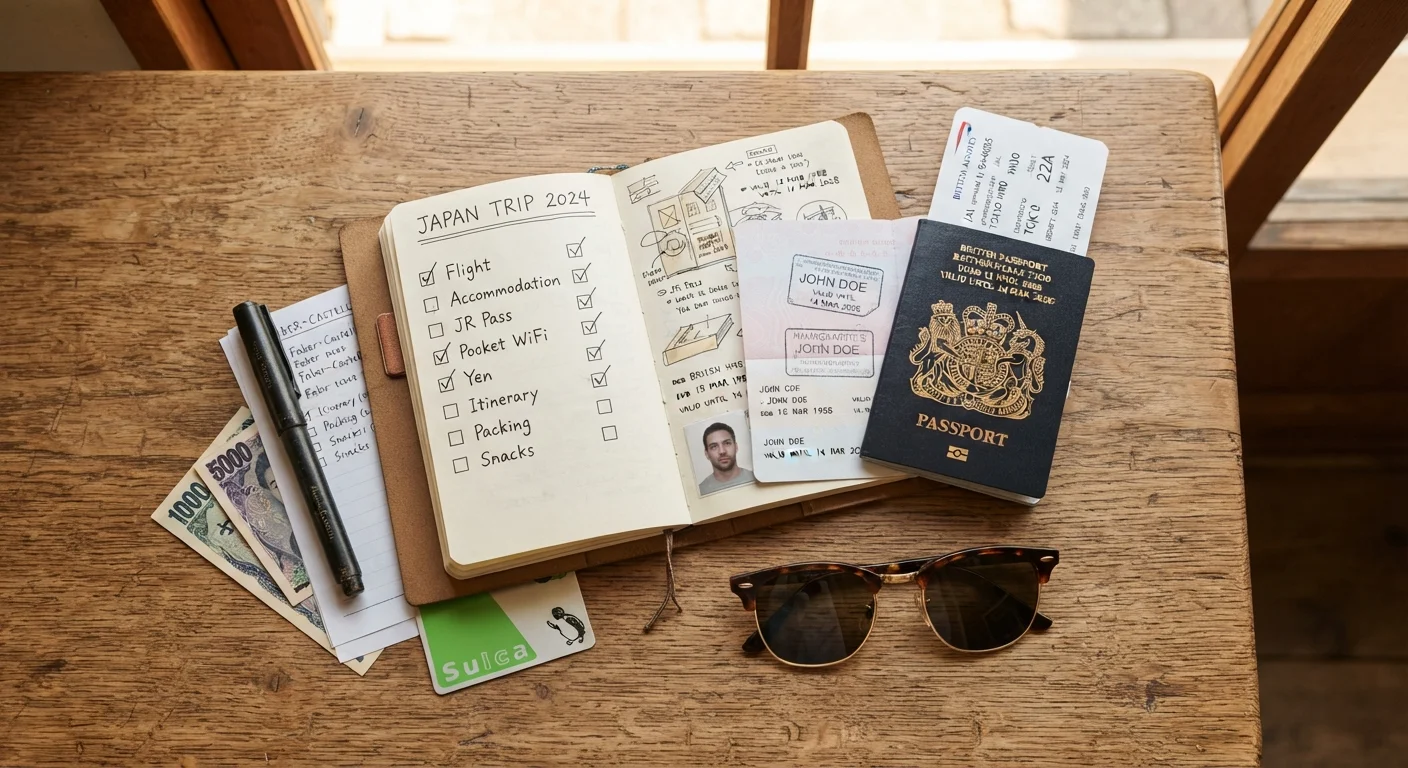
Work through this step-by-step checklist to make sure nothing slips through the cracks before your first big trip.
Key Takeaways
Starting your planning early gives you more flexibility and typically more options.
Budgeting before you book prevents the most common trip financial surprises.
Documents like passports can take weeks to obtain — check yours well in advance.
Packing strategically and verifying logistics reduces stress on travel day.
First-time travelers benefit most from working through a checklist in order.
Why a Checklist Matters Before You Book Anything
First-time travel has a funny way of feeling exciting until something slips — a passport that expired six months ago, a hotel that doesn't allow early check-in, a budget that didn't account for airport parking. None of these are disasters, but they're all avoidable with a little front-loaded organization.
This checklist walks you through the full pre-trip process: destination research, budgeting, documents, logistics, and packing prep. Work through it in order, check things off as you go, and you'll arrive at your departure gate feeling genuinely ready.
If you're planning a trip with children, keep in mind that family travel adds its own layer of complexity — see our guide on traveling with kids for what changes when little ones are in the mix. And if this is your first time heading overseas, our ground-up guide for first-time international travelers covers passports, customs, and currency in detail.
Destination & Timing
Choose a destination that fits your budget, interests, and available travel days — narrow it to one or two options before committing.Must
Research the best time of year to visit, considering weather, crowds, and local events that might affect availability.Must
Check current travel advisories for your destination through the U.S. Department of State's official website.Must
Look into any visa requirements or entry restrictions — verify these with the destination country's official embassy or consulate.Must
Budget & Finances
Estimate your total trip cost including flights, lodging, food, activities, transportation, and a buffer for unexpected expenses.Must
Notify your bank and credit card provider about your travel dates and destination to avoid cards being flagged or frozen.Must
Research whether your destination is largely cash-based or card-friendly, and plan your currency accordingly.Should
Avoid airport currency exchange kiosks, which typically offer poor rates — look into alternatives before you depart.Nice to have
Documents & Identity
Check that your passport is valid for at least six months beyond your return date — many countries require this.Must
Apply for or renew your passport as early as possible; standard processing can take several weeks.Must
Make digital and physical copies of your passport, driver's license, travel insurance, and booking confirmations.Should
Store copies separately from originals — email them to yourself or save securely in cloud storage.Should
Bookings & Logistics
Book flights and accommodation early, particularly for peak seasons — more lead time generally means more availability.Must
Confirm that your accommodation's location, check-in policies, and included amenities match your expectations.Must
Plan airport-to-hotel transportation in advance — rideshare availability, shuttle schedules, and costs vary significantly by city.Should
Look into travel insurance that covers trip cancellation, medical emergencies, and lost baggage — verify what your existing coverage already includes.Should
Health & Safety Prep
Consult your healthcare provider about any recommended vaccinations or health precautions for your destination well before departure.Must
Pack a small travel health kit with essentials like pain relievers, antidiarrheal medication, bandages, and any personal prescriptions.Should
Research the nearest hospital or clinic to your lodging — knowing this in advance reduces stress if something unexpected happens.Nice to have
Packing & Day-of Prep
Create a packing list at least a week out and gather items gradually rather than cramming everything in the night before.Must
Check airline baggage policies and size restrictions before you pack, especially for carry-on luggage.Must
Confirm your flight check-in window and arrange transportation to the airport with extra time built in.Must
Download offline maps, translation apps, or destination guides to your phone so you're not dependent on roaming data.Nice to have
Tools That Make Planning Easier
You don't need fancy software to plan a great trip. A few free or low-cost tools can handle the heavy lifting — from keeping your itinerary in one place to tracking your budget in real time.
Required
Google Docs or Notion
Create a living trip-planning document where you track bookings, itinerary details, and checklist progress in one accessible place.
Required
Spreadsheet (Google Sheets or Excel)
Build a simple trip budget tracker to log estimated versus actual costs across flights, lodging, food, and activities.
Required
U.S. Department of State Website (travel.state.gov)
Check official travel advisories, passport processing times, and visa requirements for any destination.
Optional
Offline Maps App (e.g., Maps.me or Google Maps offline)
Download destination maps to your phone so you can navigate without relying on cellular data abroad.
Optional
Cloud Storage (Google Drive or iCloud)
Store digital copies of your passport, travel insurance, and booking confirmations so they're accessible anywhere.
Budget surprises are another trip-planning pitfall. Hidden fees — resort charges, airport dining markups, currency exchange kiosks — can quietly drain your funds before you've even had fun. Read up on overlooked ways travelers blow their budget before arriving so you know exactly what to watch out for.
Don't Skip Travel Insurance Research
Many first-time travelers assume their credit card or health insurance covers trip disruptions — but coverage gaps are common, especially for international medical emergencies or trip cancellations. Review your existing policies carefully before your trip. A general-purpose travel insurance plan can fill significant gaps, but read the fine print on exclusions before you commit to any policy.
Once you've checked everything off, you're ready to actually enjoy the journey. Browse our Destinations & Guides hub for practical overviews — whether you're eyeing New York City or considering a first trip to Europe. You've done the prep work — now trust it.
Travel & Trips Editorial Team is the collective byline for our editorial team and contributor network. Articles published under this byline or an editorial pen name are researched, written, and reviewed according to our editorial standards for clarity, consistency, and independence before publication.
The content provided on our blog site traverses numerous categories, offering readers valuable and practical information. Readers can use the editorial team’s research and data to gain more insights into their topics of interest. However, they are requested not to treat the articles as conclusive. The website team cannot be held responsible for differences in data or inaccuracies found across other platforms. Please also note that the site might also miss out on various schemes and offers available that the readers may find more beneficial than the ones we cover.