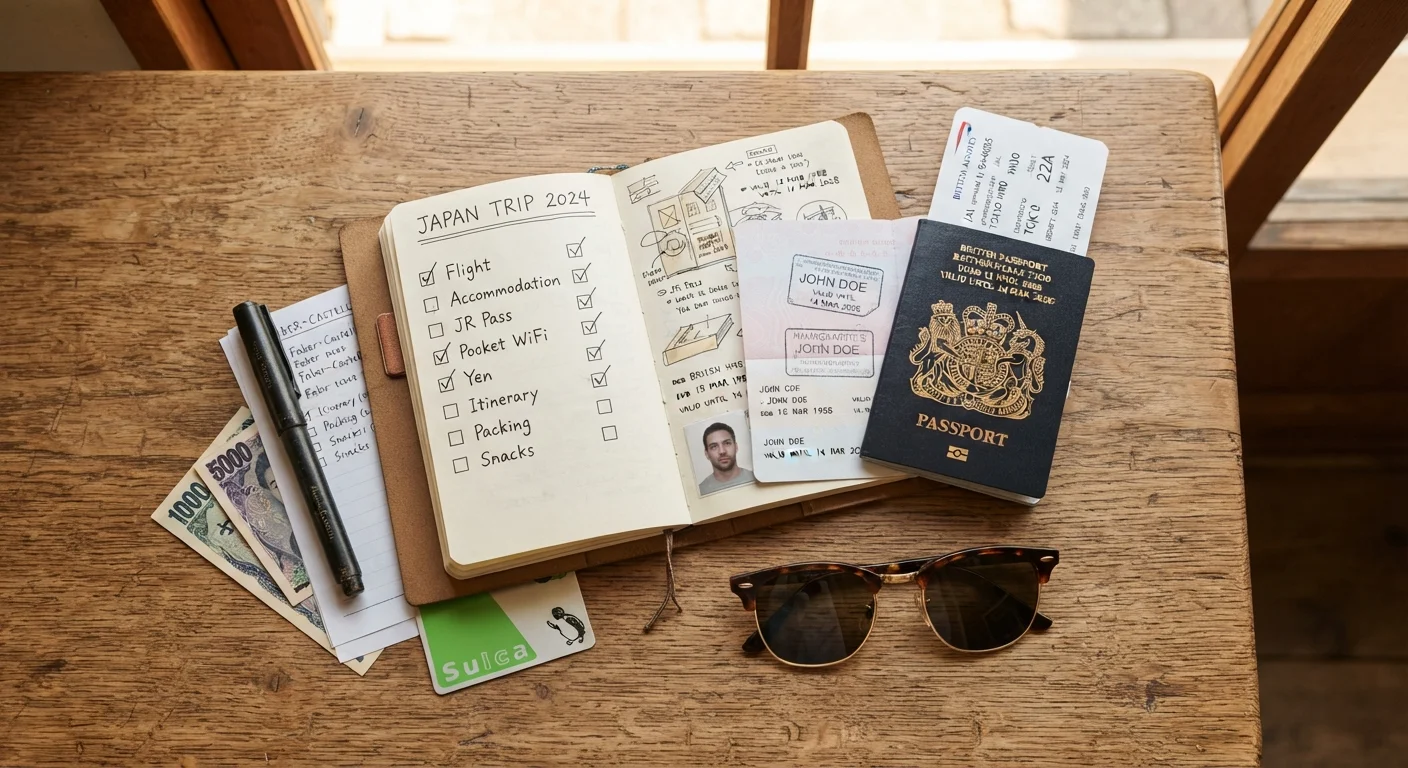

Getting Your Passport (and Making Sure It's Valid)
Your passport is the foundation of every international trip. If you don't have one yet, apply through the U.S. Department of State — you can do so at many post offices and government acceptance facilities. Standard processing takes several weeks, while expedited service is faster but costs more. Either way, don't wait until the last minute: apply at least six months before your departure date.
Already have a passport? Check the expiration date carefully. Many countries require your passport to remain valid for at least six months beyond your travel dates. A passport expiring in three months might technically get you on the plane but could create problems at your destination's border.
Apply Earlier Than You Think You Need To
Passport offices can experience significant backlogs during peak travel seasons. Applying at least six months before your trip gives you a cushion for delays and time to correct any errors in your application. If your trip is sooner, check whether expedited service is available at a regional passport agency.
For a thorough pre-trip checklist — including passport validity, medications, and home security — see the pre-trip checklist every traveler should run through.
Visas, Entry Requirements, and Travel Advisories
Many countries allow U.S. passport holders to enter visa-free for short stays (often up to 90 days), but this varies by destination. Some require a visa obtained in advance; others offer a visa on arrival. Always verify requirements directly through the U.S. Department of State's travel website and the destination country's official embassy or consulate — never rely solely on a third-party site.
While you're at it, check the State Department's travel advisories for your destination. These are tiered from Level 1 (exercise normal precautions) to Level 4 (do not travel) and cover safety, health, and local conditions.
Entry Requirements Can Change Quickly
Visa rules, health documentation, and entry restrictions can shift with little notice. Always verify requirements through official government sources — both the U.S. State Department and the destination country's embassy — within a few weeks of your departure date. Don't rely on information you researched months ago at booking.
Entry requirements can change with little notice due to political shifts, health conditions, or diplomatic changes. Verify requirements again within a few weeks of departure, not just at booking.
Also explore our trip-planning checklist for first-time travelers for a step-by-step pre-booking framework.
Money, Currency, and Cards Abroad
Figuring out money is one of the biggest stressors for first-time international travelers — but it doesn't need to be. Start by notifying your bank and credit card issuers before departure; otherwise, they may flag foreign charges as fraudulent and freeze your card at the worst moment.
Next, understand your options:
- Local ATMs typically offer competitive exchange rates. Look for ATMs affiliated with major banks rather than independent kiosks.
- Airport currency exchange counters are convenient but usually charge higher fees — use them sparingly, only for immediate needs.
- Credit cards with no foreign transaction fees are worth seeking out before your trip. For a broader look at understanding card terms and fees, our guide to navigating your first credit card explains what to look for.
Carry some local cash at all times — smaller towns, markets, and street vendors often don't accept cards.
Navigating Customs and Immigration
First-timers often find the customs and immigration process intimidating. Here's what to expect: after landing, you'll follow signs to immigration, where an officer verifies your identity and travel purpose. Have your passport, completed arrival card (usually distributed on the plane), and accommodation address ready.
After collecting your luggage, you'll pass through customs. Most countries require you to declare items above a certain value, food products, and large amounts of cash. When in doubt, declare it — the penalties for failing to declare can be significant, while declaring something often results in no issue at all.
Getting around once you clear customs is its own skill. Our guide on reading a foreign transportation system without the panic walks through metro maps, rail passes, and more.
Cultural Etiquette and Staying Respectful
Respectful travel starts before you land. Even a half-hour of research on local customs can prevent accidental offense and open doors to more genuine experiences. A few universals worth knowing:
- Dress codes matter. Many religious sites in Europe, Asia, and the Middle East require covered shoulders and knees. Carry a light scarf or layer.
- Tipping norms vary wildly. In the U.S., tipping 15–20% is standard. In Japan, tipping can be considered rude. Research the norm for your specific destination.
- Greetings differ. A handshake is standard in many Western countries, while a bow, nod, or specific greeting phrase is more appropriate elsewhere.
- Volume and personal space expectations differ across cultures — what reads as friendly in the U.S. can come across as intrusive elsewhere.
Your first international trip sets the tone for a lifetime of travel. Going in curious, prepared, and open-minded is the most reliable formula for a smooth, memorable experience. For destination-specific preparation, our guide to visiting Japan for the first time shows what deep-dive destination research looks like in practice.