Why Packing Mistakes Keep Happening to Smart Travelers
Most packing errors aren't caused by carelessness — they're caused by assumptions. Travelers assume the hotel stocks what they need, assume their bag will fit in the overhead bin, or assume they packed that one thing they definitely did not pack. These mental shortcuts feel reasonable in the moment but consistently create friction at exactly the wrong time: when you're already exhausted and far from home.
The good news is that the same mistakes surface trip after trip, which means they're entirely predictable — and preventable. Understanding why these patterns happen is the first step to breaking them for good. For broader trip preparation beyond just what goes in your bag, see our trip-planning checklist for first-time travelers.
Assuming the hotel will have everything you need.
Why it happens: Marketing photos of luxurious hotel bathrooms create an impression of abundance. Travelers extrapolate from one experience at a full-service property to every accommodation on every trip.
Packing for hypothetical scenarios instead of the actual itinerary.
Why it happens: Anxiety about the unknown pushes travelers toward over-preparation. The "what if it gets cold" or "what if there's a formal dinner" mindset adds items for situations that almost never materialize.
Forgetting destination-specific essentials like medications, adapters, or climate-appropriate gear.
Why it happens: Travelers focus heavily on clothes and electronics while overlooking the less exciting but critical items. International destinations also require power adapters and sometimes specific health preparations that aren't part of domestic routines.
Ignoring baggage weight and size limits until check-in.
Why it happens: Travelers often pack with a vague sense that their bag will probably be fine, or they underestimate how quickly weight accumulates across souvenirs, toiletries, and shoes.
Leaving packing until the night before departure.
Why it happens: Packing feels like a low-urgency task right up until it suddenly isn't. Life fills the days before a trip, and packing gets perpetually delayed.
Building Better Packing Habits Before Your Next Trip
The travelers who pack well aren't necessarily more experienced — they've just built a reliable system. A written packing list created at least two days before departure is the single highest-leverage habit you can develop. It gives your brain time to surface forgotten items organically rather than forcing a mental sprint at 11 p.m. the night before a 6 a.m. flight.
~50%
Travelers who report overpacking regularly
Travel industry surveys consistently find that roughly half of travelers say they bring more than they actually use on a typical trip.
$75–$200
Typical airline overweight baggage fee range
Many U.S. and international carriers charge significant fees for bags exceeding weight limits, often applied per bag, per direction.
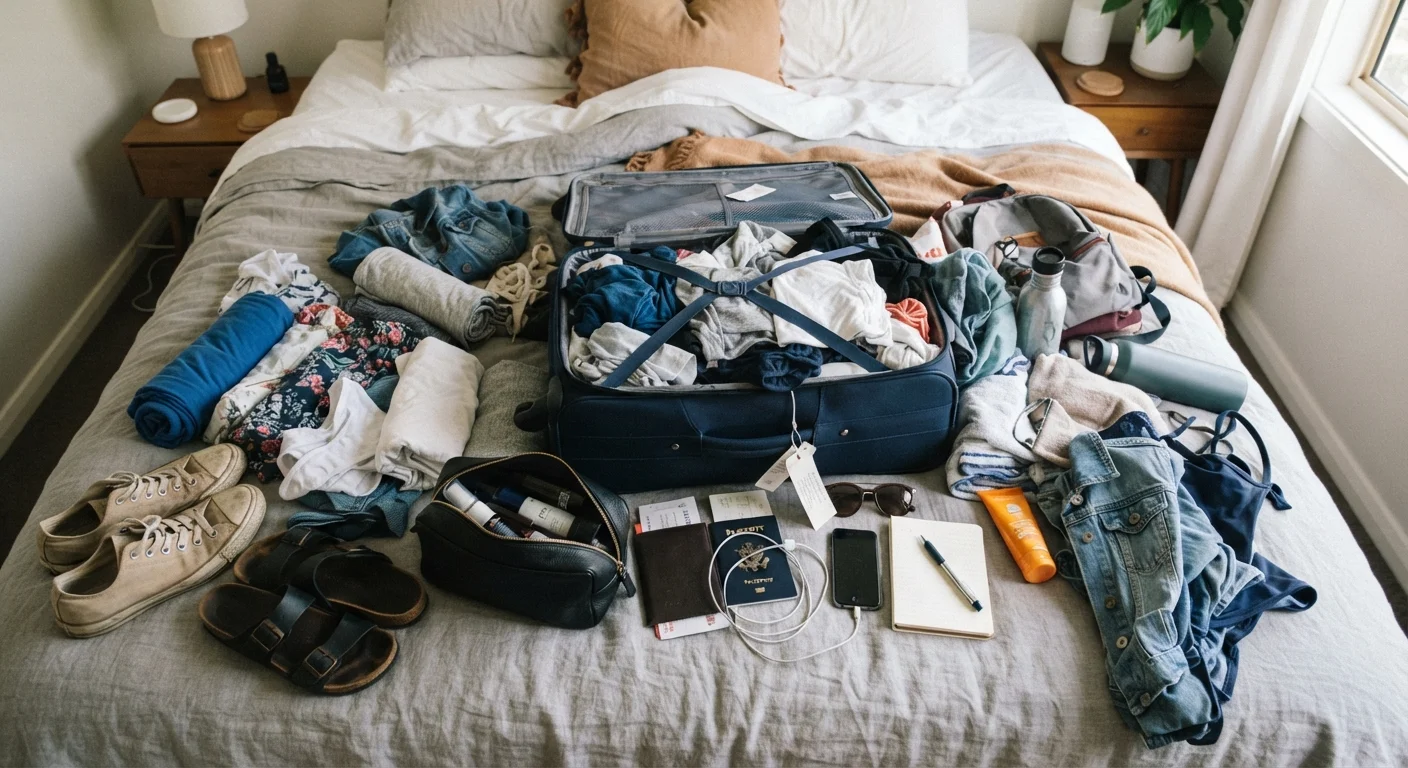
Lay everything out on the bed before it goes into the bag. This physical step makes weight and volume visible in a way that mentally cataloguing items never does. If something doesn't connect to a specific planned activity, ask honestly whether it needs to come. Most "just in case" items are available locally or simply go unused.
Finally, packing mistakes often travel in pairs with budget mistakes — an emergency toiletry run at a resort, checked-bag fees on a budget airline, or a replacement adapter at an airport shop can quietly drain funds. Our guide to pre-trip budget traps covers those spending patterns in detail. And before you zip up that carry-on, it's worth reviewing what travelers most often get wrong at security — a few small packing decisions can save significant time at the checkpoint.
Medications Belong in Your Carry-On — Always
Checked luggage can be delayed, misdirected, or temporarily lost — sometimes for several days. Prescription medications packed in a checked bag may be inaccessible during that window. Always carry medications in your personal item or carry-on, in their original labeled containers. If you're traveling internationally, verify whether your medications are permitted in your destination country before you leave, as regulations vary significantly.