
The Central Valley: Your Gateway to Everything
Almost every American traveler lands in San José, which sits in the Central Valley at roughly 3,800 feet above sea level. That elevation gives the region a famously comfortable climate — warm days, cool nights, rarely oppressively hot. This is Costa Rica's cultural and economic heartbeat, home to museums, markets, and some of the country's best coffee-growing country just outside the city.
Don't dismiss the Central Valley as just a layover zone. Nearby towns like Cartago and Sarchí offer craft traditions and colonial history, while the cloud forests of the Poás and Irazú volcanoes are day-trip distance. That said, most beach- or wildlife-focused travelers move on within one or two days.
San José as a Base vs. a Destination
Most travelers use San José purely as a transit point and spend little time there. While the city does have worthwhile museums and food scenes, it lacks the natural scenery that draws most visitors to Costa Rica. If your flight arrives late, spending one night in the Central Valley before heading to your main region is often the most practical approach — and gives you time to adjust before hitting the road.
Guanacaste and the Nicoya Peninsula: Sunshine and Surf
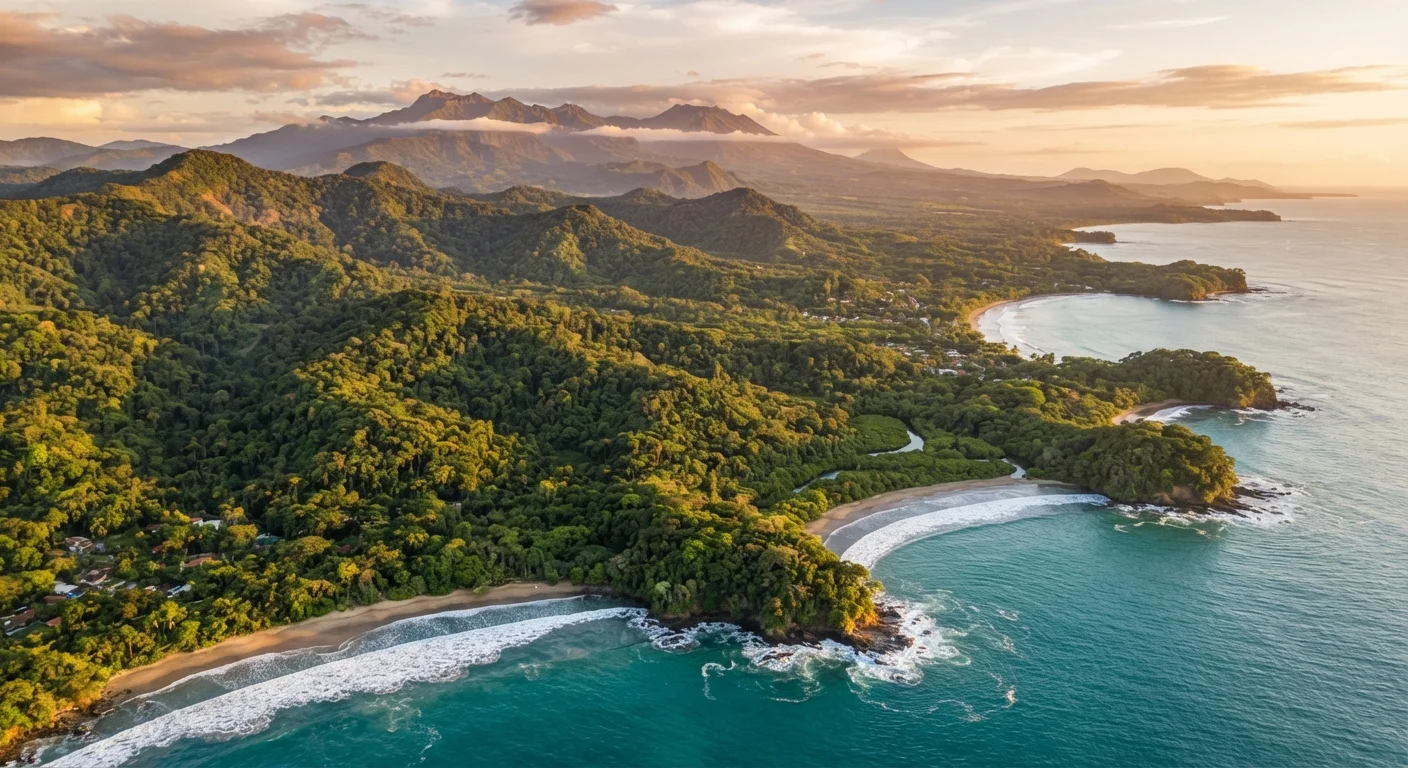
If you picture golden-sand beaches, crystalline water, and a cold drink in your hand, you're probably imagining Guanacaste. This is Costa Rica's driest province, stretching along the North Pacific coast, and it draws travelers seeking reliable sun from December through April. Towns like Tamarindo, Nosara, and Santa Teresa on the Nicoya Peninsula have become well-established destinations with surf schools, yoga retreats, and a laid-back international crowd.
The Nicoya Peninsula itself deserves special mention — it's one of the world's designated Blue Zones, areas associated with unusually long, healthy lifespans among local residents. Surfing culture runs deep here, and the coastline alternates between busy beach towns and stretches that feel genuinely off-the-beaten-path.
25%
Share of Costa Rica protected as national parks or reserves
Costa Rica's national park system covers roughly a quarter of the country's total land area, one of the highest proportions of any nation in the world.
500,000+
Species estimated to live in Costa Rica
Despite covering just 0.03% of Earth's surface, Costa Rica is estimated to host nearly 5% of the world's total biodiversity, according to conservation researchers.
~1 hour
Domestic flight time from San José to the Osa Peninsula
Small domestic airlines connect San José's Tobías Bolaños International Airport to Drake Bay and Puerto Jiménez, making the remote Southern Zone genuinely reachable.
The Arenal and Northern Lowlands: Volcanoes and Adventure
Arenal Volcano is arguably Costa Rica's most iconic image — a near-perfect cone rising above a lake, with hot springs, zip lines, and hanging bridges nearby. The Arenal region anchors what locals call the Northern Zone, a broad area that also includes the Monteverde Cloud Forest and the wetland-rich Sarapiquí lowlands.
Monteverde sits at around 4,600 feet and stays misty and cool — dramatically different from the Pacific beaches just a few hours away. Wildlife here includes resplendent quetzals and hundreds of bird species. Adventure travelers tend to love this entire region for its concentration of activities: white-water rafting, canopy tours, horseback riding, and wildlife night walks.
The Southern Zone and Osa Peninsula: Wild and Remote
The Osa Peninsula is where Costa Rica gets serious about biodiversity. National Geographic has described the area around Corcovado National Park as one of the most biologically intense places on the planet — and the experience on the ground backs that up. Scarlet macaws, tapirs, jaguars, and multiple species of monkeys share this rainforest. Reaching it requires a domestic flight or a long drive, which naturally keeps crowds manageable.
The broader Southern Zone, including the town of Dominical and the Chirripó highlands (home to Costa Rica's highest peak at nearly 12,500 feet), appeals to hikers, birders, and travelers who want space to breathe. This is not a region for resort-style vacations — it's for people who want to feel genuinely immersed in wilderness.
The Caribbean Coast: A Different Costa Rica Entirely
Cross the mountains from San José heading east and you enter a completely different country — culturally, climatically, and ecologically. The Caribbean Coast, centered around the town of Puerto Viejo de Talamanca in the south and the canals of Tortuguero in the north, has an Afro-Caribbean heritage that shapes everything from the food (think rice and beans cooked in coconut milk, fresh seafood) to the music and the pace of life.
Tortuguero is one of the most important sea turtle nesting sites in the Western Hemisphere — accessible only by boat or small plane, making it a genuine adventure. Puerto Viejo draws a younger, backpacker-friendly crowd alongside families who appreciate its easygoing beach vibe and relative affordability compared to the Pacific side.
Match Your Season to Your Region
Before booking, look up the specific dry and wet season dates for your target region — not just 'Costa Rica' broadly. The Pacific dry season (roughly December–April) and the Caribbean's calmer months (roughly February–October, with local variation) don't align. Choosing the wrong region for your travel dates is the most common and easily avoidable trip-planning mistake.