
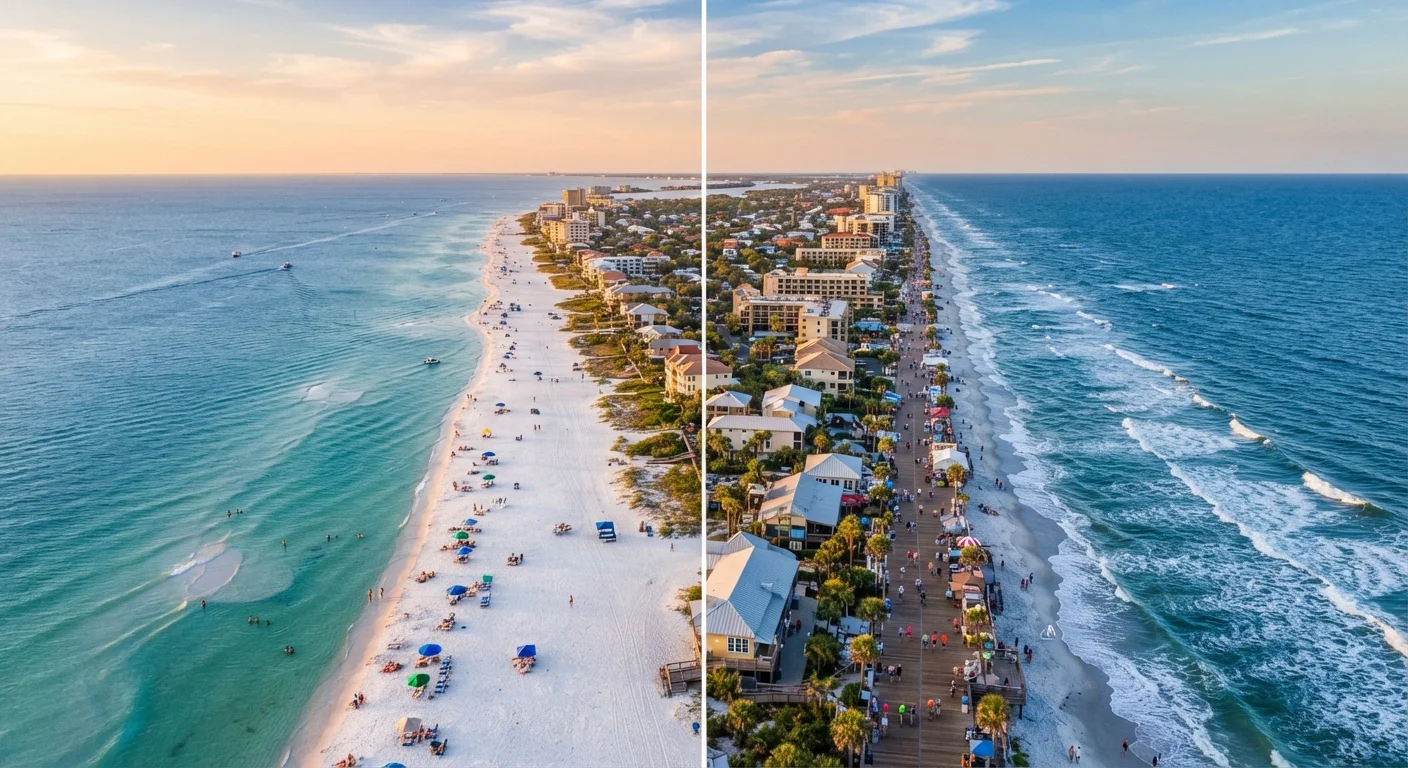
Water, Waves, and Beach Character
The single biggest difference between Florida's two coasts comes down to the water itself. The Gulf of Mexico on the west side is essentially a semi-enclosed sea, which means waves are minimal and water clarity is exceptional. On a calm day, you can see your feet in waist-deep water. The sand on beaches like Siesta Key near Sarasota is famously fine and white — almost powdery — because it's composed of ground quartz rather than crushed shell or coral.
The Atlantic side plays by different rules. Open-ocean swells reach Florida's eastern shoreline with enough energy to create real surf breaks, particularly around spots like Cocoa Beach and Sebastian Inlet. The sand here tends to be coarser and darker, and the water, while still beautiful, carries more chop and color variation. Both coastlines are genuinely stunning — they simply deliver different sensory experiences from the moment you step onto the beach.
| Criterion | Gulf Coast | Atlantic Coast |
|---|---|---|
| Wave intensity | Calm, minimal waves | Moderate to strong surf |
| Water clarity | Very clear, turquoise | Clear, blue-green |
| Sand texture | Fine, powdery white quartz | Coarser, tan to golden |
| Water temperature | Warmer, especially off-season | Slightly cooler in spring/fall |
| Ocean view at sunset | Sunset over the water | Sunrise over the water |
| Urban energy | Relaxed, spread-out towns | Dense city beach scenes |
| Best for families | Excellent — gentle conditions | Good, with more supervision needed |
| Best for surfers | Limited surf options | Strong surf culture |
Towns, Atmosphere, and What to Do
The Atlantic Coast is home to Florida's largest and most internationally recognized beach cities. Miami's South Beach blends art deco architecture with a cosmopolitan energy that's unlike anywhere else in the U.S. Fort Lauderdale offers a slightly calmer but still lively vibe with an extensive canal system. Daytona Beach draws motorsports fans and spring breakers alike. If you want density — restaurants, clubs, cultural museums, and constant activity — the Atlantic side delivers.
Gulf Coast towns tend to be more spread out and laid-back. Naples is known for upscale dining and calm Gulf-view sunsets. St. Pete Beach sits just across the bay from St. Petersburg's thriving arts district. Clearwater Beach consistently earns recognition for its clean, accessible shoreline. Fort Myers Beach and Sanibel Island attract shell collectors from across the country. These aren't sleepy destinations — they have great food and plenty to see — but the pace is genuinely slower.
Driving Between the Two Coasts
Florida is roughly 150 miles wide at its broadest point, meaning you can drive from the Gulf Coast to the Atlantic Coast in about two to three hours depending on your starting point. Many travelers base themselves centrally — near Orlando, for example — and do day trips to both coasts. This makes a Gulf-to-Atlantic comparison trip very practical without requiring two separate accommodations.
Sunsets, Sunrises, and Timing Your Visit
Here's one practical detail many first-time Florida visitors overlook: the coasts face opposite directions. Gulf beaches face west, meaning sunsets happen directly over the water — a phenomenon that draws crowds to the shoreline every evening in places like Clearwater and Naples. Atlantic beaches face east, so sunrises are the ocean-view show. If you're an early riser who wants to photograph the sun rising out of the sea, the Atlantic side is your spot. Evening sunset views on the Atlantic side are over land, not water.
Seasonally, both coasts follow similar patterns — summer is hot and rainy (hurricane season runs June through November), while winter and spring bring drier, cooler, and generally more pleasant conditions. Spring and fall shoulder seasons are worth considering: the Gulf's water stays warmer longer into autumn, while the Atlantic side can feel cooler earlier in the season. Always check current travel advisories and weather forecasts before you book, as conditions vary year to year.
825 miles
Total Gulf Coast shoreline in Florida
According to the Florida Department of Environmental Protection, Florida has approximately 825 miles of Gulf Coast shoreline open to the public.
580 miles
Florida Atlantic Coast shoreline length
Florida's Atlantic-facing coast stretches roughly 580 miles from the Georgia border down to Miami, offering an extensive range of beach environments.
~84°F
Average Gulf water temp in summer
Gulf of Mexico surface water temperatures along Florida's west coast commonly reach the low-to-mid 80s (°F) during summer months, warmer than most Atlantic readings.