The Lodging Landscape at a Glance
Choosing where to sleep is one of the first — and most consequential — decisions in any trip plan. The right lodging sets the tone for your budget, comfort level, and daily routine on the road. Get it wrong and you're either overspending or waking up wishing you'd read the fine print. This reference guide breaks down every major accommodation type so you can match your situation to the right fit, fast.
For help thinking through destination type before locking in lodging, see how different destinations align with different travel styles.
Hotels, Motels, and Extended-Stay Properties
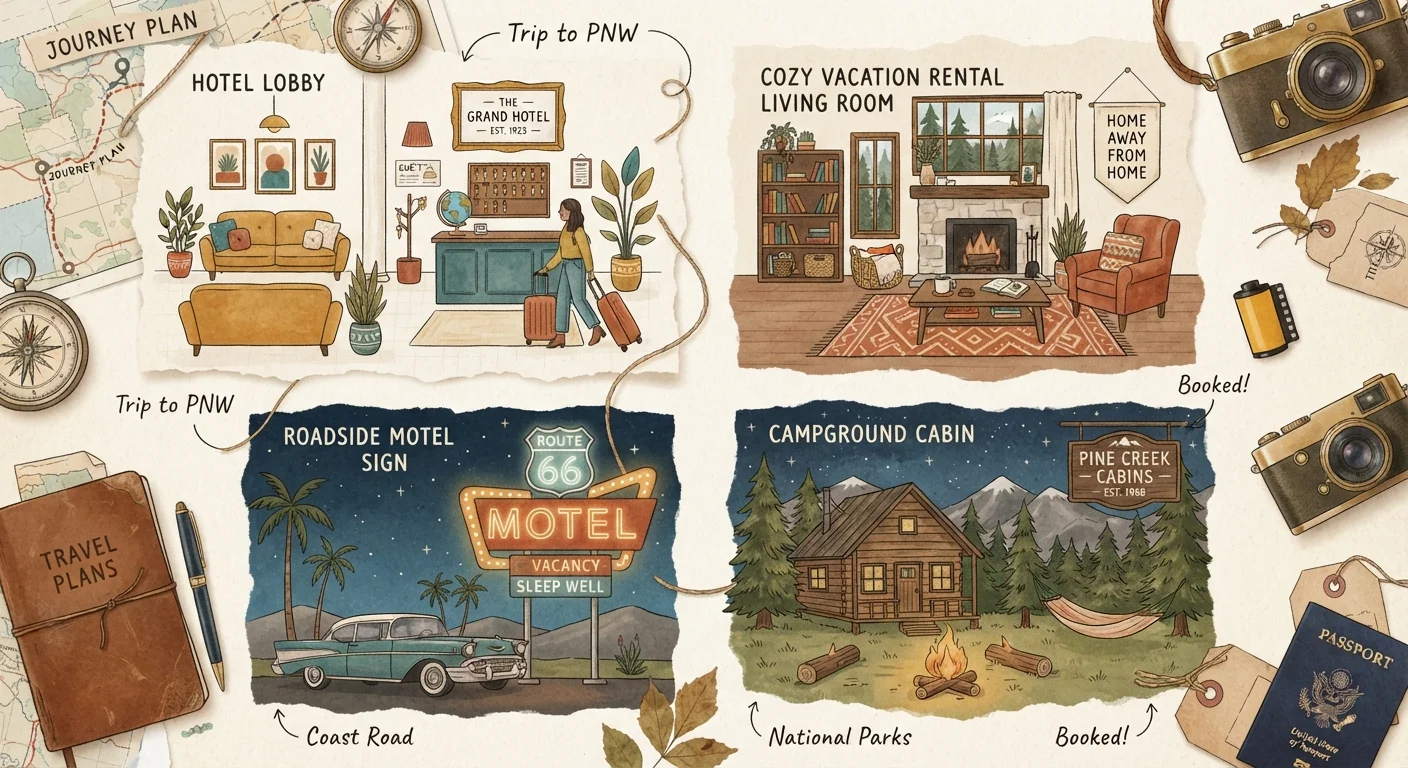
Hotels are the most familiar option: staffed front desks, consistent amenities (pool, gym, daily housekeeping), and pricing that scales with star rating and location. They work best for business travel, short city stays, or any trip where predictability matters more than space or budget.
Motels are hotels stripped to the essentials — exterior room access, parking right outside your door, and lower nightly rates. They're a practical pick for road trips where you need a clean, no-fuss place to sleep between drives. For a deeper look at road-trip logistics, check out the anatomy of a well-planned American road trip.
Extended-stay hotels target stays of a week or longer. They typically include in-room kitchenettes, laundry access, and weekly rate discounts — making them sensible for relocations, work assignments, or slow travel.
Extended-stay hotel
A hotel designed for multi-week stays, featuring in-room kitchenettes, laundry facilities, and discounted weekly rates. Common for relocations and longer work assignments.
Vacation rental
A privately owned property (home, condo, cabin) rented to travelers, usually for a full-home experience. Quality and policies vary by individual host.
Glamping
Glamorous camping — outdoor accommodations with added comforts such as real beds, electricity, and sometimes climate control, inside furnished tents, yurts, or cabins.
Boutique hotel
A smaller, independently operated hotel with distinct character, often themed around local culture or design. Typically offers more personalized service than chain properties.
Bed and breakfast (B&B)
A small lodging property, often owner-operated, where a morning meal is included in the room rate. Usually found in historic homes or rural settings.
Hostel
Budget accommodation offering shared dormitory-style rooms, common areas, and shared bathrooms. Private rooms are often available at a higher rate.
Vacation Rentals, Hostels, and Specialty Stays
Vacation rentals — privately owned homes, condos, or cabins listed through various platforms — give travelers full-home access: kitchen, multiple bedrooms, living space, and often outdoor areas. The trade-off is variability; quality depends on individual hosts, and cancellation policies differ significantly by listing. They shine for families, groups, and longer trips where cooking your own meals saves meaningful money.
Hostels offer dormitory-style shared rooms at the lowest price point in the lodging spectrum. Private rooms are available in many hostels for a premium but still below typical hotel rates. They suit solo travelers and backpackers who prioritize community and cost over privacy.
Boutique hotels and inns occupy the middle ground between chain hotels and vacation rentals — individually curated, often themed around local character, and typically limited in room count. Bed-and-breakfasts (B&Bs) fall here too, with the added perk of an included morning meal.
All-inclusive resorts bundle lodging, meals, drinks, and entertainment into one upfront price. They remove daily spending decisions but limit flexibility. For a balanced breakdown, see the honest pros and cons of all-inclusive resort travel.
Camping and glamping round out the spectrum. Traditional tent camping and RV sites offer minimal amenities at low cost. Glamping — glamorous camping — adds creature comforts like furnished tents, yurts, or cabins, bridging the gap between outdoors and comfort.
Matching Lodging Type to Your Trip
No single lodging type wins every scenario. Here's a quick decision framework:
- Solo business trip (2–3 nights): Hotel near your destination — predictable check-in, business amenities, easy expensing.
- Family vacation (7+ nights): Vacation rental — kitchen access, shared living space, and per-night cost spread across more people.
- Cross-country road trip: Motels and extended-stay properties along the route — affordable, parking-friendly, and easy to book night by night.
- Budget solo travel: Hostel — lowest nightly rate, built-in social opportunities.
- Romantic weekend getaway: Boutique hotel or B&B — atmosphere and personal service that chains can't replicate.
- Nature-focused retreat: Camping or glamping — immersive environment, often inside or adjacent to parks and wilderness areas.
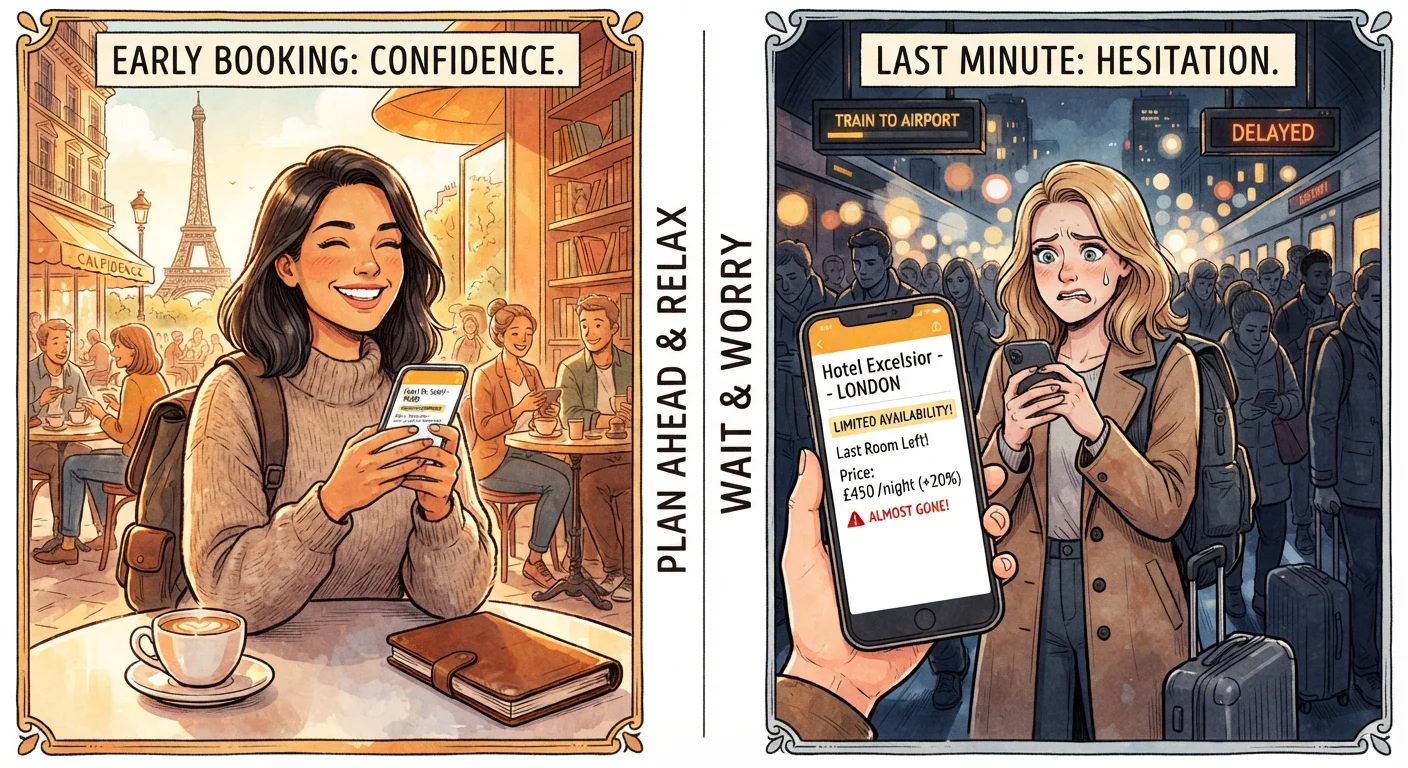
Once you've identified your lodging type, timing your booking is the next decision. Learn the real trade-offs in booking accommodations early vs. waiting. For broader travel strategies, explore the Travel Tips & Hacks hub.