
Why a Pre-Exercise Checklist Matters
Starting a new exercise program is one of the most positive steps you can take for your long-term health. But jumping in without a little preparation is also one of the most common reasons beginners get hurt, burn out, or quit within weeks. According to exercise physiology research, the majority of beginner exercise injuries are preventable - and most result from starting too hard, too fast, without assessing individual readiness.
This checklist is designed to close that gap. It gives you a clear, structured way to check your health status, set realistic expectations, prepare your equipment, and know what warning signs to watch for. Think of it as a pre-flight check before takeoff - not a barrier to getting started, but a way to make sure your launch goes smoothly.
If you're ready to go deeper after completing this checklist, the beginner fitness roadmap covers how to structure your first weeks of training step by step.
This checklist is not medical advice
The information here is general educational guidance for healthy adults considering a new exercise routine. It is not a substitute for personalized advice from a qualified healthcare professional. Always consult your doctor or a licensed physical therapist before starting exercise if you have any medical conditions, symptoms, or concerns.
How to Use This Checklist
Work through each group in order - medical clearance first, then goals, equipment, and finally safety awareness. You don't need to complete every optional item before you begin, but every must item should be addressed before your first session. Items marked should are strongly recommended and will meaningfully improve your experience and safety. Nice-to-have items add structure and accountability over time.
Set aside 20 to 45 minutes to go through this carefully - it's a one-time investment that pays off across every workout that follows. Use the tools below to support your preparation:
PAR-Q Self-Screening Form
A standardized questionnaire used to identify physical conditions that may require medical clearance before beginning exercise.
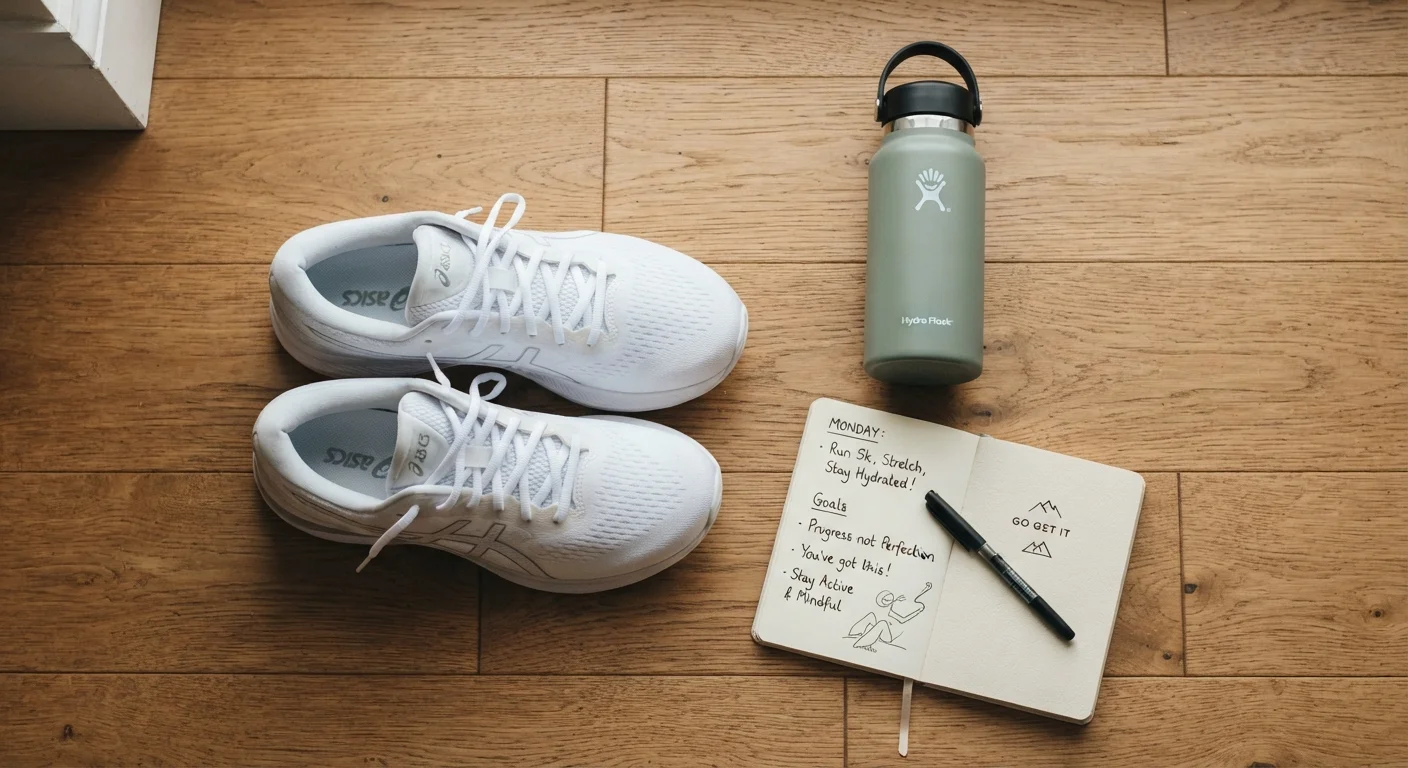
Properly Fitted Athletic Footwear
Activity-appropriate shoes reduce impact stress and lower the risk of ankle, knee, and foot injuries for beginners.
Water Bottle (16-24 oz minimum)
Staying hydrated supports performance and safety during physical activity, particularly in warm or humid conditions.
Workout Journal or Tracking App
Logging sessions helps you notice patterns, track progress, and identify early signs of overtraining or injury.
Heart Rate Monitor or Fitness Watch
Helps beginners gauge exercise intensity and avoid working at an unsustainably high effort level from the start.
Once you've completed the checklist, be aware that even well-prepared beginners hit obstacles in the first few weeks. If you want to understand why early routines often stall - and how to avoid those patterns - see why new workout routines fall apart.
The Full Safety Checklist
Work through all four groups below. Tick off each item as you address it, and note any action steps needed (for example, a doctor's appointment or a trip to get proper footwear).
Medical & Health Clearance
Goal & Program Assessment
Equipment & Environment
Awareness & Safety Signals
Stop and seek care for these symptoms
If you experience chest pain, pressure, or tightness; severe shortness of breath; sudden dizziness or fainting; or irregular heartbeat during exercise, stop immediately and seek emergency medical attention. These symptoms are never normal during physical activity, regardless of fitness level. Do not attempt to "push through" them.
Skipping medical clearance carries real risk
Many people with undiagnosed conditions - including high blood pressure, prediabetes, or heart irregularities - feel perfectly fine at rest. Vigorous activity can stress systems that weren't previously challenged. If you have any doubt about your health status, a brief conversation with your provider is time well spent.
After completing this checklist and beginning your program, it's worth knowing what physical changes to expect. The first month of exercise guide provides a realistic, week-by-week look at how your body adapts to new movement - including why soreness and fatigue in the early weeks are normal.
This article is for general informational and educational purposes only and does not constitute medical advice. Consult a qualified healthcare professional before beginning any new exercise program, particularly if you have existing health conditions, take medications, or have been inactive for an extended period.