Why Visual Portioning Works Better Than Calorie Counting for Most People
Calorie counting can be a useful tool for some people in specific clinical contexts - but for everyday balanced eating, it has significant drawbacks. It requires accurate measurement of every ingredient, knowledge of calorie values, and consistent logging. Research consistently shows that people - including trained dietitians - underestimate portion sizes when eyeballing food, making precise tracking difficult even with apps. More critically, obsessive tracking can shift focus from hunger and enjoyment to numbers, which can undermine a healthy relationship with food over time.
The plate method, developed and promoted by nutrition organizations as a practical alternative, sidesteps these issues by using visual cues you already have: your plate and your hand. It encodes the key ratio insight from nutritional science - that most meals benefit from more vegetables, moderate protein, and controlled starch - without requiring arithmetic. For a deeper look at how well-studied eating patterns apply these principles, see our comparison of Mediterranean, DASH, and whole-food diets.
This Is Education, Not Medical Advice
The guidance here is general nutrition education based on widely accepted dietary principles. It is not a substitute for personalized advice from a registered dietitian or your healthcare provider. If you have a medical condition, food allergy, or specific health goal, consult a qualified professional before changing your eating pattern.
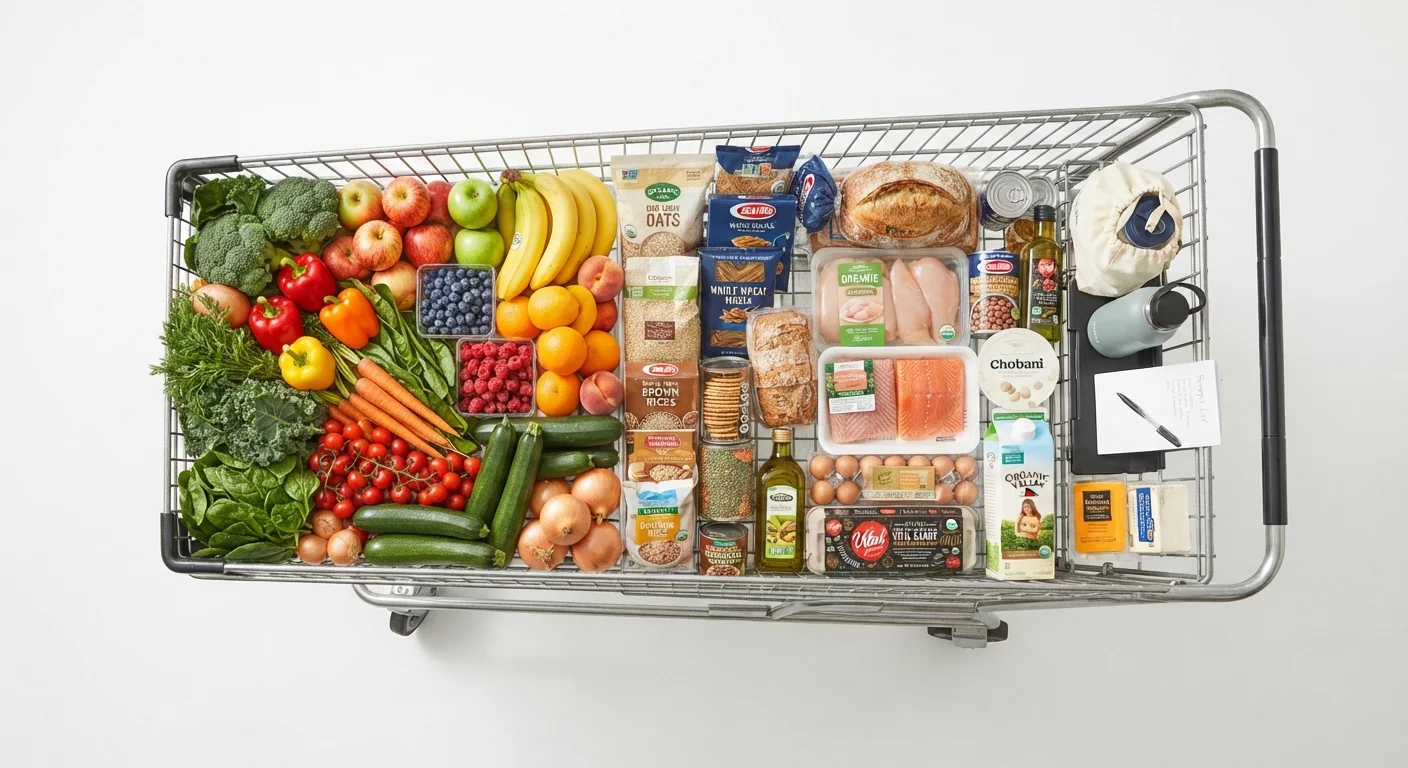
Understanding what's actually in your food is a useful companion skill. Our guide on reading an ingredient list explains how packaging language works so you can make more informed choices at the store without getting lost in fine print.
What You'll Need Before You Start
What you will need
9-10 Inch Dinner Plate
Serves as your primary portioning guide - the plate itself defines boundaries without measuring cups.
Your Own Hand
Used as a built-in measuring tool - palm, fist, thumb, and cupped hand approximate common serving sizes.
Meal Planning Notepad or App
Helps you loosely plan meals for the week so balanced choices are easier to execute at mealtime.
How to Build Your Balanced Plate
Fill Half Your Plate With Non-Starchy Vegetables
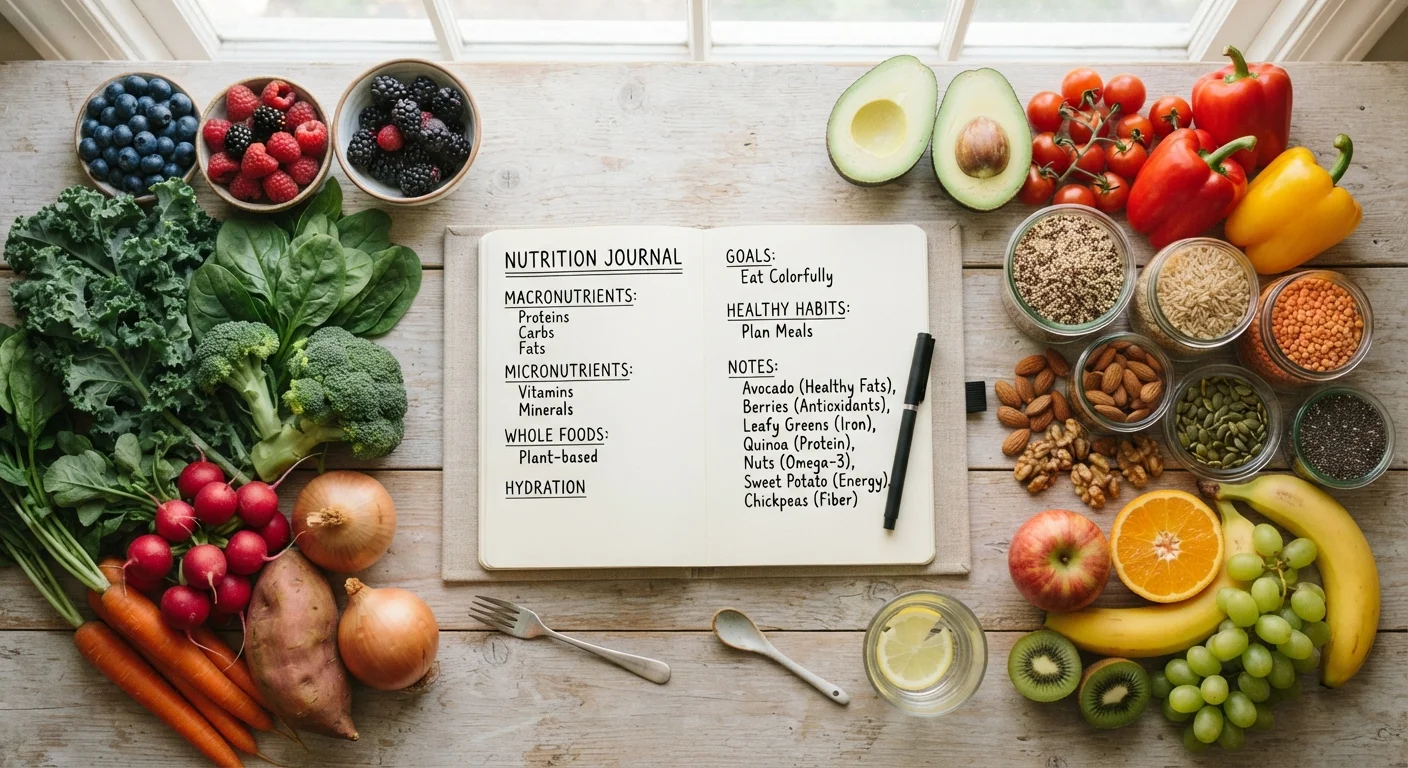
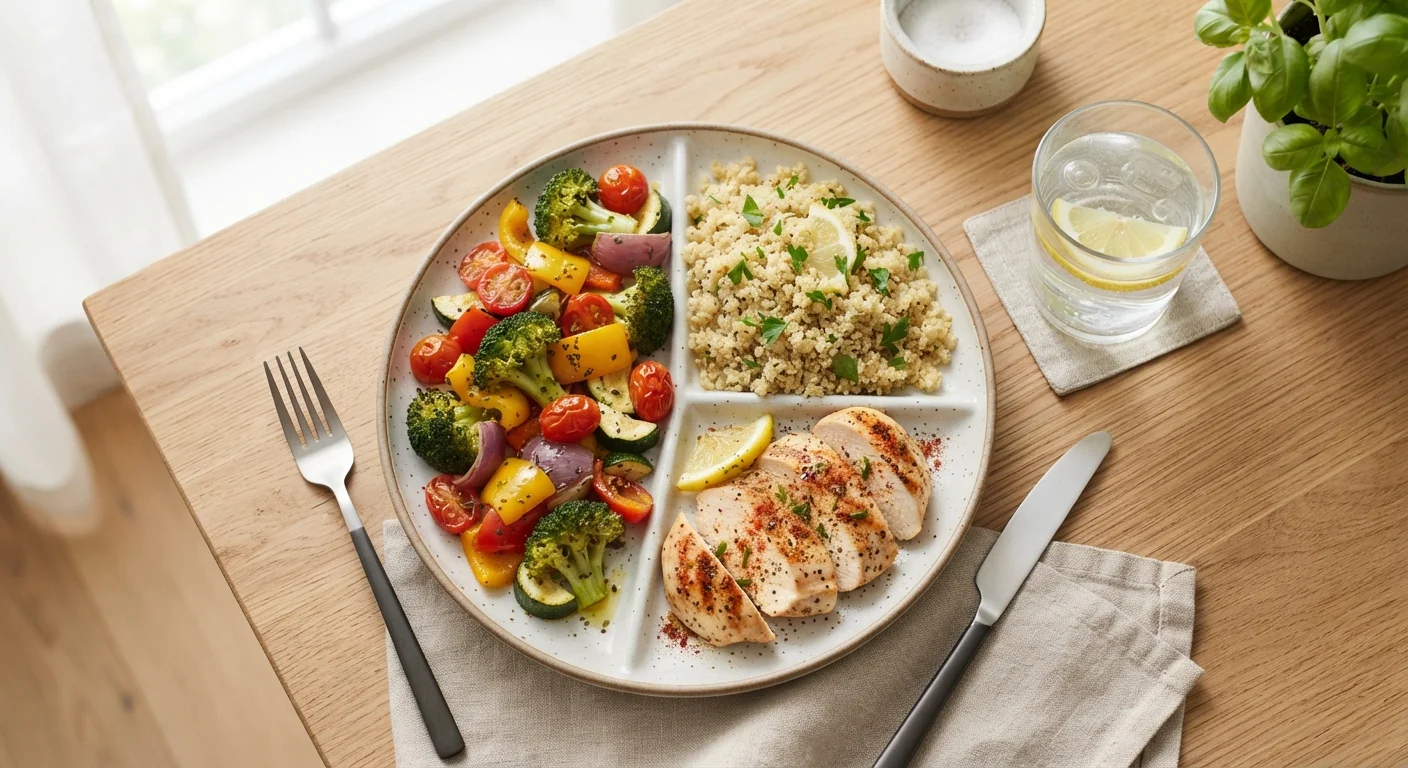
Before anything else lands on your plate, dedicate the entire left half to non-starchy vegetables - think leafy greens, broccoli, bell peppers, zucchini, tomatoes, cucumbers, or carrots. These foods deliver fiber, vitamins, minerals, and water content with relatively few calories per bite, making them the foundation of a balanced meal.
Frozen vegetables count just as much as fresh. Roasted, steamed, raw, or sautéed in a small amount of olive oil all work well. Variety across the week matters more than perfection at a single meal.
Add a Palm-Sized Portion of Protein
On the upper right quarter of your plate, place a protein source roughly the size and thickness of your palm. That's approximately 3-4 ounces for most adults, though individual needs vary. Good sources include chicken, fish, eggs, tofu, tempeh, legumes (beans and lentils), or low-fat dairy like cottage cheese.
Protein is essential for muscle maintenance, satiety, and dozens of metabolic processes. Choosing a variety of sources across the week - including plant-based options - also adds nutritional diversity.
Reserve the Remaining Quarter for Whole Grains or Starchy Vegetables
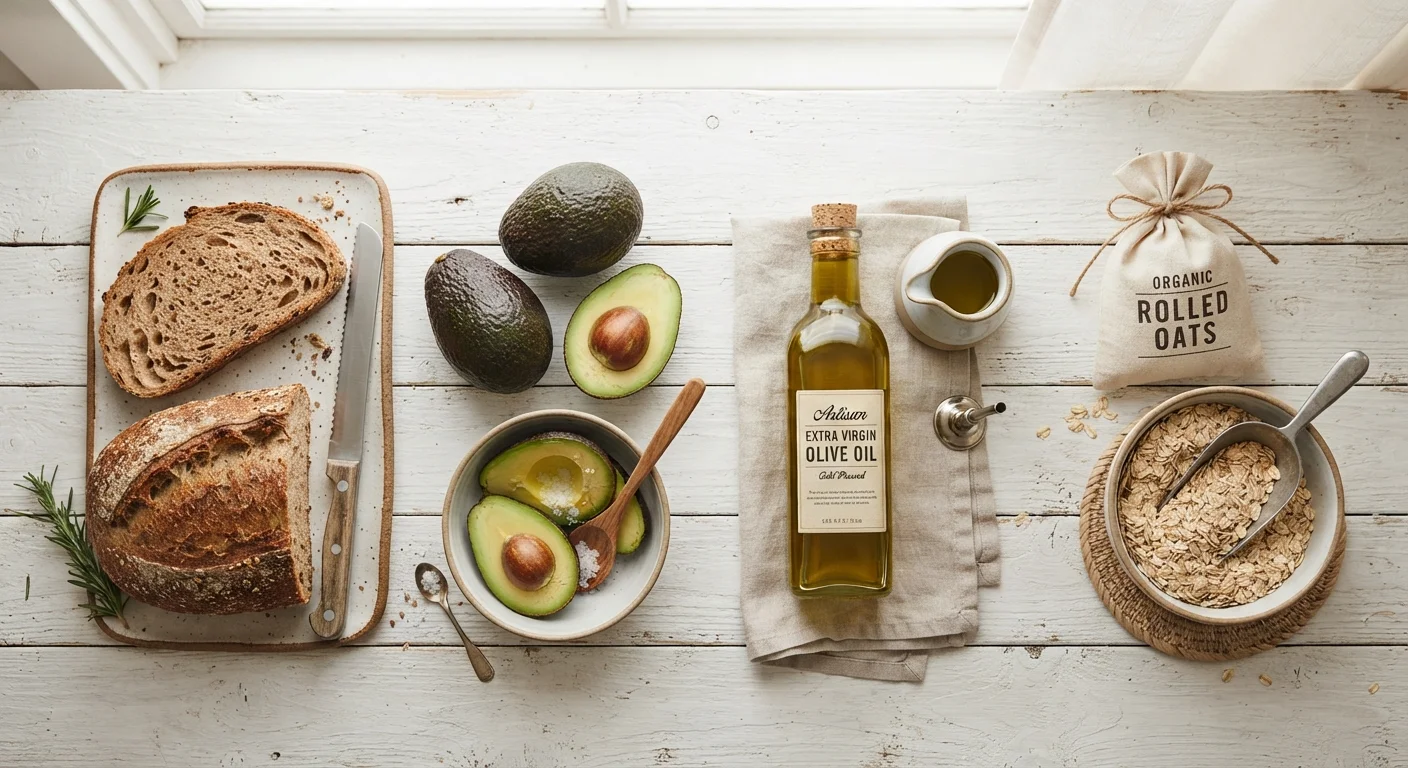
The lower right quarter of your plate is for energy-dense carbohydrates. Prioritize whole grains - brown rice, quinoa, whole-wheat pasta, oats, farro - or starchy vegetables like sweet potato, corn, or winter squash. These provide fiber and sustained energy compared to refined grain alternatives.
A cupped hand is a useful visual reference for this portion. You don't need to eliminate refined grains entirely; the goal is to make whole grains the default choice most of the time.
Include a Small Amount of Healthy Fat
Fat is not the enemy - it supports hormone function, fat-soluble vitamin absorption (vitamins A, D, E, and K), and meal satisfaction. Add a thumb-sized portion of a healthy fat source: avocado slices, a drizzle of olive oil used in cooking, a small handful of unsalted nuts, or seeds sprinkled over vegetables.
The key is moderation, not elimination. Fat is calorie-dense, so a little goes a long way both nutritionally and in terms of satiety.
Choose Water or an Unsweetened Drink as Your Beverage
Beverages can quietly add substantial amounts of added sugar to a meal. Water is the default best choice. Sparkling water, unsweetened herbal tea, and black coffee are also solid options. If you enjoy milk or a milk alternative, look for unsweetened varieties.
Limiting sugary drinks - sodas, sweetened juices, flavored coffees - is one of the most impactful adjustments most people can make to their overall diet quality, according to mainstream nutrition guidance.
Eat Slowly and Pay Attention to Fullness Signals
The plate method handles proportions; mindful eating handles portions in practice. Hunger and fullness signals - regulated in part by hormones like leptin and ghrelin - take roughly 15-20 minutes to register fully. Eating slowly gives that system time to communicate with your brain before you've overshot your body's needs.
Put down utensils between bites, avoid screens during meals when possible, and pause mid-meal to check in with how you feel. These behaviors support eating until comfortably satisfied rather than overfull.
Start With One Meal at a Time
You don't need to overhaul every meal simultaneously. Pick one meal per day - often lunch or dinner - and practice the plate method there first. Once it feels natural, apply it to other meals. Gradual change tends to stick far better than an overnight reset.
Making This a Sustainable Habit
The plate method is a framework, not a rigid rule. Some meals won't fit neatly - soups, stir-fries, grain bowls, and sandwiches don't always sit in distinct plate sections. In those cases, mentally apply the same ratios: is roughly half the meal vegetables? Is there a moderate protein anchor? Is the starch portion kept in check? That mental check takes seconds and trains your intuition over time.
Consistency across meals and days matters far more than precision at any one sitting. One unbalanced meal doesn't undo good patterns; it's what you do routinely that shapes your overall diet quality. Our article on habits that support sustainable eating explores the behavioral side of this in more depth.
Avoid Obsessive Restriction or Tracking
Healthy eating should feel manageable, not anxiety-inducing. If tracking food intake - even casually - triggers stress, guilt, or preoccupation with eating, speak with a healthcare provider. Disordered eating patterns can develop gradually; balance includes a healthy relationship with food, not just food choices.
Portion perception is genuinely tricky - restaurant servings and packaged food portions often differ dramatically from what nutrition labels define as a serving. If you want to understand that gap better, our piece on portion size distortion is a practical next read. And if you're interested in how nutrition pairs with physical activity, the Fitness & Movement hub covers the basics of building an active lifestyle alongside good eating habits.
This article provides general nutrition education and is not a substitute for personalized medical or dietary advice. Consult a registered dietitian or qualified healthcare professional for guidance tailored to your individual health needs.