How Each Floor Is Built - and Why It Matters
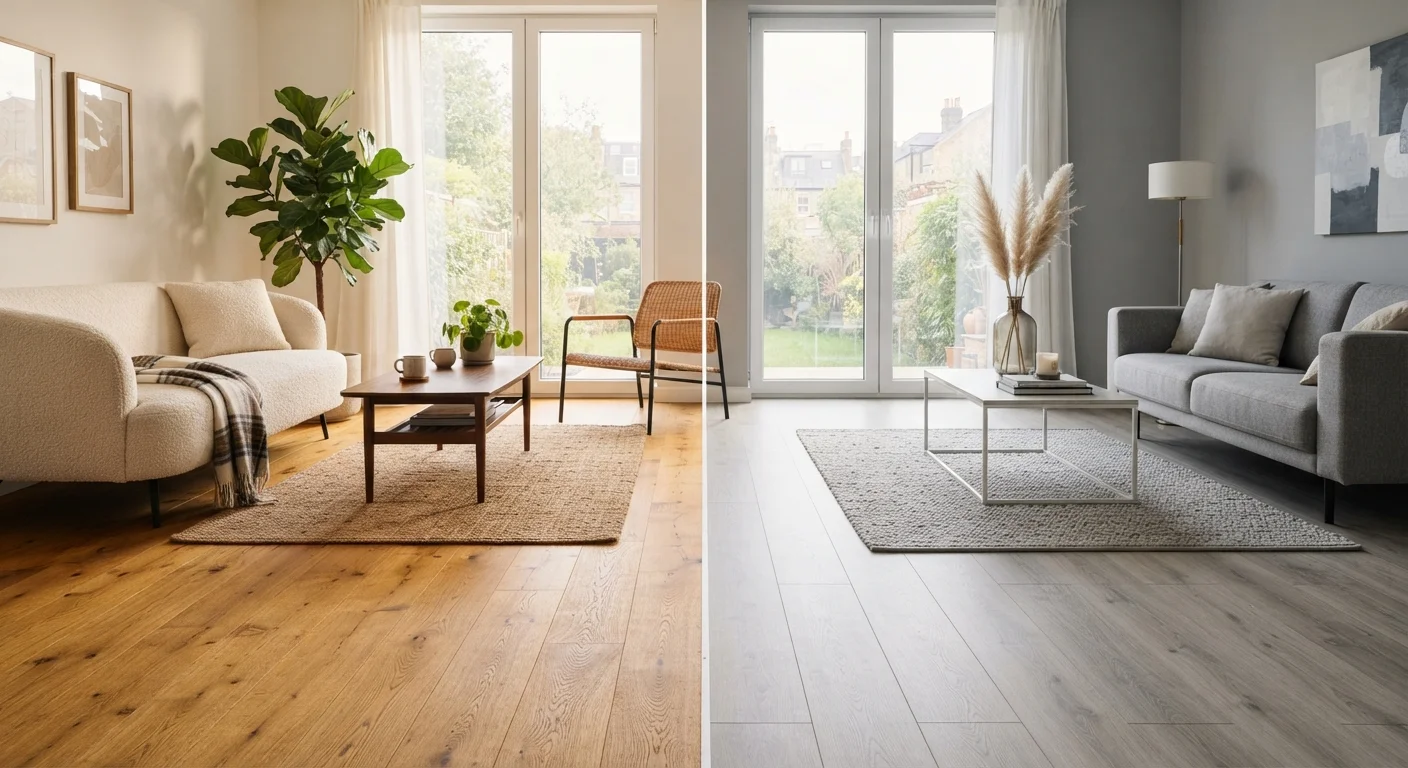
Laminate flooring is an engineered product made of multiple compressed layers: a stabilizing base, a high-density fiberboard (HDF) core, a photographic image layer that mimics wood grain, and a clear protective wear layer on top. The result looks like wood but contains no solid wood in the structural layers.
Hardwood flooring is milled directly from timber. Solid hardwood planks are typically ¾ inch thick - the same species of wood all the way through. Engineered hardwood uses a real wood veneer bonded over plywood layers, offering improved dimensional stability. For this comparison, we focus on solid hardwood since it represents the traditional choice most homeowners weigh against laminate.
The construction difference is the root cause of every practical difference that follows. Because solid hardwood is wood all the way through, it can be sanded. Because laminate is mostly fiberboard with a decorative photo layer, sanding destroys it. This single fact shapes the entire long-term ownership experience of each floor.
| Criterion | Laminate Flooring | Hardwood Flooring |
|---|---|---|
| Refinishable | No - must be replaced when worn | Yes - can be sanded 3-5 times |
| Scratch resistance | High (AC-rated wear layer) | Moderate (varies by species) |
| Moisture tolerance | Low - HDF core swells with water | Moderate - needs prompt cleanup |
| Below-grade installation | Often suitable | Not recommended |
| Typical lifespan | 15-25 years | 50-100+ years with refinishing |
| DIY installation difficulty | Lower - floating click system | Higher - nail/glue, acclimation needed |
| Home resale impact | Modest | Generally higher |
Durability, Wear, and What Damage Actually Looks Like
Laminate's wear layer - rated using the Abrasion Class (AC) system from AC1 (light residential) to AC5 (heavy commercial) - is genuinely hard to scratch under normal use. Dragged furniture and dog nails that would dent a softwood hardwood floor may leave no visible mark on a quality laminate.
However, laminate has a ceiling. When the wear layer eventually erodes, the photographic layer beneath is exposed, and the floor looks degraded. There is no fix - the planks must be replaced. Water is laminate's other serious vulnerability. Because the HDF core is wood fiber, prolonged moisture exposure causes swelling, warping, and bubbling that cannot be repaired.
Hardwood dents and scratches more visibly in the short term - especially softer species like pine or cherry. But those same marks can be sanded out during refinishing. A well-maintained hardwood floor can be refinished three to five times over its life, each time looking nearly new. Hardwood also tolerates occasional moisture better than laminate, though it still requires prompt cleanup and should not be used in chronically damp areas.
15-25 years
Typical laminate floor lifespan
Industry guidance suggests quality laminate lasts 15 to 25 years under normal residential use before replacement is needed.
3-5 times
Refinishing cycles for solid hardwood
A ¾-inch solid hardwood floor generally supports three to five full sand-and-refinish cycles over its lifetime, depending on species and wear.
35-55%
Ideal indoor humidity range for hardwood
The National Wood Flooring Association recommends maintaining indoor relative humidity within this range to minimize seasonal movement in hardwood floors.
Long-Term Maintenance: What You'll Actually Do Each Year
Both floors need regular sweeping or vacuuming to prevent grit from acting like sandpaper underfoot. Beyond that, the routines diverge.
Laminate maintenance is straightforward. Damp mop with a pH-neutral cleaner approved for laminate; avoid soaking the floor. Never use steam mops - the heat and moisture force water into seams. Fix scratches with color-matched repair kits (a wax pencil or putty designed for laminate). If a plank is badly damaged, floating-floor laminate can often be disassembled back to the problem area and individual planks replaced - a realistic DIY repair if you saved leftover material.
Hardwood maintenance requires a little more care. Use hardwood-specific cleaners, keep humidity in the home between roughly 35-55% to prevent seasonal gapping or cupping, and apply a refresher coat of finish every few years before a full sand-and-refinish becomes necessary. Refinishing is typically a professional job involving sanding equipment and finish application; it's dusty, time-consuming, but ultimately transformative.
A Note on Engineered Hardwood
Engineered hardwood sits between laminate and solid hardwood in several ways: it contains a real wood veneer so it can be lightly refinished (typically once or twice), and its plywood core makes it more dimensionally stable than solid wood in variable humidity. If solid hardwood feels too demanding but you want a real wood surface, engineered hardwood is worth understanding as a separate category before you decide.
Moisture, Installation Conditions, and Where Each Floor Can Go
Solid hardwood requires careful acclimation before installation - planks should sit in the installation space for several days so the wood adjusts to the home's temperature and humidity. Skipping this step leads to post-installation buckling or gapping. Hardwood should not be installed below grade (basements) and is generally not recommended for bathrooms or laundry rooms.
Laminate is more forgiving. Most products still need a short acclimation period (typically 48 hours), but the floating installation method - planks click together without being nailed or glued to the subfloor - makes it faster and more DIY-friendly. Many laminate lines are marketed for below-grade use, and some carry ratings for limited bathroom use, though any standing water remains a risk.
Both floors benefit from a clean, flat, dry subfloor. Significant subfloor irregularities should be corrected before either product goes down - a step that applies equally whether you hire a pro or do it yourself.