Why Indoor Safety Audits Matter More Than You Think
Most pet injuries and poisonings happen at home — not outside. Everyday household items that seem harmless to people, such as certain houseplants, common foods, and loose electrical cords, can seriously harm a dog, cat, rabbit, or bird. The good news is that the majority of indoor hazards are fixable with simple changes that take an hour or less.
This checklist is designed for new pet owners walking through their space room by room, but it's equally useful if you've recently adopted a second animal or your current pet has entered a new life stage. If you're still in the planning phase, our guide on bringing a pet home for the first time covers what to set up before your animal even arrives.
Work through each group below at your own pace. Check items off as you go — and revisit the list any time you redecorate, move, or add a new pet to your household.
Toxic substances and plants
Electrical and cord hazards
Physical hazards and escape risks
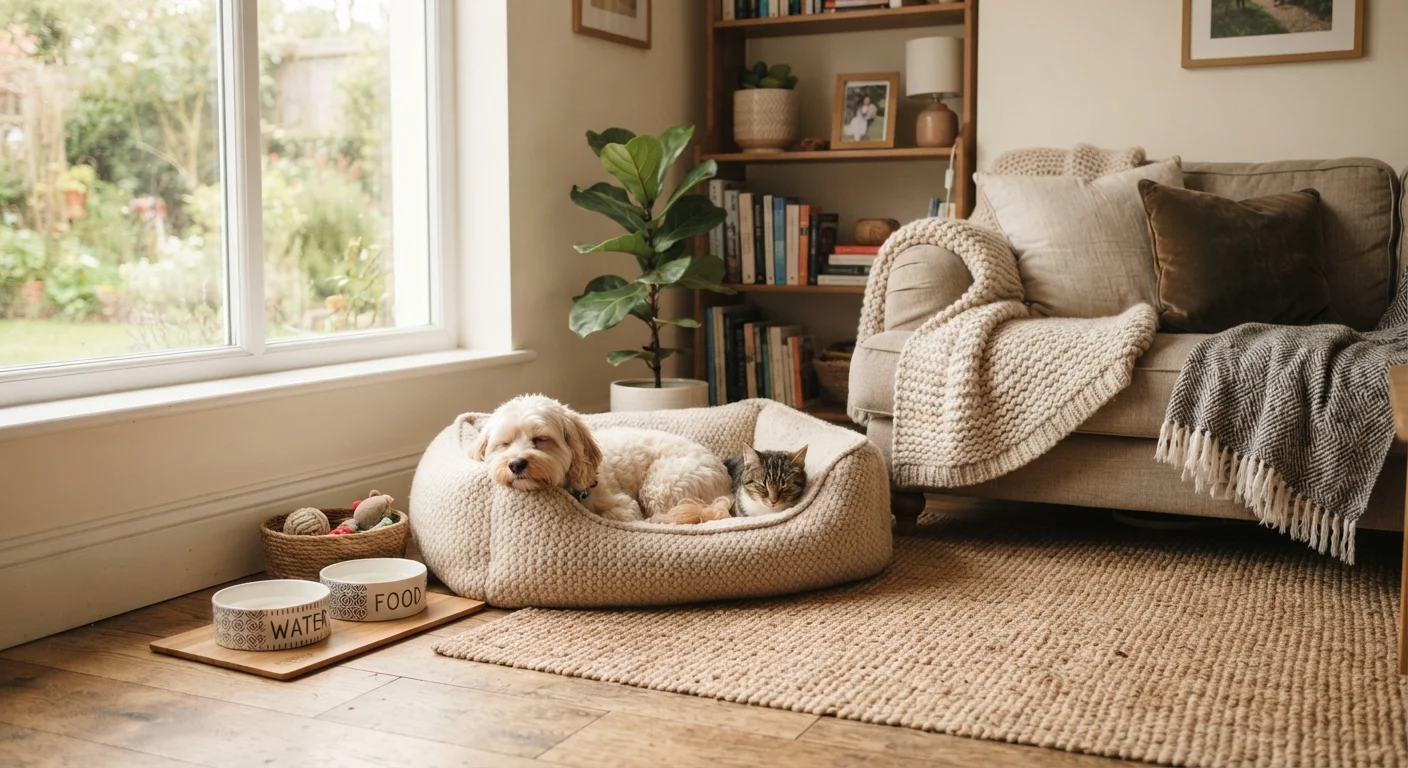
Safe spaces and comfort essentials
Preparation and ongoing monitoring
Tools and Supplies You'll Need
Most pet-proofing requires inexpensive hardware and a bit of reorganisation rather than any specialised equipment. Gather these before you start your walkthrough so you can address problems immediately rather than making a second trip.
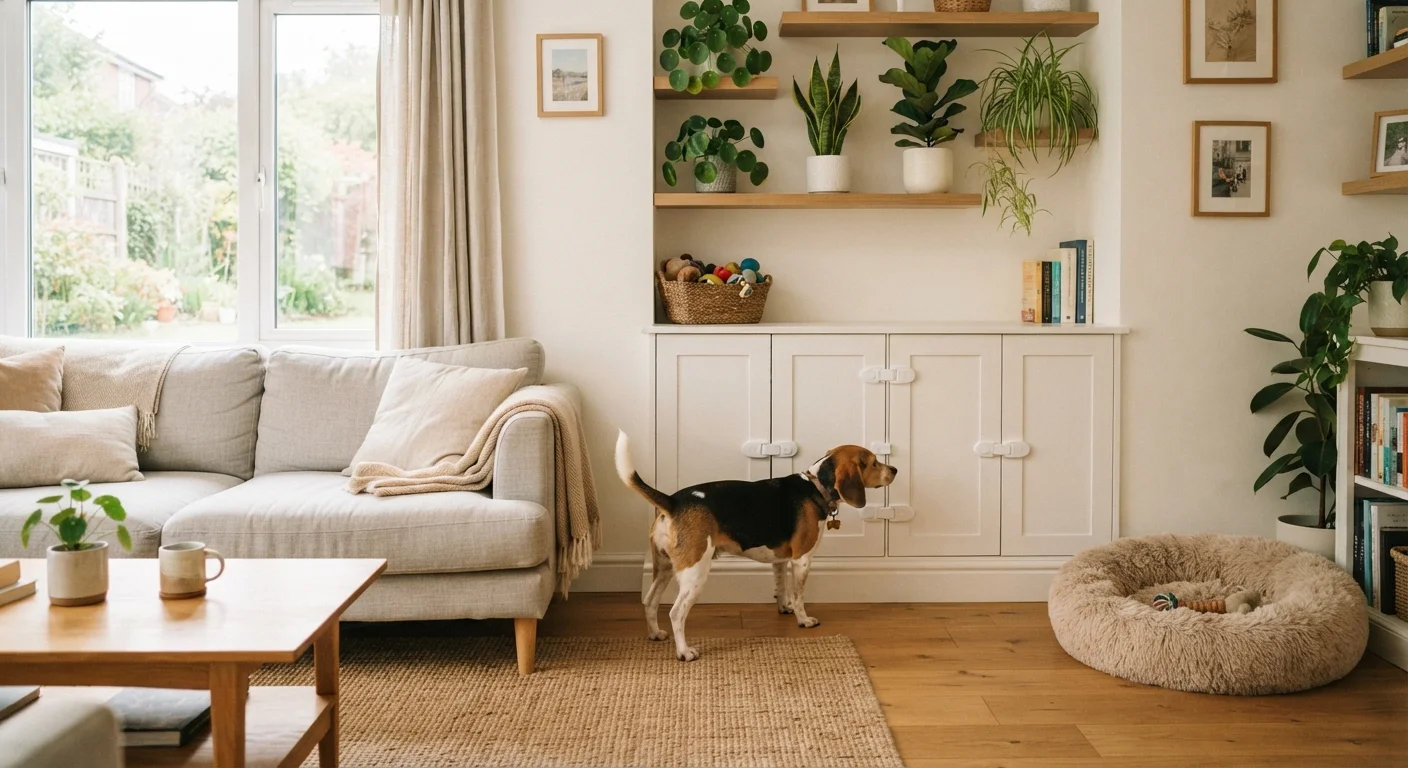
Cabinet safety latches
Prevent pets from nosing open lower cabinets that contain cleaning products, medications, or food.
Cord management sleeves or covers
Protect electrical cords from chewing and reduce the risk of electrocution or cord-related injuries.
Pet gate or baby gate
Block off stairways, rooms, or kitchen areas that contain unmanaged hazards.
Window stops or window locks
Prevent pets from pushing out window screens and escaping or falling.
Outlet covers
Cover unused electrical outlets in rooms where puppies, kittens, or small animals roam.
Non-toxic plant reference list
Verify whether the plants in your home are safe for your specific pet species before keeping them accessible.
Animal poison control contact card
Provide a quick reference to call for guidance if your pet ingests a potentially toxic substance.
Room-by-Room Priorities to Know Before You Start
Kitchens and bathrooms carry the highest concentration of chemical hazards — cleaning products, medications, and certain foods. Living rooms and home offices tend to have the most cord and small-object risks. Bedrooms often contain medications in nightstands and loose items on low surfaces that pets investigate overnight when unsupervised.
Do not assume height alone keeps items safe
Cats can reach countertops, shelves, and the tops of refrigerators with ease. A plant or medication placed "up high" is not necessarily out of reach for a climbing cat. Always secure items in closed containers or latched cabinets, regardless of where they're positioned vertically.
Some hazards are less obvious than they appear
Common scented products — including certain essential oil diffusers, candles, and air fresheners — can be harmful to birds and cats even without direct contact. If you're unsure whether a household product is safe around your specific animal, consult your veterinarian before using it in shared spaces.
Species matters significantly here. Cats climb, so high shelves are not automatically safe. Birds are acutely sensitive to non-stick cookware fumes and scented candles. Small animals like rabbits and guinea pigs chew almost everything they can reach. Tailor your audit to your specific pet's behaviour and instincts. For housing-specific guidance by pet type, see our overview of crates, tanks, and litter box setups.
Once your environment is secured, the next step is establishing a routine that keeps your pet mentally and physically healthy every day. Our article on building a daily care routine walks through how to structure feeding, exercise, and rest in a realistic way. And if a pet accident or sudden illness does occur despite your precautions, knowing which symptoms require an emergency vet visit can make a critical difference.
This article provides general educational information for pet owners and is not a substitute for professional veterinary advice. Always consult a licensed veterinarian with questions about your specific animal's health and safety.