Why Housing Setup Matters More Than You Think
Before your pet eats its first meal or learns its name, its living space is already shaping how safe it feels. Animals rely on their immediate environment to regulate stress, establish routines, and express natural behaviors. A crate that's too large can make a dog anxious; a tank that's too small can cause fish to become aggressive or ill. Getting the basics right upfront is one of the highest-impact things a new owner can do.
This guide breaks down housing essentials by animal type so you can make confident, informed choices. For broader setup considerations, see our guide on setting up a safe indoor environment for your pet.
Dogs: Crates, Beds, and Defined Spaces
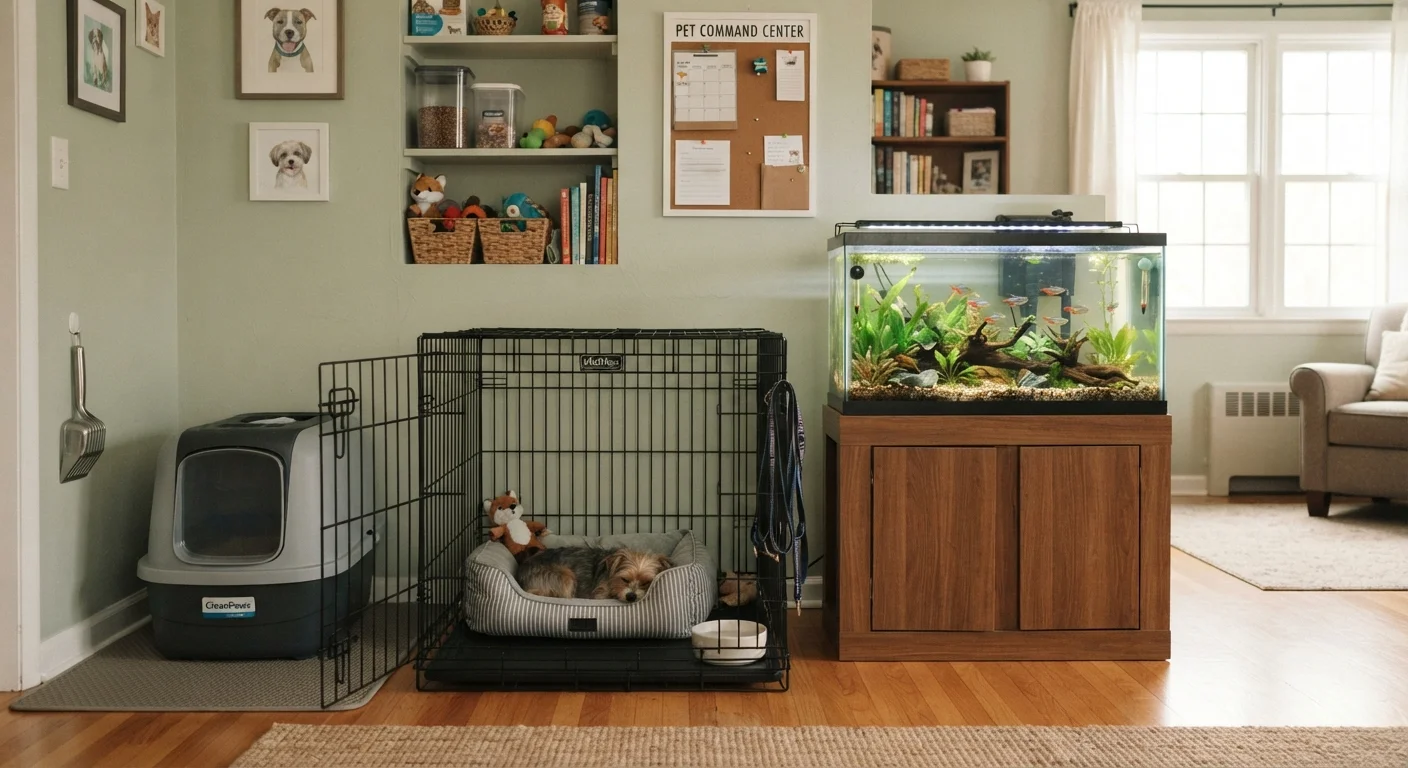
A crate serves as a dog's den — a retreat, not a punishment. The crate should be large enough for the dog to stand, turn around, and lie down comfortably, but not so spacious that a puppy uses one end as a bathroom. Wire, plastic, and soft-sided crates each suit different temperaments and travel needs.
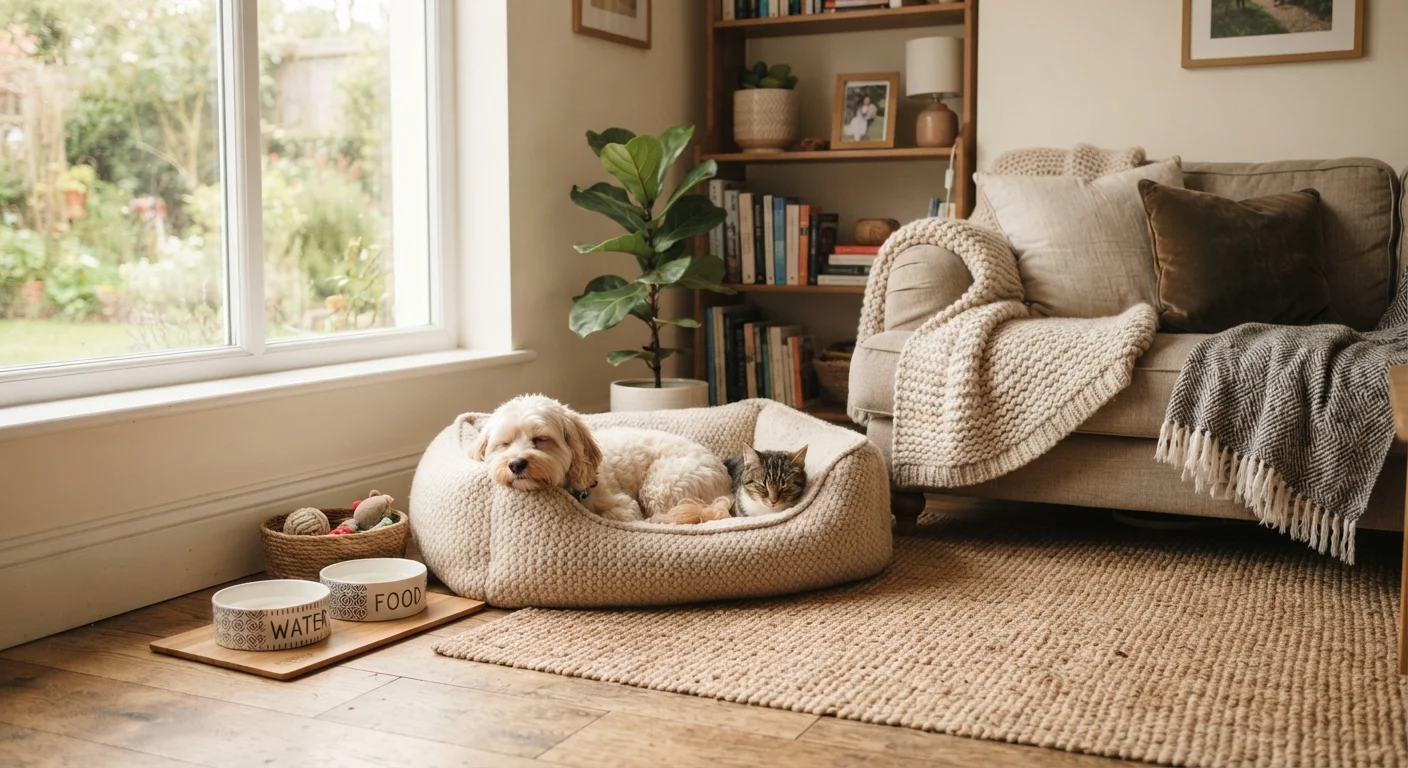
Beyond the crate, dogs benefit from a consistent resting area outside of it — a dog bed or mat in a low-traffic corner where they can decompress. Puppies under six months generally shouldn't be crated for more than three to four hours at a stretch during the day. If your dog shows persistent anxiety around confinement, consult your veterinarian or a certified trainer. For introducing a crate as part of a calm daily rhythm, see building a daily care routine.
Cats: Litter Boxes and Vertical Territory
The standard recommendation is one litter box per cat, plus one extra. Boxes should be placed in quiet, low-traffic areas — cats avoid boxes near loud appliances or in high-foot-traffic hallways. Scoop daily and do a full clean weekly. Covered boxes appeal to some cats for privacy but can trap odor and deter others; observe your cat's preference.
Cats also need vertical space: cat trees, wall shelves, or window perches allow them to survey their territory and reduce conflict in multi-cat homes. A cat that suddenly changes its litter box habits may be signaling a health issue — learn more in our article on decoding your cat's litter box habits.
Tank cycling
The process of establishing beneficial bacterial colonies in an aquarium before introducing fish. These bacteria break down ammonia from fish waste into less harmful compounds. Skipping this step is a leading cause of early fish death.
Thermal gradient
A deliberate range of temperatures across a reptile enclosure, from a warm basking spot to a cooler resting area. Reptiles regulate their body temperature by moving between zones.
Substrate
The material lining the floor of an enclosure — bedding, gravel, sand, or soil depending on the animal. It affects comfort, hygiene, humidity, and natural burrowing behavior.
Vertical territory
Elevated spaces cats use to survey their environment, rest safely, and reduce tension with other cats. Cat trees, shelves, and window perches all provide vertical territory.
Small Animals and Reptiles: Tanks and Enclosures
Fish and aquatic animals require properly cycled tanks — meaning beneficial bacteria colonies are established before fish are introduced. Tank size depends heavily on species; crowding raises ammonia levels and causes disease. Most beginner freshwater fish need at least a 10-gallon tank, though many species thrive better in 20 gallons or more.
Reptiles need enclosures that replicate their natural thermal gradient — a warm basking zone on one end and a cooler zone on the other. Substrate type, humidity levels, and UV lighting are all species-specific. Research your particular reptile's requirements thoroughly before setup.
Small mammals such as rabbits, guinea pigs, and hamsters need enclosures large enough for exercise, with solid floors rather than wire bottoms (which can injure small feet). Rabbits in particular are often housed in enclosures that are too small; a rabbit should be able to take at least three full hops in any direction within its living area.
If you're still in the planning phase, our article on bringing a pet home for the first time covers the full pre-arrival checklist.