
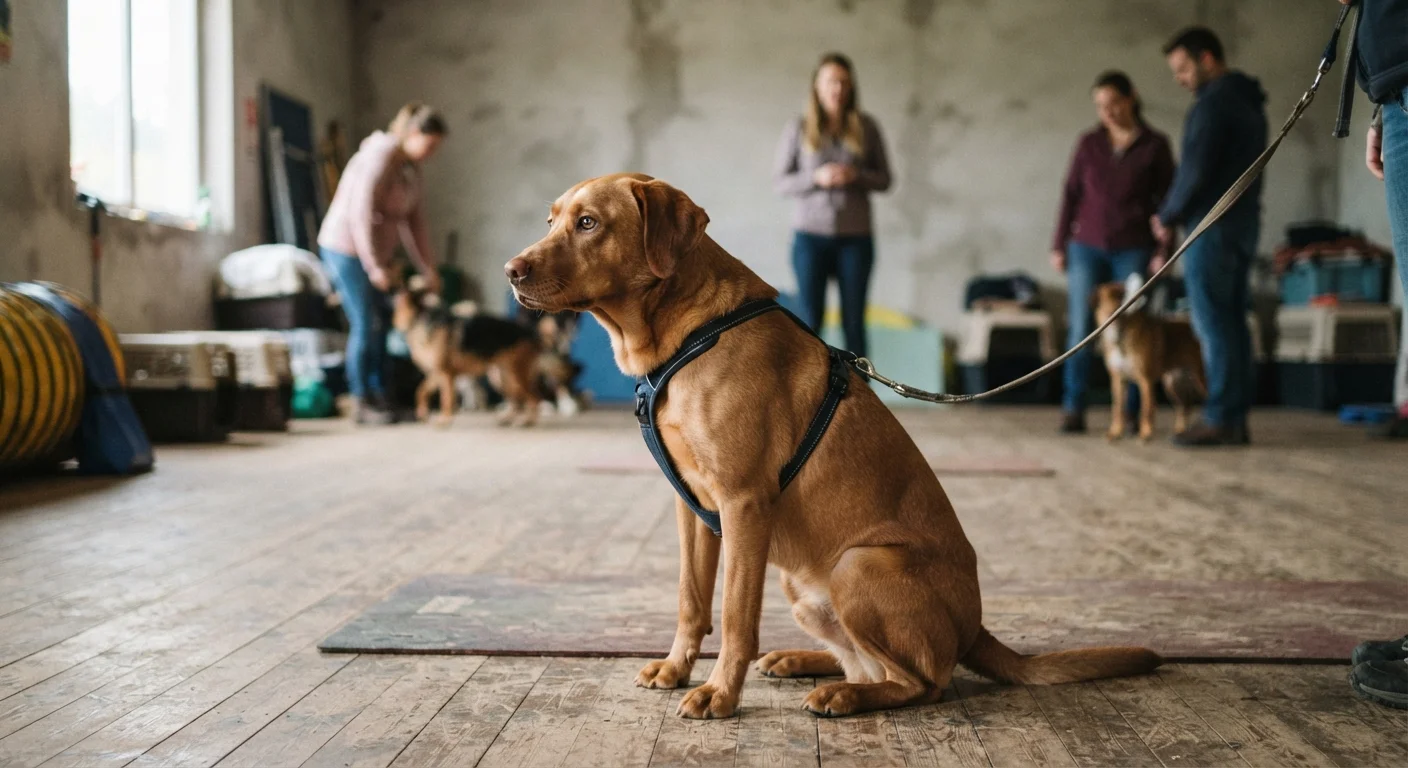
Why Stress Recognition Matters in Training
Training is meant to build trust, not erode it. But even well-intentioned sessions can tip into stress territory — and once a pet is stressed, they simply cannot learn. Understanding the difference between a confused pet and an overwhelmed one helps you pivot quickly before frustration becomes avoidance or, in more serious cases, aggression.
Stress during training is rarely dramatic. Most of the time, it shows up as small, easy-to-miss signals called calming signals — subtle behaviors your pet uses to communicate that something feels like too much. For a fuller picture of how anxiety manifests beyond the training room, see how stress shows up in pets.
| Most common stress signal in dogs | Yawning outside of tiredness context (American Kennel Club, general training guidance) |
| Most common stress signal in cats | Tail tucking or flat ears (ASPCA general feline behavior resources) |
| Recommended session length for beginners | 3–5 minutes per session (Widely cited trainer consensus) |
| Key training principle when stress is observed | End on a win, then stop (Positive reinforcement training consensus) |
| Stress vs. distraction | Stressed pets disengage; distracted pets still respond to higher-value rewards (General applied animal behavior guidance) |
Common Stress Signals in Dogs
Dogs communicate stress through body language well before they bark, growl, or shut down. Learning to read these early cues is one of the fastest ways to become a more effective trainer.
- Yawning: When a dog yawns repeatedly during a training session — not because they are tired — it is a classic calming signal indicating mild to moderate stress.
- Lip licking or nose licking: A quick flick of the tongue over the nose, often done rapidly, signals discomfort or nervousness.
- Looking away or turning the head: Your dog breaking eye contact and redirecting their gaze is an active attempt to reduce tension.
- Whale eye: The whites of the eyes become visible as the dog turns their head away but keeps watching — a sign of conflict or anxiety.
- Displacement behaviors: Suddenly sniffing the ground, scratching, or shaking off mid-session are signs the dog needs a mental reset.
- Slow movement or freezing: A dog that was moving freely but becomes slow or stiff may be approaching their stress threshold.
Stress Is Not Stubbornness
When a pet stops responding mid-session, it is tempting to assume they are being defiant or stubborn. In most cases, however, a non-responsive pet has simply hit their stress threshold and can no longer learn. Repeating a command more forcefully in this state typically makes things worse, not better. Recognizing this distinction is one of the most important shifts a new pet owner can make.
If you are also working on a specific command and noticing disengagement, common habits that undermine training progress may be affecting how your dog is responding.
Common Stress Signals in Cats
Cats are often trained less frequently than dogs, but they do participate in sessions — and they experience training stress just as readily. Their signals tend to be more subtle and easier to misread as indifference.
- Flattened ears: Ears pulled back or rotated sideways indicate increasing discomfort.
- Tail tucking or low tail carriage: A tail held low or curled tightly against the body reflects anxiety or submission.
- Dilated pupils: In a calm training environment with normal lighting, wide pupils can suggest heightened stress arousal.
- Crouching low: A cat that flattens their posture and tries to make themselves small is signaling they feel unsafe or overwhelmed.
- Grooming mid-session: Sudden, out-of-context self-grooming is a displacement behavior indicating the cat needs a break.
- Leaving or hiding: If a cat walks away from the session or retreats to a hiding spot, the session is over — and pushing further is counterproductive.
What to Do When You Spot These Signals
The moment you recognize a stress signal, the most effective response is simple: pause. Do not repeat the command, do not increase the reward, and do not push for one more repetition. Instead:
- Give your pet space. Step back, drop any pressure, and let them reset for 30–60 seconds.
- Return to something easy. Ask for a behavior your pet knows well and can succeed at quickly. End the session on that success.
- Shorten future sessions. For most pets new to training, 3–5 minutes is enough. Frequent short sessions outperform long ones every time.
- Review the environment. Noise, other animals, or a tight space can all push a pet toward threshold before the first command is even given. Use the training session readiness checklist to audit your setup.
If stress signals are consistent across multiple sessions, or if your pet shows signs of ongoing anxiety outside of training, it is worth speaking with a veterinarian or a certified animal behaviorist. Persistent behavioral changes can sometimes reflect a health issue — how pets signal they are not feeling well covers when those signs warrant professional attention.
Calming signals
Instinctive behaviors dogs and cats use to communicate discomfort or a desire to de-escalate tension. Examples include yawning, lip licking, and looking away.
Threshold
The point at which a pet's stress level becomes too high to learn effectively. When a pet is 'over threshold,' they cannot process commands or respond reliably.
Displacement behavior
An action that seems out of context for the situation — such as suddenly sniffing the ground mid-training — that signals a pet is trying to cope with stress or conflicting urges.
Shut-down behavior
A state where a pet becomes unresponsive, freezes, or withdraws entirely. It often follows prolonged exposure to a stressor and signals the pet has stopped engaging to protect itself.