
What Each Program Actually Does
Both TSA PreCheck and Global Entry are run through the U.S. Department of Homeland Security's Trusted Traveler Programs, but they solve different friction points in your travel journey.
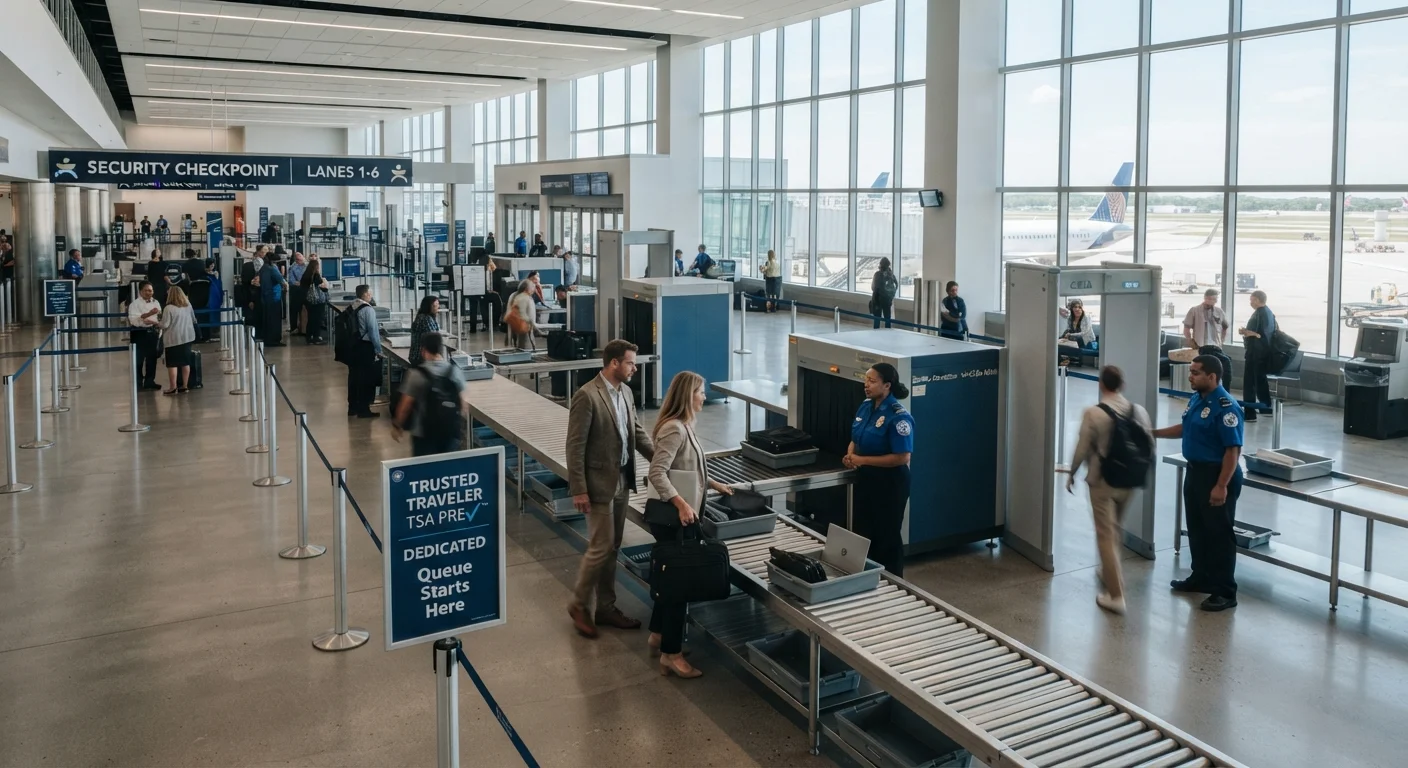
TSA PreCheck gets you into dedicated, faster security lanes at participating U.S. airports. That means no removing shoes, no pulling out laptops, and no emptying your quart-size liquids bag. It's a domestic security upgrade — and a genuinely pleasant one. Over 200 U.S. airports and 85+ airlines participate, so coverage is wide. (Always confirm your specific airport and airline participate before your trip.)
Global Entry works on the back end of international travel. When you land in the U.S. from abroad, instead of standing in the customs declaration line, you walk up to an automated kiosk, scan your passport and fingerprints, answer a few questions on screen, and walk out. The program is available at more than 75 U.S. international airports and select international locations through preclearance. Crucially, Global Entry membership automatically includes TSA PreCheck — so you don't need both.
For a deeper look at how to breeze through the security side of things, check out what most travelers get wrong at security — knowing the program is only half the equation.
| Criterion | TSA PreCheck | Global Entry |
|---|---|---|
| Application fee | $85 / 5 years | $120 / 5 years |
| Includes TSA PreCheck | Yes (is PreCheck) | Yes, automatically |
| Expedited U.S. customs | No | Yes |
| In-person interview required | No | Yes |
| Enrollment center locations | Thousands nationwide | Primarily international airports |
| Best for | Domestic travel | Domestic + international travel |
| Background check | Yes | Yes |
Cost, Enrollment, and What to Expect
Here's where the practical differences start to matter. TSA PreCheck runs $85 for a five-year membership (renewals are $70 online). The application is completed online, and then you visit one of thousands of enrollment centers — often located in airports, shopping centers, and UPS stores — for a brief identity verification appointment. No formal interview required.
Global Entry costs $120 for five years. The application is also online, but approval requires an in-person interview at a Customs and Border Protection (CBP) enrollment center, which are typically located at major international airports. Wait times for these interviews can vary widely — sometimes weeks, sometimes months — though conditional approval lets many travelers complete their interview upon returning from an international trip.
85+
Airlines participating in TSA PreCheck
According to the TSA, over 85 airlines participate in the PreCheck program across more than 200 U.S. airports.
< 10 min
Typical PreCheck security wait time
The TSA has reported that the majority of TSA PreCheck passengers wait less than 10 minutes in dedicated lanes.
$35
Extra cost of Global Entry over PreCheck
Global Entry's $120 fee is only $35 more than TSA PreCheck's $85 fee, yet it includes all PreCheck benefits plus international customs clearance.
One cost-saving note worth knowing: many travel rewards credit cards offer a statement credit that covers the Global Entry or TSA PreCheck application fee as a cardholder benefit. Check your card's benefits guide before you pay out of pocket — this is general information and card terms vary.
Before any application, make sure your identification documents are in order. Our pre-trip checklist is a good place to confirm passport validity and other essentials.
How to Decide: Matching the Program to Your Travel Habits
The simplest decision framework: how often do you cross international borders?
- Purely domestic flyer? TSA PreCheck gives you everything you need at a lower price point and simpler enrollment.
- One or more international trips per year? Global Entry's $35 premium over PreCheck pays for itself quickly in avoided customs wait times — and you still get PreCheck's domestic perks.
- Traveling internationally for the first time? Global Entry is worth considering even before your trip, but factor in the interview scheduling timeline. Starting early is key.
It's also worth noting what neither program covers: expedited security in foreign airports. If you're clearing security in another country, you're subject to that country's standard process regardless of your Trusted Traveler status. Programs like NEXUS (for U.S.-Canada travel) and SENTRI (for U.S.-Mexico land border crossings) address specific corridors if those are relevant to your habits.
If you're still early in planning your travel identity and figuring out what documents and programs you need, our trip-planning checklist for first-time travelers walks through the bigger picture step by step.
Program availability, fees, and participating locations are subject to change. Always verify current details on the official CBP Trusted Traveler Programs website (ttp.dhs.gov) before applying.