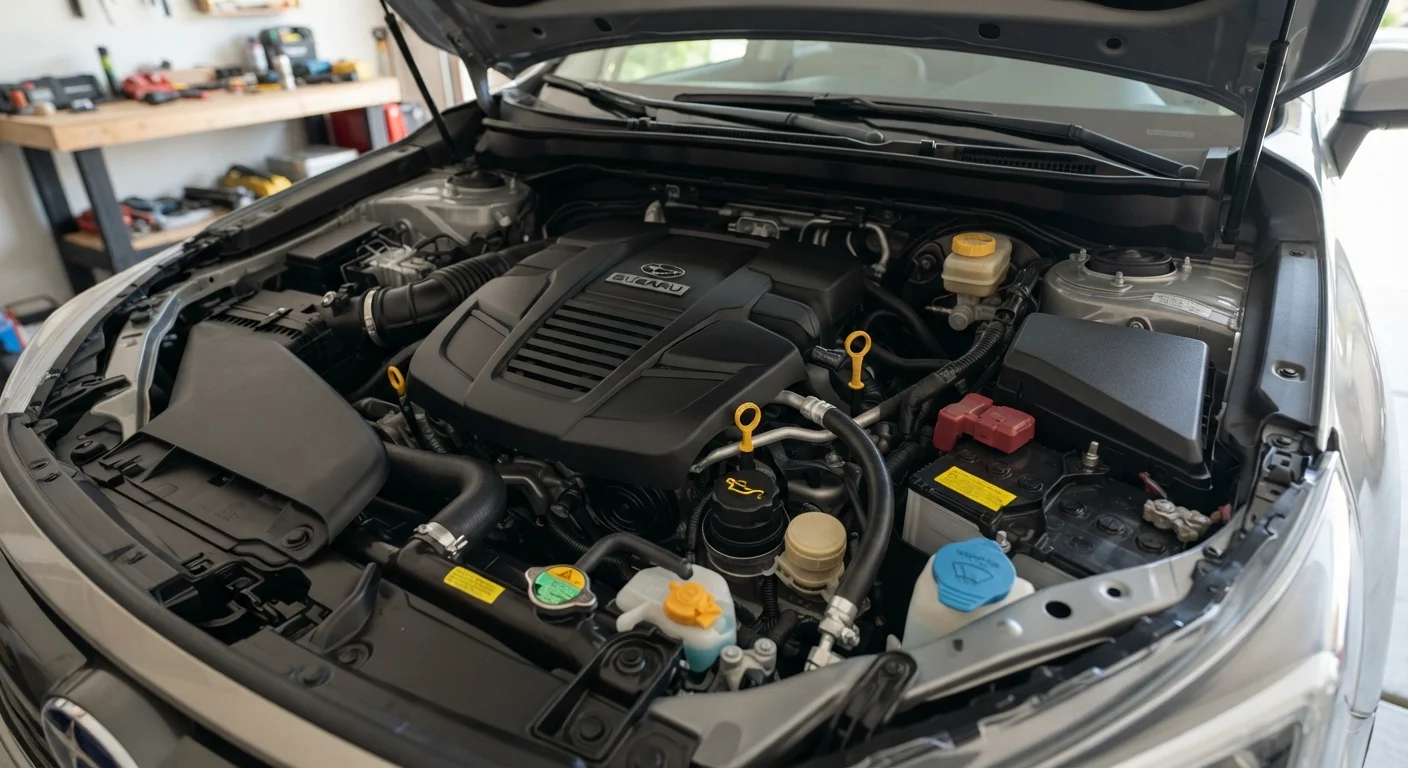
Why the Owner's Manual Gets Ignored - and Why That's a Mistake
Most glove compartments hold an owner's manual that has never been opened beyond a quick flip when a warning light appears. It's understandable - the books can run 300 to 500 pages, and the assumption is that a mechanic or shop will handle the details. But that assumption has a cost.
Generic maintenance advice - including the schedules posted at quick-lube chains - is designed for the average car. Your vehicle isn't average; it has a specific engine configuration, transmission type, and fluid requirements that only one document addresses directly: the manual the manufacturer wrote for it. As we explain in our breakdown of common maintenance myths, following generalized rules instead of manufacturer guidance is one of the most widespread and quietly damaging habits drivers have.
The good news is that you don't need to read the manual cover to cover. A few key sections do the heavy lifting - and knowing where to look makes this one of the fastest, most reliable maintenance shortcuts available.
Can't Find Your Physical Manual?
Many manufacturers publish owner's manuals as free PDFs on their official websites. Search your vehicle's year, make, and model plus 'owner's manual PDF' to locate the correct document. Some automakers also offer interactive digital versions through their apps or owner portals.
What the Manual Actually Contains (That Most Drivers Never Find)
Beyond basic controls and warranty information, a typical owner's manual contains several sections with direct maintenance value:
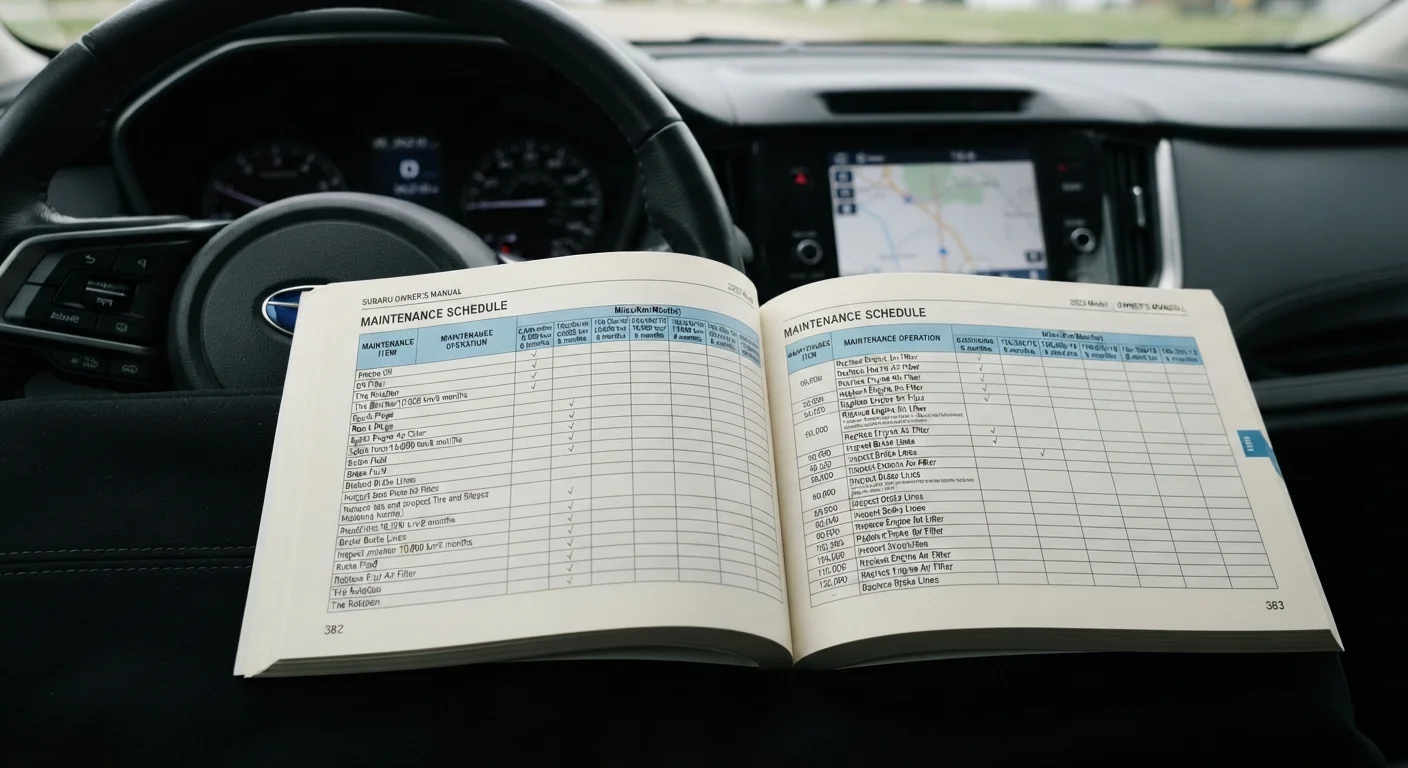
- Scheduled Maintenance Tables: Mileage- and time-based service intervals for oil, filters, spark plugs, belts, fluids, and more - specific to your powertrain.
- Fluid Specifications: Exact grades and formulations required for engine oil, coolant, brake fluid, power steering fluid, and transmission fluid. See our guide to car fluids every driver should know for context on why these matter.
- Tire Pressure and Load Ratings: The manufacturer-recommended cold inflation pressure - not the maximum listed on the tire itself.
- Warning and Indicator Lights: An illustrated guide explaining what each dashboard symbol means and how urgently it requires attention.
- Severe vs. Normal Service Conditions: A second maintenance track for drivers whose conditions accelerate wear.
Each of these sections directly affects service decisions. Used together, they give you a clear picture of what your car actually needs - and when.
Locate and read the scheduled maintenance section before your next service appointment.
This section lists every service interval - oil changes, filter replacements, fluid flushes, belt inspections - by mileage and time. Knowing this prevents you from paying for services you don't yet need or missing ones that are overdue.
Use the manual's tire pressure specification, not the number printed on the tire sidewall.
The figure on a tire sidewall is the maximum cold inflation pressure, not the recommended operating pressure. Your manufacturer's specification - found in the manual and on the driver's door jamb sticker - is calibrated for your vehicle's weight distribution and ride quality.
Cross-reference the manual's fluid specifications before adding or topping off any fluid.
Using the wrong grade of motor oil, coolant type, or transmission fluid can degrade performance and, in some cases, void warranty coverage. Manufacturers specify exact grades and formulations for a reason.
Consult the warning light guide before assuming a dashboard indicator means catastrophe.
Owner's manuals include an illustrated guide to every warning and indicator light. Some lights signal an urgent stop; others indicate a service reminder that can be addressed at your next appointment. Knowing which is which prevents both unnecessary panic and dangerous dismissiveness.
Note the 'severe service' schedule if your driving conditions qualify.
Most manuals include two maintenance tracks: normal and severe. Severe conditions - frequent short trips, extreme temperatures, towing, or stop-and-go commuting - require more frequent service intervals. Many urban drivers qualify without realizing it.
Putting the Manual to Work at Every Service
The manual is most useful when you treat it as a reference tool rather than a one-time read. Bring it - or pull up the PDF - before any service appointment. Review the mileage intervals for your current odometer reading and note anything due or approaching. This takes less than five minutes and gives you a factual basis for the service conversation.
If a shop recommends a service that isn't listed for your mileage, it's worth asking why. Conversely, if a service is due according to the manual but hasn't been mentioned, you can raise it directly. This isn't about second-guessing mechanics - it's about arriving informed. For a broader look at how skipped intervals compound into larger problems, see why deferred maintenance costs more over time.
For new drivers still building their maintenance foundation, our practical starting point for new drivers walks through the fundamentals that complement everything the manual covers. And for the complete maintenance picture, our bumper-to-bumper reference guide covers every major system in plain language.