
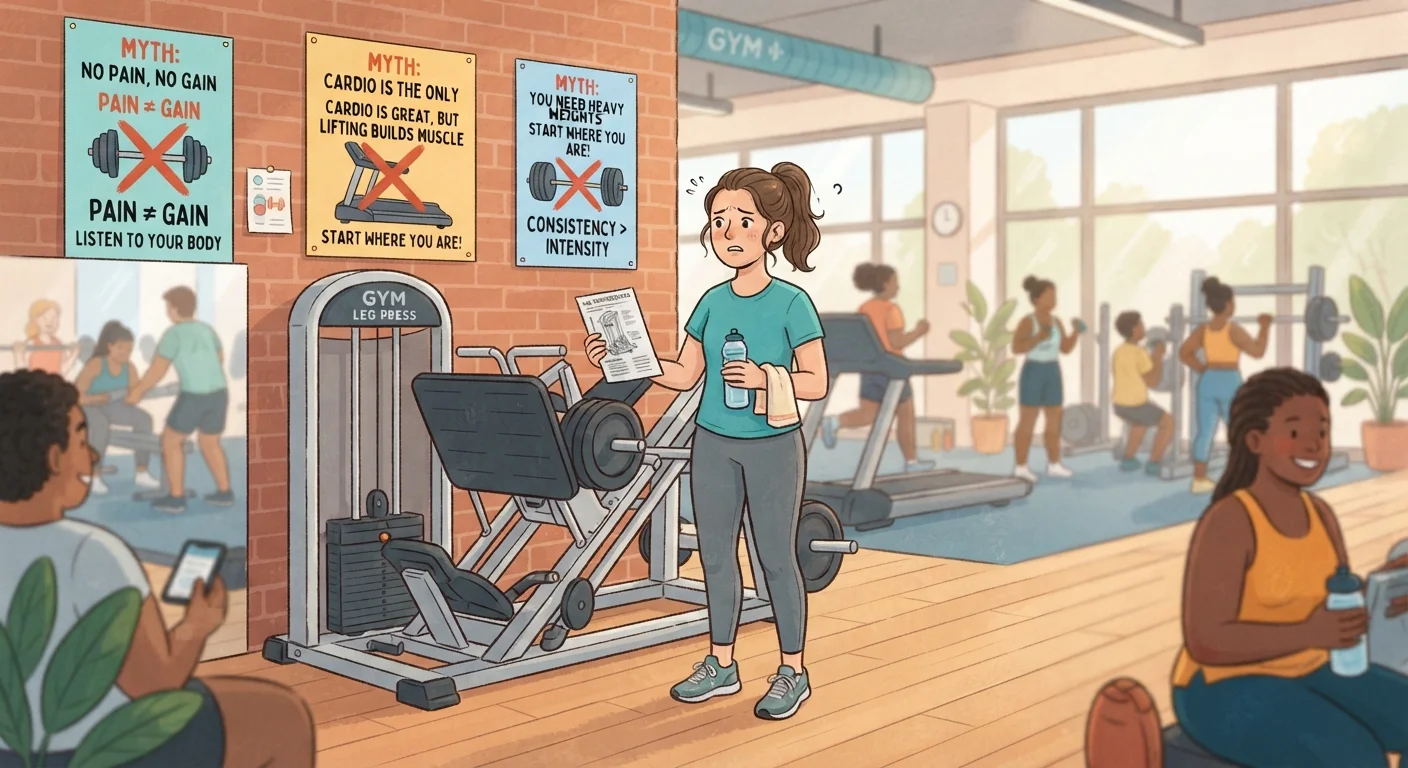
Why Fitness Myths Are Especially Costly for Beginners
Misinformation in fitness is everywhere - on social media, in gyms, and passed down through well-meaning friends. For someone just starting out, a single bad belief can lead to injury, burnout, or quitting altogether. Understanding what the evidence actually supports helps you build a routine that lasts.
If you're completely new to exercise, our practical roadmap for true beginners is a useful companion to this article. First, though, let's dismantle the myths most likely to derail you early on.
Myth
No pain, no gain - if your workout doesn't hurt, it isn't working.
Fact
Mild muscle fatigue during exercise is normal, but sharp or joint pain is a warning sign, not a badge of progress.
The phrase "no pain, no gain" has caused real harm by encouraging people to push through signals their body sends for protective reasons. Exercise science distinguishes between the temporary burning sensation of working muscles (often called muscle fatigue) and actual pain, which can indicate tissue damage or injury. Beginners are especially vulnerable to overuse injuries when they ignore discomfort in pursuit of intensity. A sustainable workout should feel challenging but controlled - not agonizing. If something hurts sharply, particularly in a joint, stop and consult a healthcare professional.
Myth
You can target fat loss in a specific area by exercising that body part.
Fact
Spot reduction is not physiologically possible. Fat loss occurs throughout the body based on overall energy balance, not where you feel the burn.
Doing hundreds of crunches will strengthen abdominal muscles but will not selectively burn belly fat. Research consistently shows that fat is mobilized systemically - meaning your body draws on fat stores from across the body during exercise, not specifically from the area being worked. The appearance of certain muscles becoming more defined over time reflects overall body composition change, not localized fat loss. Understanding this prevents wasted effort and, more importantly, unrealistic expectations that cause people to quit when they don't see results where they expected them.
Myth
If you're not sweating heavily or gasping for air, you're not working hard enough.
Fact
Sweat and breathlessness are measures of exertion level, not workout quality. Moderate-intensity exercise delivers substantial health benefits.
Sweat rate varies significantly between individuals based on genetics, fitness level, temperature, and humidity - it is not a reliable measure of calorie burn or effectiveness. Public health guidelines from organizations like the U.S. Department of Health and Human Services support moderate-intensity activity (such as brisk walking, where you can speak in short sentences but not sing) as genuinely beneficial for cardiovascular health, metabolic function, and mental well-being. Beginners who feel they must always work at maximum intensity are more likely to get injured or burn out quickly. For a clearer understanding of intensity zones, see our explanation of aerobic and anaerobic exercise.
Myth
Lifting weights will make you bulk up and look overly muscular.
Fact
Building significant muscle mass requires specific, sustained training combined with a caloric surplus - it doesn't happen accidentally from general strength training.
This myth particularly discourages women and older adults from resistance training, which is unfortunate because strength training supports bone density, metabolic health, balance, and functional independence. Meaningful muscle hypertrophy (increase in muscle size) requires dedicated progressive overload over months, often years, and specific nutritional support. General strength training two to three times per week builds useful functional strength and improves body composition without producing the physique associated with competitive bodybuilding. Avoiding weights out of fear of "getting too big" means missing some of the most well-supported benefits exercise science has to offer.
Myth
You need to exercise for at least an hour for it to count.
Fact
Shorter sessions - even 10 to 20 minutes - provide measurable health benefits, especially for beginners.
The belief that only long workouts are worthwhile keeps many beginners from starting at all. Research supports the idea that physical activity benefits accumulate throughout the day and that shorter, more frequent bouts of movement are meaningful. For someone who has been sedentary, even a 15-minute walk produces genuine cardiovascular and metabolic improvements. As fitness develops, duration can increase gradually. The most important factor at the beginning is consistency, not session length. Our guide to your first month of exercise offers a realistic week-by-week picture of early progress.
What Evidence-Based Fitness Actually Looks Like for Beginners
Once you clear away the myths, the picture that emerges is far more manageable than most beginners expect. Effective exercise does not require pain, extreme duration, or specialized equipment. What it does require is regularity, gradual progression, and adequate recovery.
~80%
Adults not meeting activity guidelines
The CDC estimates that roughly 80% of U.S. adults do not meet federal guidelines for both aerobic and muscle-strengthening activity.
150 min
Weekly moderate activity recommended
U.S. Department of Health and Human Services guidelines recommend at least 150 minutes of moderate-intensity aerobic activity per week for adults.
2x/week
Minimum strength training frequency
Federal physical activity guidelines recommend muscle-strengthening activities involving all major muscle groups at least two days per week.
One of the most common reasons new routines collapse isn't lack of effort - it's unrealistic expectations set by misinformation. If you've tried and stopped before, that pattern is worth examining. Our article on why new workout routines fall apart explains the real structural reasons beginners quit and how to set yourself up differently.
It's also worth knowing that lower-intensity movement counts more than most people think. Research on walking as exercise shows meaningful cardiovascular and metabolic benefits from activity many people dismiss as too easy. Similarly, low-impact options like swimming, cycling, and resistance bands can build genuine fitness without high injury risk.
Recovery is not optional. Rest days are when your muscles repair and your nervous system adapts - skipping them routinely leads to diminishing returns, not faster progress.
Pain Is Not Progress - Know the Difference
Sharp, localized, or joint pain during exercise is a signal to stop - not push through. Delayed onset muscle soreness (DOMS), the achiness felt 24-48 hours after a new workout, is normal and generally harmless. Acute pain during activity is not. If you experience chest pain, dizziness, or severe shortness of breath during exercise, stop immediately and seek medical attention.
This article is for general informational and educational purposes only and does not constitute medical advice. Consult a qualified healthcare professional before starting any new exercise program, especially if you have existing health conditions or have been inactive for an extended period.