
Why Low-Impact Exercise Deserves More Credit
When most people picture effective exercise, they imagine high-intensity boot camps or heavy barbell lifting. But for millions of Americans - especially those just starting out, managing joint pain, or returning after injury - that kind of activity is neither accessible nor necessary. Low-impact exercise means movement that keeps at least one foot on the ground at all times, or is performed in a medium like water that reduces gravitational load on the body. The result is less pounding stress on bones, cartilage, and connective tissue.
Importantly, lower impact does not mean lower value. Research consistently shows that activities like walking, swimming, and cycling can improve cardiovascular health, build functional strength, and support mental well-being. If you're weighing where to begin, our beginner's practical roadmap is a helpful companion to this guide.
Below are seven evidence-supported low-impact options worth knowing about - along with what each genuinely delivers.
Walking
Walking is the most accessible form of low-impact exercise available - it requires no equipment, no gym membership, and no prior fitness level. Brisk walking elevates the heart rate enough to qualify as moderate-intensity cardiovascular exercise according to general exercise science guidelines. Over time, regular walking supports heart health, helps regulate blood sugar, and improves mood through the release of endorphins.
To increase the challenge without increasing joint stress, try walking on inclines, extending your duration gradually, or adding walking poles for upper-body engagement.
Brisk walking qualifies as moderate-intensity cardio and requires no equipment whatsoever.
Swimming and Water Aerobics
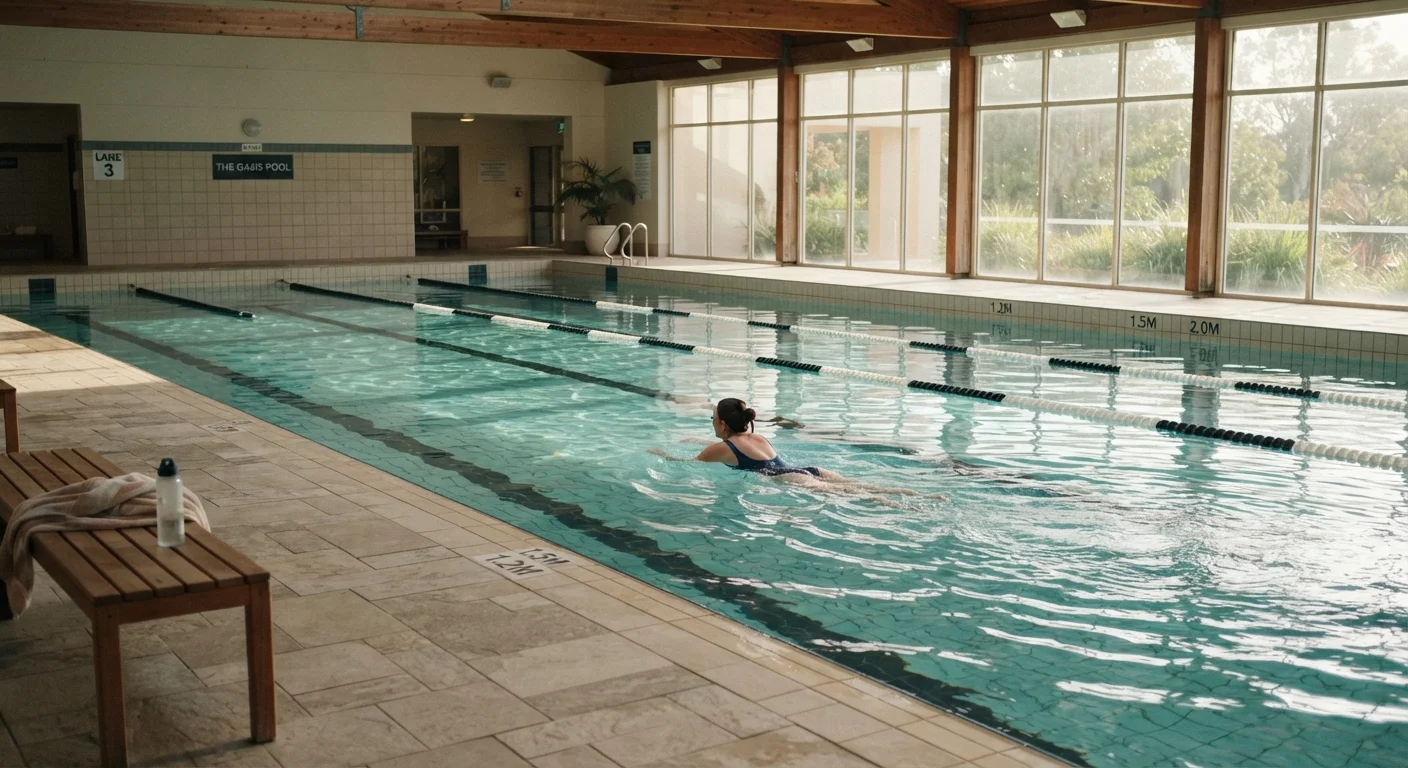
Water provides buoyancy that significantly reduces compressive force on joints - making swimming and water-based exercise particularly useful for people with arthritis, excess body weight, or lower-body injuries. At the same time, water creates resistance in every direction, meaning muscles work harder than they appear to from the outside.
Swimming laps builds cardiovascular endurance and engages the entire body. Water aerobics classes, often available at community recreation centers, offer a social and structured alternative with similar physiological benefits.
Water's buoyancy reduces joint compression while its resistance challenges every major muscle group.
Cycling (Stationary or Outdoor)
Cycling keeps the body's weight supported by the seat, dramatically reducing impact on the knees, hips, and ankles compared to running. Both stationary bikes and outdoor cycling build lower-body strength - particularly in the quadriceps, hamstrings, and glutes - while providing sustained cardiovascular stimulus.
Stationary cycling offers the added benefit of controlled effort with no traffic or terrain concerns, making it a strong option for true beginners. Resistance can be adjusted incrementally to match current fitness and progress over time.
Cycling builds lower-body strength and cardio endurance with minimal stress on weight-bearing joints.
Yoga
Yoga improves flexibility, balance, and body awareness through controlled movement and held postures. Many styles - particularly Hatha (slow, foundational postures) and Yin (long, passive holds) - are genuinely low-intensity and appropriate for beginners or those with limited mobility. Even gentle yoga sessions build real functional strength in stabilizing muscles that are often neglected in conventional exercise.
Beyond the physical, yoga's emphasis on breath awareness has been associated with reductions in perceived stress. For guidance on how stretching fits into a broader fitness routine, see what the evidence says about stretching.
Yoga builds stabilizing strength and flexibility while supporting stress management through breathwork.
Elliptical Training
The elliptical machine mimics the movement pattern of running but keeps the feet in continuous contact with the pedals, eliminating the repetitive impact that makes running hard on the knees and hips. Studies have shown elliptical training produces similar cardiovascular responses to treadmill running at equivalent effort levels, making it a meaningful substitute rather than a lesser alternative.
Most ellipticals also include moveable arm handles, engaging the upper body and distributing the workload across more muscle groups.
Elliptical training matches the cardiovascular output of running with a fraction of the joint impact.
Tai Chi
Tai chi is a traditional Chinese movement practice that involves slow, flowing sequences of postures performed with deliberate control. From a fitness standpoint, it builds leg strength, balance, and coordination - benefits that become especially meaningful for older adults, where fall prevention is a major health priority. Research has found tai chi to be effective at reducing fall risk in older populations.
Its meditative pacing makes it accessible even for those with significant physical limitations, and group classes are widely available through community centers and YMCAs.
Tai chi's slow, controlled movements build balance and leg strength - critical for fall prevention.
Resistance Band Training
Resistance bands provide progressive muscular challenge without the compressive load that free weights or machines place on the spine and joints. They can be used seated, lying down, or standing, making them adaptable to nearly any fitness level or physical limitation. Band training targets the same muscle groups as conventional strength work and can be progressively intensified by moving to bands with greater resistance.
For beginners unsure whether to prioritize cardio or strength-based work, our article on cardio vs. strength training explores what each delivers and how to balance them.
Resistance bands build real muscular strength while keeping joint stress low and cost minimal.
Building a Sustainable Practice
The greatest advantage of low-impact exercise isn't just injury prevention - it's sustainability. Activities that don't leave you wrecked the next day are ones you'll actually keep doing. That consistency is where real fitness gains accumulate over weeks and months.
Progress Gradually to Avoid Overuse
Even low-impact activities can cause overuse injuries if intensity or volume increases too quickly. A commonly cited general guideline is to increase weekly exercise duration by no more than 10% from one week to the next. Track how your body responds - some muscle soreness is normal, but sharp or persistent pain warrants rest and professional evaluation. Read more about what to expect in our article on your first month of regular exercise.
It's also worth understanding that low-impact methods can be combined. A weekly routine might include two walks, one swim session, and a yoga class - and that variety keeps both the body and the mind engaged. For practical strategies on fitting movement into a full schedule, see our article on building a weekly movement habit.
If you've ever been told you need to push harder to see results, our piece on fitness myths that keep beginners stuck addresses that and other common misconceptions directly.
This article is for general informational purposes only and does not constitute medical advice. If you have a health condition, injury, or other concern, please consult a qualified healthcare professional before beginning any new exercise program.