
Cost and Accessibility
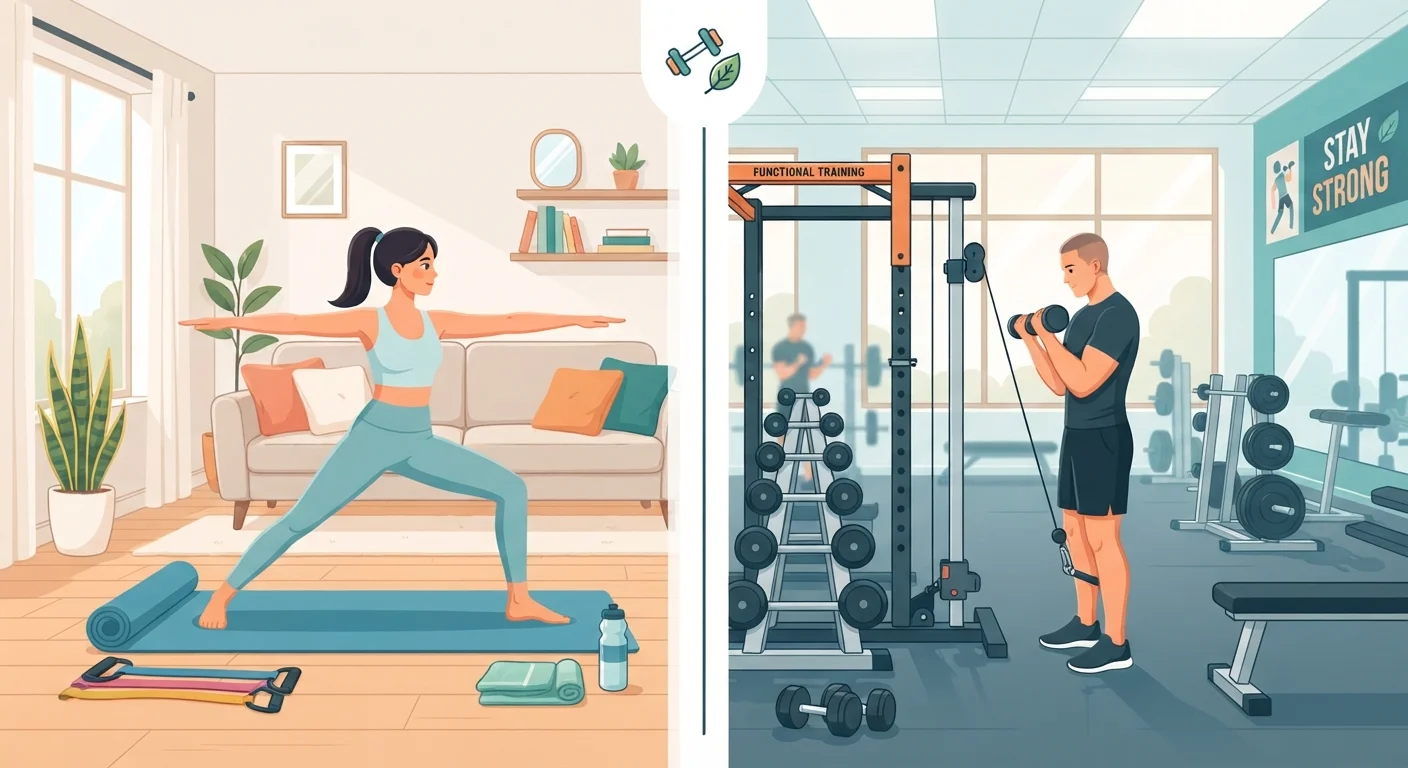
For beginners, cost is often the first thing to weigh. A gym membership in the U.S. typically runs anywhere from around $20 to over $80 per month, depending on the facility and location. Add potential enrollment fees and the total first-year cost can be substantial. Home workouts, by contrast, can start at zero - a clear floor and your own bodyweight are genuinely enough to begin.
That said, costs can creep up on both sides. A home setup with dumbbells, a resistance band set, and a quality exercise mat can easily reach several hundred dollars. And gym memberships, while an ongoing expense, spread the cost of expensive equipment - squat racks, cable machines, treadmills - across many users.
Accessibility is another layer. Not everyone lives near a gym, and not everyone has space at home. Consider your realistic options honestly before committing to either path.
| Criterion | Home Workouts | Gym Workouts |
|---|---|---|
| Upfront cost | Low to none | Enrollment fees possible |
| Ongoing cost | Minimal once equipped | $20-$80+/month |
| Equipment variety | Limited unless you invest | Extensive |
| Convenience | Very high - no commute | Requires travel |
| Professional guidance | Limited (online resources) | Trainers available on-site |
| Social environment | Private, solo | Community and classes |
| Progression options | Possible with creativity | Easier with weight range |
Equipment, Variety, and Progression
One of the gym's clearest advantages is equipment range. A well-stocked facility gives you access to free weights in small increments, resistance machines that isolate specific muscle groups, and cardio equipment like rowing machines or stair climbers. This variety makes it easier to apply progressive overload - the principle of gradually increasing resistance over time to continue building strength. Research in exercise physiology consistently supports progressive overload as a key driver of long-term fitness gains.
Home exercisers can absolutely progress too, but it takes more creativity. Bodyweight progressions (for example, moving from a standard push-up to an archer push-up) and adding resistance bands or adjustable dumbbells can keep things challenging. If you want to understand the types of exercise you're doing - whether aerobic or anaerobic - our guide on aerobic and anaerobic exercise breaks it down clearly. You might also find it helpful to read about whether to start with cardio or strength training as you plan your routine.
~50%
Adults who cite convenience as top exercise barrier
Research published in health behavior journals consistently identifies time and accessibility as the leading reasons Americans do not meet physical activity guidelines.
150 min
Weekly moderate activity recommended for adults
The U.S. Department of Health and Human Services Physical Activity Guidelines for Americans recommend at least 150 minutes of moderate-intensity aerobic activity per week for most adults.
2x
Strength sessions per week recommended as baseline
The same federal guidelines suggest muscle-strengthening activities - achievable at home or in a gym - on two or more days per week for general health.
Convenience, Consistency, and Motivation
The single strongest predictor of fitness results isn't the equipment you use - it's consistency. This is where convenience becomes critically important, especially for beginners. Home workouts eliminate travel time, locker room logistics, and waiting for equipment. That friction reduction is significant: multiple behavioral studies have found that reducing the "effort cost" of a habit dramatically improves follow-through.
Gyms, however, create a dedicated context for exercise - a place whose sole purpose is working out. For many people, this mental separation is genuinely helpful. The social environment, group fitness classes, and the presence of others exercising can all act as motivators. If you're interested in structured, time-efficient routines, our article on the pros and cons of high-intensity interval training is worth reading - HIIT works in both settings. If joint concerns are a factor, low-impact exercise options can be done at home or at the gym with equal effectiveness.
A Hybrid Approach Is a Valid Strategy
You don't have to choose exclusively between home and gym. Many people build a reliable home routine for weekdays and use a gym for weekend sessions with heavier equipment. This hybrid approach captures the convenience of home exercise and the equipment advantages of a gym. If cost is a concern, some community centers and YMCAs offer lower-cost memberships worth exploring.
Safety, Form, and Guidance
Injury risk is a real consideration for beginners. At a gym, certified personal trainers can assess your form, correct dangerous movement patterns, and help you build a program suited to your current fitness level. This guidance is difficult to replicate at home, though online coaching and video instruction have improved considerably and can be a reasonable substitute for many exercises.
Home workouts carry their own safety factors. Without a spotter, heavy barbell work is inadvisable. Improvised equipment - using chairs as benches, for example - introduces additional risk. Starting with established bodyweight movements and progressing gradually is a sensible, lower-risk approach for anyone exercising without supervision.
Whichever environment you choose, learning proper technique before increasing intensity or load is always the right first step. If you're unsure where to start, a single session with a qualified fitness professional can provide a safe foundation - even if you plan to exercise at home going forward.
This article is for general informational and educational purposes only and does not constitute medical or fitness advice. Consult a qualified healthcare provider or certified fitness professional before beginning any new exercise program, especially if you have an existing health condition or injury.