
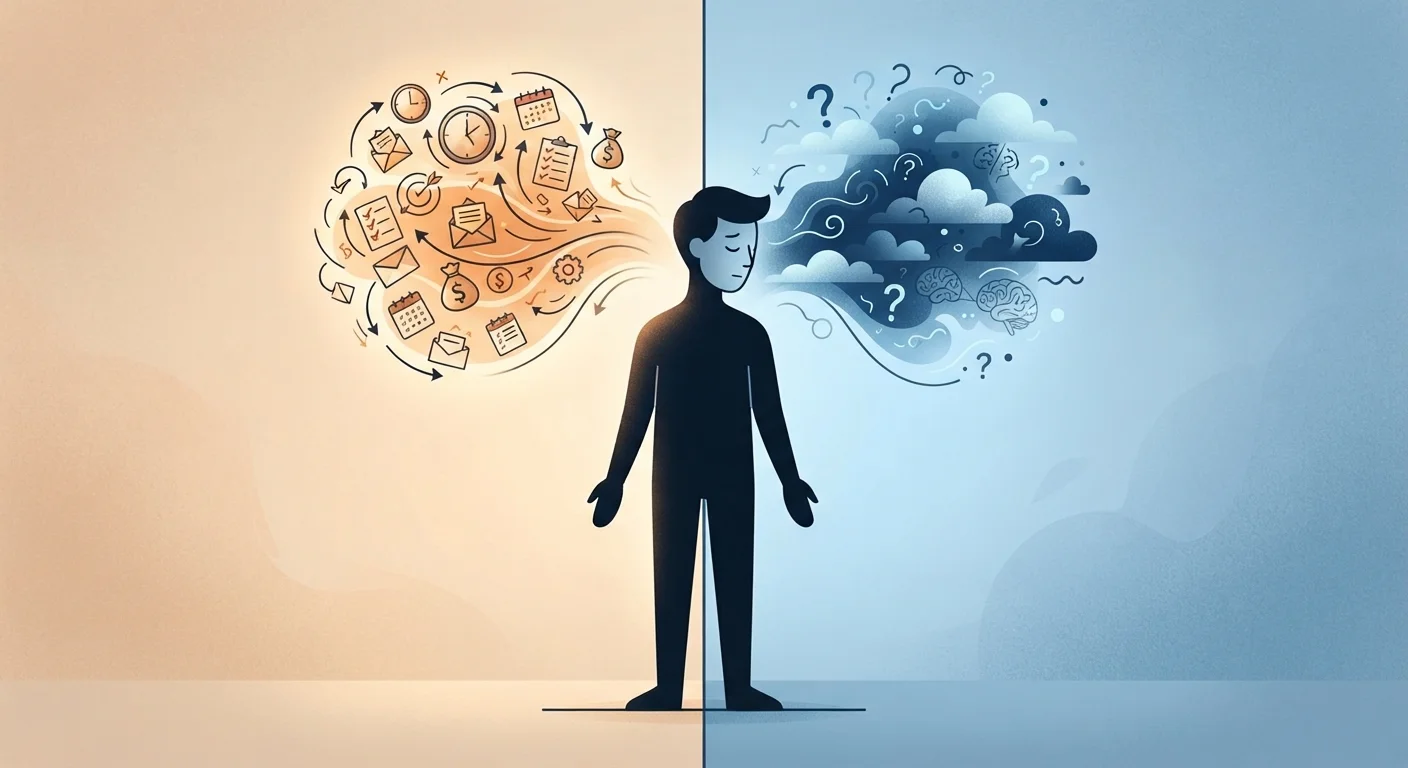
What Makes Stress and Anxiety Different?
Stress and anxiety share a lot of real estate in everyday conversation - we use the words almost interchangeably. But from a psychological standpoint, they describe distinct experiences, and recognizing that difference is a genuinely useful skill.
Stress is a response to an external demand - something happening to you or around you. A pile of bills, a disagreement with a coworker, an upcoming presentation: these create pressure, and your body and mind react. That reaction is stress. Critically, stress tends to ease once the situation resolves or changes. Remove the stressor, and relief typically follows.
Anxiety is subtler. It can start with a stressor, but then outlast it - or arrive without one entirely. Anxiety is characterized by ongoing worry or dread that persists even when there's no immediate threat. It's your nervous system responding to a perceived danger rather than a present one. For some people, it's mild and manageable. For others, it can become disruptive enough to interfere with daily life.
To understand how these fit into your broader mental wellness picture, see what mental wellness actually means - it provides helpful context for where stress and anxiety fit in a larger framework.
| Criterion | Stress | Anxiety |
|---|---|---|
| Primary cause | External, identifiable stressor | Internal or perceived threat; may lack clear cause |
| Duration | Typically resolves with the stressor | Can persist beyond the trigger or appear without one |
| Focus of worry | Specific situation or demand | Diffuse or generalized dread |
| Physical symptoms | Tension, fatigue, disrupted sleep | Similar, often more persistent |
| Most helpful responses | Problem-solving, time management, rest | Mindfulness, breathing, professional support |
| When to seek help | If self-management strategies aren't working | When symptoms are frequent or disruptive to daily life |
Shared Symptoms - and Why That Causes Confusion
One reason stress and anxiety are so frequently mixed up is that their symptoms overlap considerably. Both can produce:
- A racing or pounding heartbeat
- Muscle tension, particularly in the shoulders and neck
- Difficulty sleeping or disrupted rest
- Trouble concentrating or making decisions
- Irritability or emotional sensitivity
The key diagnostic question isn't what you feel - it's when and why. If the symptoms appear in direct response to a clear situation and fade when it passes, stress is the more likely explanation. If they linger, recur without obvious cause, or feel disproportionate to the situation at hand, anxiety may be a more accurate framing.
~33%
Adults reporting extreme stress
The American Psychological Association has consistently found that a significant share of U.S. adults report stress levels they describe as extreme.
19%
U.S. adults affected by anxiety disorders annually
According to the Anxiety and Depression Association of America, anxiety disorders are among the most common mental health conditions in the United States.
It's worth noting that neither stress nor anxiety is inherently abnormal. Both are part of the human experience. The goal isn't to eliminate them entirely - it's to understand them well enough to respond usefully.
How This Distinction Shapes Your Response
Understanding which experience you're having matters because the most effective responses differ meaningfully.
For stress, practical strategies often work well: breaking tasks into smaller steps, setting clearer priorities, practicing time boundaries, or addressing the source of pressure directly. Stress management is largely about engaging with the external situation. The Starter's Roadmap to Managing Everyday Stress is a good place to begin if you're new to these tools.
For anxiety, engagement with the problem isn't always enough - because there may not be a discrete problem to solve. Approaches like mindfulness, controlled breathing, cognitive reframing, and consistent sleep and movement habits are often more helpful. These work by calming the nervous system rather than fixing an external situation. Comparing tools like mindfulness and meditation can help you find practices that fit your life.
When anxiety is frequent, intense, or interfering with work, relationships, or daily function, it's a signal to seek professional support rather than self-manage alone. A licensed therapist or your primary care provider can help clarify what's happening and what approaches make sense for your situation. The signs that stress has become more than everyday pressure is worth reading if you're unsure where your experience falls.
This article is for general informational and educational purposes only and is not a substitute for professional medical or mental health advice. If you are concerned about your mental health, please consult a qualified healthcare provider.