
Why the Confusion Exists - and Why It Matters
The words mindfulness and meditation are used interchangeably in wellness culture, on apps, and even in some clinical materials. That blurring creates a real problem: if you think they mean the same thing, you may choose the wrong starting point or give up on one because the other felt hard.
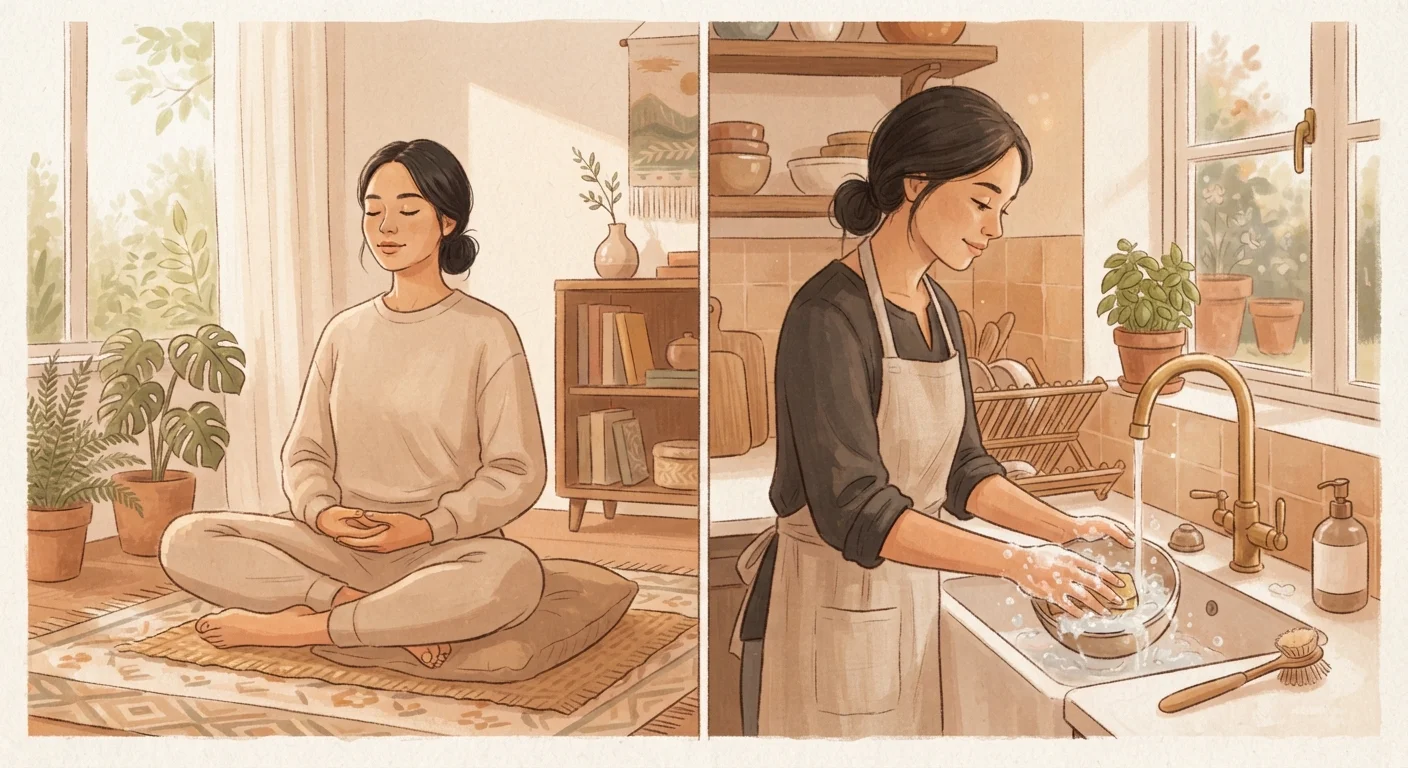
Here is the clearest way to separate them: mindfulness is a quality of attention, while meditation is a deliberate practice. One is something you have; the other is something you do. Understanding that distinction shapes how you integrate either one into daily life.
For a broader look at the landscape of mental wellness concepts, see what mental wellness actually means - it provides useful context for why practices like these matter.
What Mindfulness Actually Is
Mindfulness, at its core, means paying attention to what is happening right now - in your body, thoughts, or surroundings - without judging it as good or bad. Psychologists often describe it as present-moment awareness with an attitude of openness.
The important point is that mindfulness is not limited to any special setting. You can bring it to brushing your teeth, a difficult conversation, or a walk across a parking lot. It is available anywhere, at any time, once you learn to notice it.
Mindfulness does not require closing your eyes, sitting still, or following any particular tradition. It simply asks: What is actually happening right now, and can I notice it without immediately reacting?
| Criterion | Mindfulness | Meditation |
|---|---|---|
| What it is | A quality of attention | A structured practice or exercise |
| When it happens | Any moment of daily life | A dedicated, set-aside time block |
| Requires a quiet space? | No | Usually helpful, not always required |
| Requires a technique? | No formal technique needed | Yes - breath focus, body scan, etc. |
| Can be done by beginners? | Yes, immediately | Yes, with guided support helpful |
| Research support | Well-supported for stress, emotion regulation | Well-studied in clinical programs (e.g., MBSR) |
| Relationship to each other | Is the attitude inside meditation | Is a vehicle for cultivating mindfulness |
What Meditation Actually Is
Meditation is a structured exercise - a deliberate period set aside to train your mind using a specific technique. Common formats include focused-attention meditation (returning attention to a single anchor, like the breath), body-scan practices, loving-kindness exercises, and open-monitoring techniques where you observe thoughts as they arise.
What makes something meditation is that it has a beginning, a method, and an end. You are not just going about your day; you are doing a specific mental exercise, usually for a defined block of time.
Most well-studied meditation programs use mindfulness as the underlying attitude during that structured time - which is why the terms get tangled. But meditation can technically include non-mindfulness forms too, such as visualization or mantra-based repetition.
8 weeks
Typical MBSR program duration
Mindfulness-Based Stress Reduction (MBSR), developed at the University of Massachusetts Medical School, is an 8-week structured meditation program with an established research record for stress-related concerns.
~1 in 6
U.S. adults who meditate regularly
A National Institutes of Health National Health Interview Survey found that approximately one in six American adults reported practicing meditation, reflecting significant growth over prior years.
If you are exploring how practices like these fit into a broader daily routine, daily habits that support a calmer mind offers practical, grounded starting points.
How to Choose Your Starting Point
Neither practice is universally superior - the right entry point depends on your life, schedule, and what specific challenge you are trying to address.
If you frequently feel like you are running on autopilot, snapping at people without meaning to, or struggling to stay present in conversations, informal mindfulness practice is often the gentler, more immediately accessible entry point. Pick one routine activity each day and simply pay full attention to it.
If you want something more measurable and structured - a dedicated mental workout - formal meditation gives you that container. Brief, consistent sessions (often cited in research as around 10-20 minutes) tend to produce more benefit than long, infrequent ones, though you should explore what works for your own schedule without treating any specific duration as a prescription.
Many people find that starting with mindfulness makes meditation feel far less intimidating when they eventually try it. And if stress or anxiety feels significant or persistent, understanding the difference between stress and anxiety is a useful companion read - knowing which you are dealing with shapes which tools make sense.
It is also worth noting that apps can support both practices, though they come with real limitations. See the upsides and limits of mental wellness apps for a balanced perspective.
Neither Practice Replaces Professional Care
Mindfulness and meditation are wellness tools, not treatments for clinical conditions. If you are living with depression, an anxiety disorder, trauma, or another mental health condition, these practices may complement - but should not substitute for - care from a licensed mental health professional. If you are unsure what kind of support fits your situation, therapy, counseling, and self-help compared breaks down the options clearly.
This article is for general informational and educational purposes only and does not constitute medical or mental health advice. If you are experiencing significant distress, persistent anxiety, or any mental health concerns, please consult a qualified healthcare or mental health professional.