What Homeowners Can Realistically Handle
Not all electrical work requires a licensed electrician, and understanding the dividing line empowers you to save money on straightforward tasks without taking on dangerous ones. Generally speaking, device-level replacements - swapping a like-for-like outlet, replacing a light switch, or changing a light fixture on an existing circuit - are within reach for a careful, informed homeowner in most states.
The keys to doing these tasks safely are: always verify power is off with a non-contact voltage tester, work with dry hands in a dry environment, follow the manufacturer's wiring diagram exactly, and never exceed the amperage rating of the device you're installing. These aren't just suggestions - they're the practices that separate safe DIY from dangerous guesswork.
Tasks that involve adding new circuits, relocating wiring inside walls, or working anywhere near the main panel are a different category entirely and are best left to a licensed electrician. Just as knowing when to DIY versus hire a pro applies to other home systems, a thoughtful approach to home improvement budgeting includes honestly assessing which electrical jobs fall within your skill level and which don't.
Common Electrical Myths - Set Straight
Misinformation about home electrical work is surprisingly widespread, and acting on it can lead to real danger. The myth-and-fact pairs below address the misconceptions we hear most often from homeowners who are new to DIY electrical projects.
Myth
As long as I flip the breaker off, the wiring is completely safe to touch.
Fact
Turning off a breaker de-energizes most of the circuit, but the wires entering your panel from the utility (the service entrance conductors) remain live at all times - and some multi-wire circuits share a neutral that can still carry current.
Breakers control the flow of electricity within your home's circuits, but they do not disconnect power from the utility lines feeding the main panel. Those incoming lines are always energized unless your utility company shuts them off. Additionally, in shared-neutral (multi-wire) circuits, failing to turn off both breakers that share a neutral can leave the neutral wire energized - a risk many homeowners aren't aware of. Before touching any wires, use a non-contact voltage tester to verify that a wire is de-energized. Never assume the breaker alone guarantees safety.
Myth
Electrical work only needs a permit if you're doing something major like rewiring the whole house.
Fact
In most U.S. jurisdictions, adding a new circuit, installing a subpanel, or making any change to the electrical system beyond simple device replacement typically requires a permit - regardless of project scale.
Permit requirements vary by municipality, but the threshold is often lower than homeowners expect. Tasks like adding an outlet to a room, running wire for a new appliance circuit, or installing a ceiling fan where no wiring previously existed generally require a permit in most localities. Skipping a required permit can create serious problems: your insurer may deny a claim related to unpermitted work, and you may face costly corrections when selling your home. See our guide to when permits are required for a detailed breakdown of what typically triggers an inspection.
Myth
If the wiring looks fine and nothing is sparking, it's safe.
Fact
Electrical hazards are frequently invisible. Loose connections, undersized wiring, and improper grounding can cause fires and shocks without any visible warning signs.
A loose wire nut or a connection that isn't properly torqued down can arc internally - generating heat that builds over months and eventually ignites surrounding material. The National Fire Protection Association reports that electrical failures and malfunctions are a leading cause of U.S. home fires, and many of those fires originate inside walls where nothing appears wrong from the outside. Absence of visible sparks or burning smells is not a reliable safety indicator. Proper connections, correct wire gauge for the circuit load, and verified grounding are what actually make wiring safe.
Myth
Any handy homeowner can work on their electrical panel.
Fact
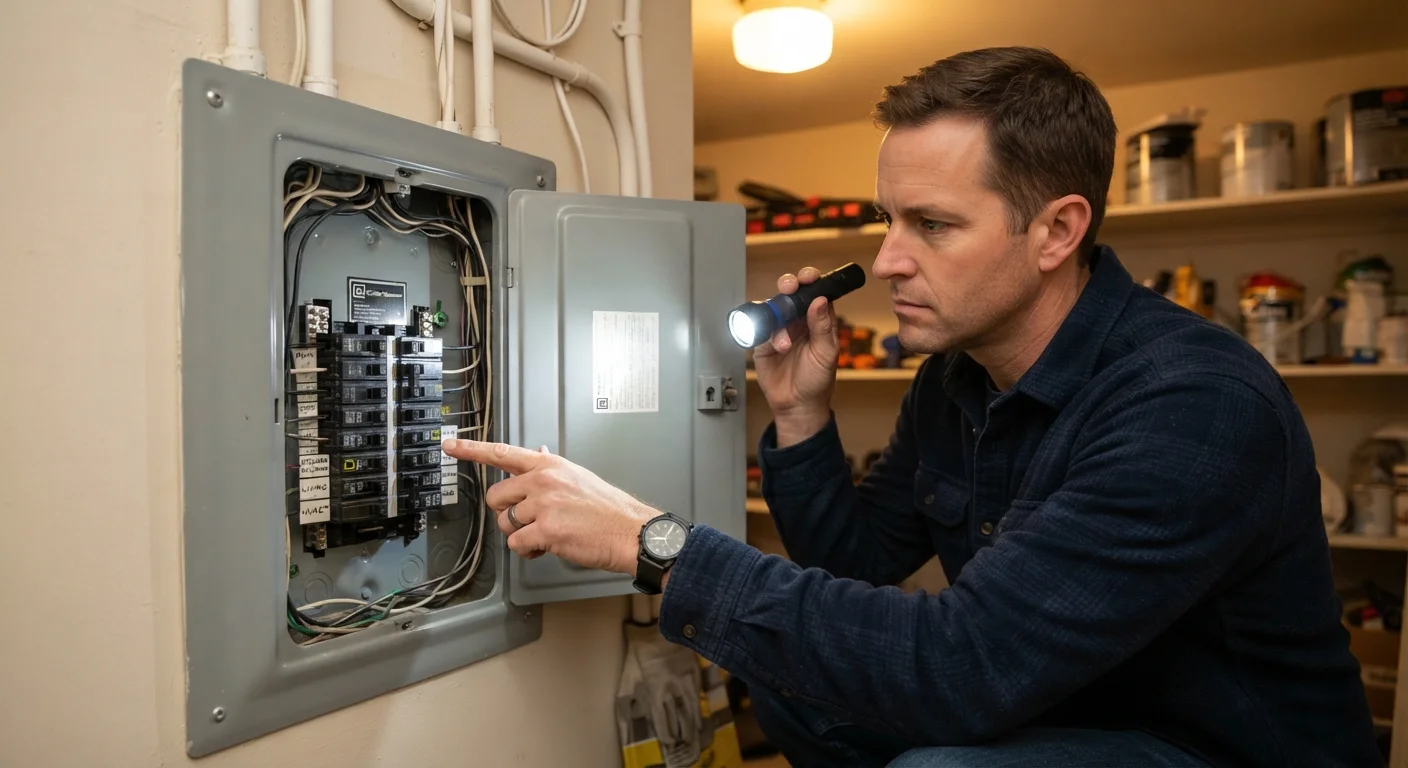
Main panel work - including adding breakers, replacing the panel, or touching service entrance wires - is among the most hazardous home tasks and is restricted to licensed electricians in most states.
Inside the main panel, even with the main breaker off, the thick cables entering from the utility remain live and carry enough current to cause fatal electrocution in a fraction of a second. This is not an area where general handiness translates to safety. Many states explicitly prohibit homeowners from performing panel-level work, and even in states that allow limited homeowner electrical work, opening the service entrance is off-limits without utility disconnection. If your panel needs attention, this is the clearest case for hiring a licensed professional. Our article on what to ask before hiring a contractor can help you vet electricians confidently.
Myth
Electrical tape is a reliable fix for damaged wire insulation.
Fact
Electrical tape is a temporary solution at best. Damaged wire insulation should be replaced or properly spliced with approved connectors inside a covered junction box.
Standard electrical tape can loosen, dry out, and lose adhesion over time - especially in warm locations like attics or near fixtures. The National Electrical Code (NEC) requires that all wire splices and connections be housed inside accessible, covered junction boxes, not simply wrapped and tucked into a wall cavity. If you discover damaged insulation during a project, the right repair involves replacing the damaged section of wire or making a proper code-compliant splice - not wrapping it and moving on.
If any of the scenarios above sound familiar from work already done in your home, it may be worth having a licensed electrician inspect the affected areas. Catching a problem before it causes damage is always less expensive than dealing with the aftermath.
Safety Habits That Actually Matter
Knowing the facts is a starting point, but safe electrical work also depends on consistent habits every time you pick up a tool.
Panel Work Is Never a DIY Project
The interior of your main electrical panel contains conductors that remain live even when the main breaker is off. Contact with these wires can cause fatal electrocution. In most states, work inside the main panel or on service entrance wiring is legally restricted to licensed electricians. Do not attempt this work yourself, regardless of your general handiness or experience with other electrical tasks.
- Test before you touch. Use a non-contact voltage tester on every wire before making contact, even after the breaker is off.
- Label your panel. A clearly labeled breaker panel reduces the chance of accidentally restoring power to a circuit you're working on. Tape a note over the breaker as an extra precaution.
- Use the right wire gauge. Every circuit has a rated amperage, and the wire gauge must match. Using wire that's too thin for the circuit load is a fire risk.
- Don't work alone. Having someone nearby who can call for help or shut off power in an emergency is a simple precaution worth taking.
- Check local code. The NEC sets baseline standards, but your municipality may have additional requirements. Your local building department can tell you what applies to your area.
For larger renovations where electrical work is just one piece, our guide on choosing a trustworthy contractor walks through the questions worth asking before any licensed tradesperson starts work in your home.