Start With Zones, Not Containers
Before buying a single bin or shelf riser, map out how you actually use your kitchen. The most effective approach is zone-based organization - grouping items by the task they support rather than by category alone. A cooking zone near the stove holds oils, spices, and spatulas. A prep zone near the cutting board keeps knives and mixing bowls within reach. A coffee or breakfast station near the kettle consolidates mugs, filters, and morning staples.
This principle matters because it eliminates the mid-task scramble. When your tools live where you use them, the kitchen runs more smoothly - and putting things back becomes instinctive rather than effortful. If you find yourself regularly pulling items from one end of the kitchen to use them at the other, that's a sign the zone needs adjusting.
Understanding why organization systems collapse is just as important as building one. See our guide on why decluttering efforts stall for the mindset shifts that make any system last.
Managing Cabinets, Pantries, and Drawers
The interior of cabinets and pantries tends to drift toward chaos because items get stacked or pushed to the back and forgotten. Two principles counteract this: vertical visibility and first-in, first-out rotation.
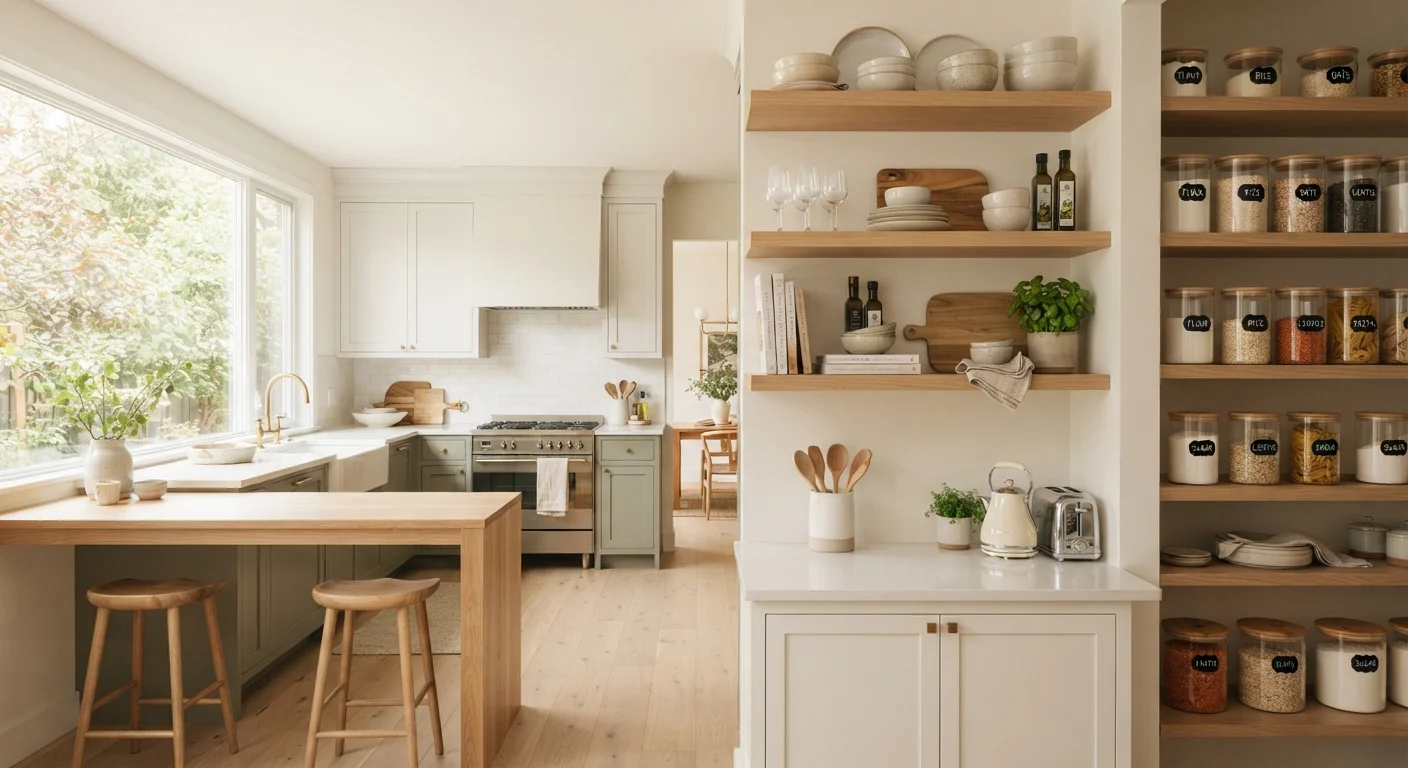
Vertical visibility means storing items so you can see what you have at a glance - think of pantry shelves where cans face forward and labels are readable, or drawers where utensils lie in a single layer rather than piled three deep. When items are visible, you use them. When they're buried, you rebuy things you already own.
First-in, first-out rotation - moving older items to the front when you restock - reduces food waste and keeps pantry contents current. This is the same system grocery stores use, and it works just as well at home.
For drawers, drawer dividers (even DIY cardboard versions) create fixed homes for items and make it impossible for the drawer to become a junk catch-all over time. Consistency of placement is the goal, not perfection of aesthetics.
Countertops: What Earns a Permanent Spot
Countertop space is some of the most valuable real estate in any kitchen, and the clearer it is, the easier the kitchen is to use and clean. A practical rule: only items used daily earn a permanent countertop spot. A coffee maker used every morning stays out. A blender used twice a month goes in a cabinet.
This isn't about minimalism for its own sake - it's about friction. Every item on the counter that you have to move before you can prep food adds a small obstacle. Multiply that across every meal, and cluttered countertops quietly become a reason the kitchen feels harder to use than it should.
For households where multiple people have different opinions about what belongs out, a simple conversation about which items are truly daily-use can resolve most disagreements. Our guide to organizing when household members disagree covers how to build shared systems that hold up for everyone.
Building Habits That Maintain the System
Even a well-designed kitchen organization system will erode without a few simple maintenance habits. The most effective ones require almost no time: a daily reset (returning items to their zones before or after dinner), a monthly pantry scan (pulling out anything expired or nearly empty), and an annual cabinet edit (removing tools or gadgets that haven't been used in a year).
Labeling is underrated as a maintenance tool. When zones and containers are labeled, household members - including children - can return items without guessing. That single change can dramatically reduce how often the system needs to be rebuilt from scratch.
Organization also works best as a household effort. When one person sets up a system but others don't know where things go, the system breaks down within weeks. A five-minute walkthrough of the new layout with everyone who uses the kitchen is often all it takes. And once the kitchen is holding steady, consider applying the same principles elsewhere - our one-in-one-out rule guide offers habits that prevent clutter from returning in any room.