Why the Plant Tag Deserves a Closer Look
Most gardeners glance at the picture on a plant tag, check the price, and move on. That habit leads to plants in the wrong spot, struggling through their first season - or not surviving at all. A plant tag is a compressed care manual. Once you know how to read each section, you can predict whether a plant will thrive in your specific yard before you spend a dollar on it.
Tags are standardized enough that the same categories appear on almost every one, whether you're buying a $4 annual or a $40 shrub. This guide walks through each field in the order you're likely to encounter it. If you enjoy decoding product labels in other areas of life, the skill translates - see how label-reading works across categories in this guide to product label claims.
| Common light categories | Full sun, part sun/shade, full shade |
| Full sun minimum | 6+ hours of direct sun per day |
| USDA Hardiness Zone range | Zones 1-13 (coldest to warmest) (USDA Plant Hardiness Zone Map) |
| Spread vs. height | Use spread for center-to-center spacing |
| Cultivar name format | Single quotes after the botanical name |
| Tag retention tip | Photograph or file the tag for future troubleshooting |
Decoding Each Section of the Tag
Plant Name (Common and Botanical)
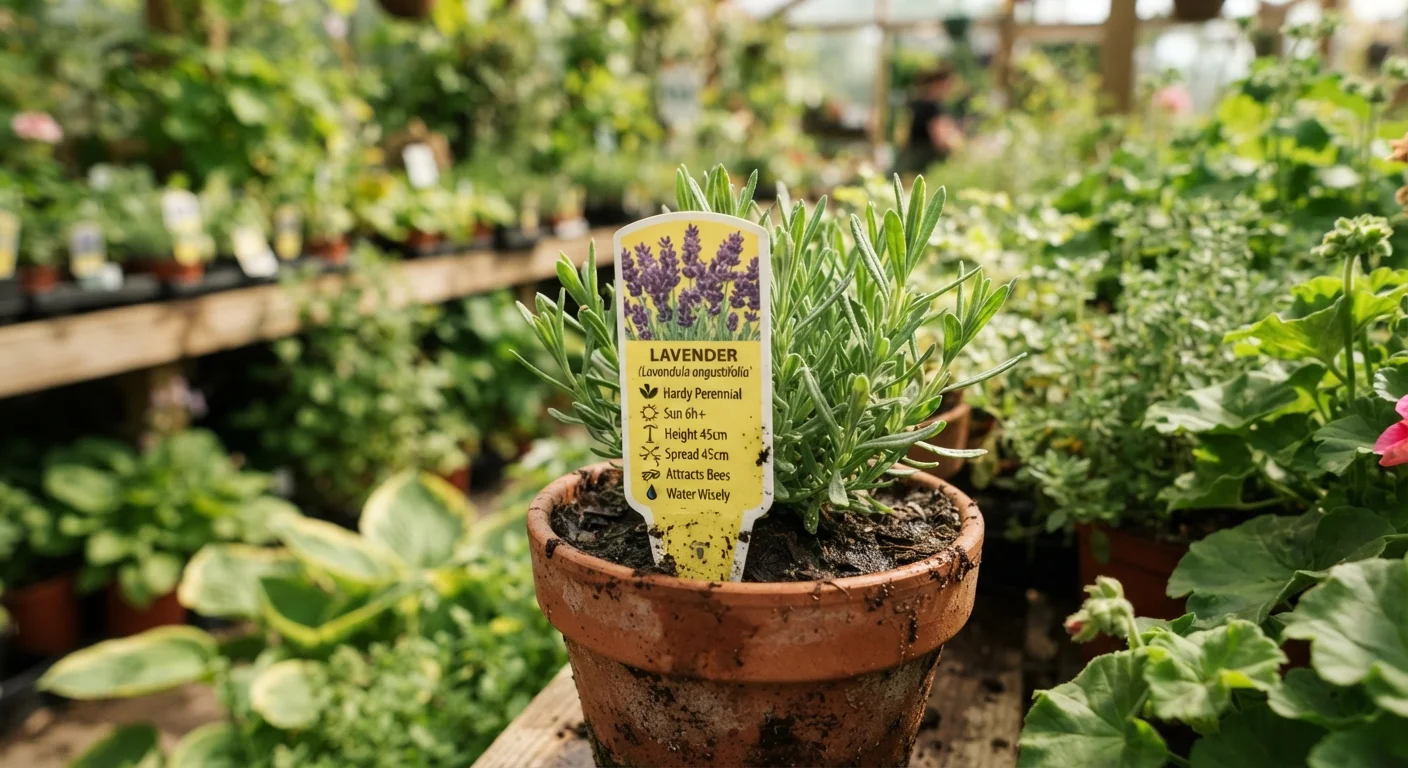
Tags list both a common name (like coneflower) and a botanical name in italics (like Echinacea purpurea). The botanical name is the one to trust for research, because common names vary by region and sometimes refer to completely different plants. The variety or cultivar name usually appears in single quotes after the botanical name - for example, Echinacea purpurea 'Magnus' - and signals specific traits like color, height, or disease resistance bred into that strain.
Light Requirements
Light symbols or text describe how much daily sun the plant needs. Full sun means at least six hours of direct sunlight. Part sun or part shade typically means three to six hours. Full shade means fewer than three hours of direct light. Measure your actual garden beds at different times of day before assuming - a spot that looks bright at noon can still be heavily shaded by late afternoon.
Watering Needs
Tags use general terms like low, moderate, or regular water. These are starting points, not precise schedules. Your local climate, soil drainage, and season all affect how frequently you actually need to water. A plant labeled drought tolerant still needs consistent moisture while it establishes during its first growing season.
Mature Size
Height and spread at maturity are listed separately - pay equal attention to both. A plant listed as 3 ft. tall × 4 ft. wide needs 4 feet of horizontal space, not 3. Underestimating spread is the most common spacing mistake and leads to crowded beds, poor air circulation, and disease problems. Use the spread number to space plants center-to-center when planting.
Hardiness Zone
The USDA Plant Hardiness Zone tells you the coldest average winter temperature a plant can survive. Zones run from 1 (coldest) to 13 (warmest). If a tag reads Zones 5-9, the plant can handle winters in those zones but may not survive outside that range. Look up your ZIP code on the USDA website to confirm your zone before buying anything intended to overwinter in your yard.
Bloom Time and Color
These fields help you plan for seasonal interest and color combinations. Bloom time is usually listed as a season or month range. Keep in mind that actual bloom timing shifts based on your local climate - plants in warmer zones often bloom earlier than the tag suggests.
Hardiness Zone
A USDA-defined geographic area based on average annual minimum winter temperatures. Plants listed for a zone are expected to survive winter conditions in that zone without special protection.
Cultivar
A cultivated variety of a plant, selectively bred for specific traits such as flower color, compact size, or disease resistance. Cultivar names appear in single quotes on the plant tag.
Mature Spread
The full horizontal width a plant reaches when fully grown. This measurement determines center-to-center spacing when planting multiples in a bed.
Full Sun
A light condition in which a plant receives at least six hours of direct, unfiltered sunlight per day. Plants labeled full sun typically produce fewer flowers or weaker growth in shadier spots.
Part Shade
A light condition offering three to six hours of direct sun per day, often with shade during the hottest afternoon hours. Some plants perform better in part shade than in hotter full-sun exposures.
Botanical Name
The internationally standardized Latin name for a plant species, written in italics. Unlike common names, botanical names are consistent across languages and regions.
Soil and pH Preferences
Some tags note preferred soil type (sandy, loamy, clay) or a pH range. Ignoring pH is one of the quieter causes of plant failure - nutrients can be present in soil yet unavailable to roots if the pH is off. Before planting acid-lovers like azaleas or blueberries, it's worth testing your soil. Our article on soil pH and plant nutrition explains how to test and adjust your soil's pH.
Using the Tag as a Placement Checklist
Before you plant, treat the tag like a quick compatibility checklist against your actual conditions. Match the light requirement to your bed's sun exposure. Compare the mature spread to available space. Verify your hardiness zone covers the plant's listed range. Check whether your soil drains well or tends to stay wet - most tags flag drainage preferences with terms like well-drained or tolerates wet soil.
Keep the tag after planting. Stick it in a small notebook or photograph it with your phone. When a plant underperforms, the tag is your first reference for troubleshooting. It's also useful when buying companion plants later, since you already have the original's requirements documented.
Reading a plant tag takes about sixty seconds once you know what each field means. That minute invested at the nursery saves hours of remediation - and the frustration of losing a plant that was simply in the wrong place.