Why pH Is the Gatekeeper of Plant Nutrition
You can spread fertilizer across your garden every week and still watch plants struggle. Yellowing leaves, stunted stems, fruit that never fills out - these are classic signs of nutrient deficiency. But here is the twist: your soil may already contain the nutrients your plants need. The problem is that at the wrong pH, those nutrients become chemically locked in the soil, and roots simply cannot reach them.
Think of soil pH as a lock on a safe. The fertilizer is the money inside. Without the right combination - the right pH - the safe stays shut. Nitrogen, phosphorus, potassium, iron, magnesium, and a range of other essential minerals all have specific pH windows where they are most available to plant roots. When soil drifts too far acidic or too far alkaline, nutrient uptake collapses even if the soil is technically loaded with nutrition.
This is why testing pH is the right first step before you add any fertilizer or amendment. It tells you whether the soil's chemistry is open for business. See our guide to fertilizer numbers for a breakdown of what nutrients you may be feeding - and why they might not be reaching your plants.
6.0-7.0
Optimal pH range for most garden plants
Soil scientists and cooperative extension guidelines consistently identify this slightly acidic range as supporting the broadest nutrient availability for common vegetables and grasses.
10×
Acidity change per one pH unit
The pH scale is logarithmic, meaning each one-unit step represents a tenfold change in acidity - a shift from 6.0 to 5.0 makes soil ten times more acidic.
2-6 months
Time for lime to measurably raise soil pH
University extension services note that lime works slowly and gardeners should allow at least one full season before reassessing pH levels after application.
Understanding the pH Scale in Plain Terms
The pH scale runs from 0 to 14. Pure water sits at 7.0 - perfectly neutral. Soil below 7.0 is acidic; above 7.0 is alkaline (also called basic). Most garden plants thrive in slightly acidic soil, roughly 6.0 to 7.0, because that range keeps the broadest spectrum of nutrients soluble and accessible.
Here is a quick reference for common plants and their preferred pH ranges:
- Lawn grasses: 6.0-7.0
- Tomatoes and peppers: 6.0-6.8
- Roses: 6.0-6.5
- Blueberries: 4.5-5.5
- Azaleas and rhododendrons: 4.5-6.0
- Spinach and asparagus: 6.5-7.5
Notice that blueberries and acid-loving shrubs want soil that would be far too acidic for vegetables. Mixing plants with very different pH needs in the same bed makes it nearly impossible to keep everyone happy - a useful fact to know before you plan your layout.
How to Test Your Soil pH
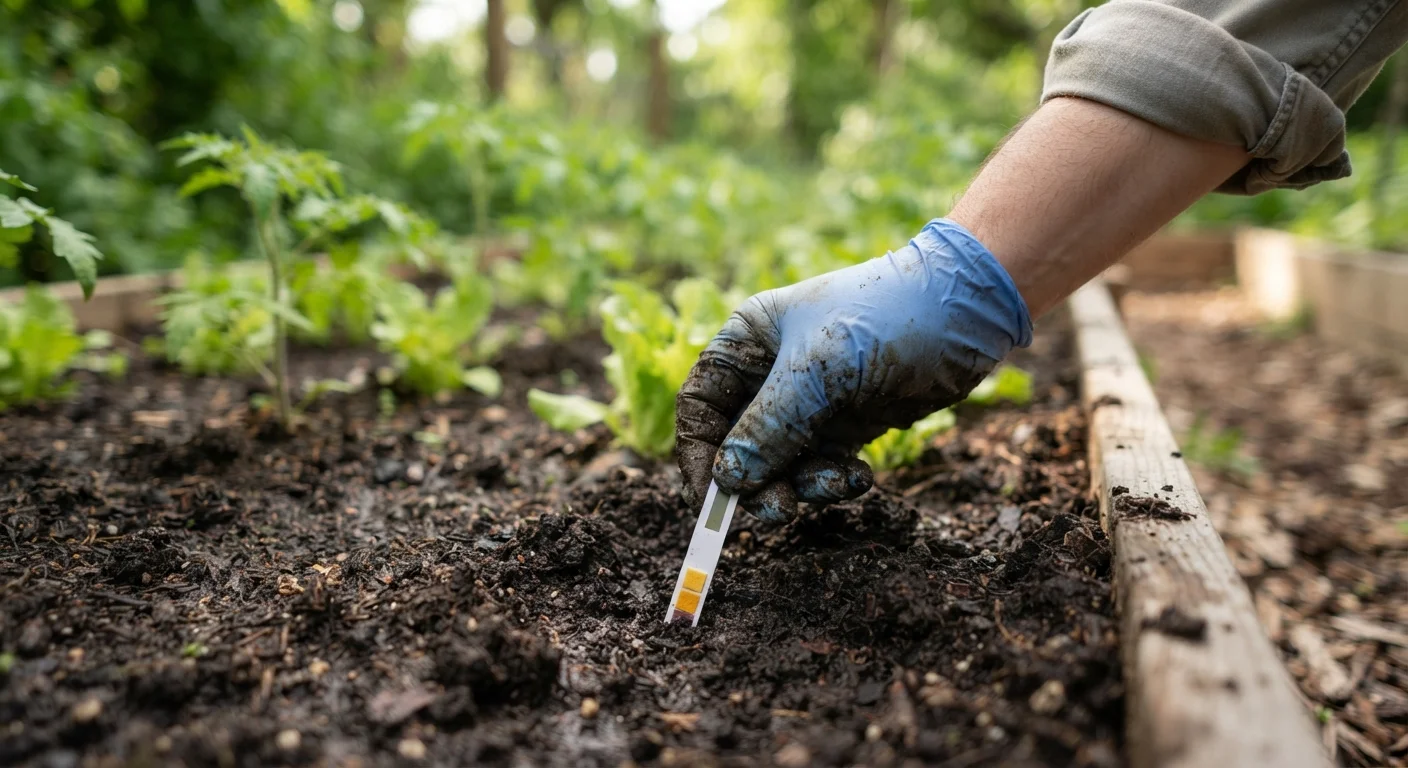
Testing soil pH is straightforward and does not require special expertise. There are two common approaches:
- Home test kits or strips: Available at garden centers, these give a color-based reading within minutes. They are useful for a rough sense of where your soil stands and cost very little.
- Cooperative extension lab testing: Most U.S. states offer soil testing through their land-grant university extension services for a modest fee. You mail in a small soil sample and receive detailed results - including pH, nutrient levels, and specific amendment recommendations for what you plan to grow. This is the most reliable option.
For the most accurate result, collect soil from several spots in your garden at a depth of four to six inches, mix the samples together, and use that blend for testing. A single scoop from one corner of the yard can be misleading.
Test Multiple Spots for an Accurate Picture
Soil pH can vary noticeably within the same yard - especially near concrete foundations (which raise pH) or under heavy tree cover (which can lower it). Collecting samples from four to six different spots and combining them gives you a much more reliable reading than a single scoop. Label samples from different beds separately if you grow a variety of plants.
How to Adjust pH When It's Off
Once you know your pH, correcting it is a matter of applying the right amendment and giving it time. Soil does not change overnight.
To raise pH (make soil less acidic): Apply ground limestone - commonly called garden lime or agricultural lime. The amount needed depends on your current pH, your target pH, and your soil type. Sandy soils need less lime than clay soils to shift the same number of points. Your soil test results will usually include a specific recommendation.
To lower pH (make soil less alkaline): Elemental sulfur is the most common amendment. Soil bacteria slowly convert it to sulfuric acid, which lowers pH over weeks to months. Acidifying fertilizers and organic matter - particularly composted pine bark or peat - can also nudge pH downward gradually. If you want to build organic matter while supporting soil chemistry, see our guide to home composting for a practical starting point.
Patience is important. Significant pH changes can take a full growing season to appear. Test again before the next planting cycle to confirm the shift and decide whether another application is needed.
Making pH Part of Your Seasonal Routine
The best time to test and amend soil pH is before you plant - ideally in fall or early spring. Fall application of lime, for example, gives it all winter to work into the soil before spring planting begins. Our spring lawn and garden prep checklist walks through soil preparation as part of a full seasonal plan.
Once you understand your soil's baseline pH, you do not need to test every single year unless you are actively amending or if plants start showing unexplained symptoms. Every two to three years is sufficient for established beds. New planting areas, raised beds with added soil mixes, and vegetable gardens warrant more frequent checks since inputs - compost, fertilizer, water source - all influence pH over time.
Understanding what your soil actually needs before you spend money on amendments or fertilizers is one of the most practical habits you can build as a gardener. pH testing gives you a clear starting point - and it removes a lot of the guesswork.