The Three Numbers, Explained Simply
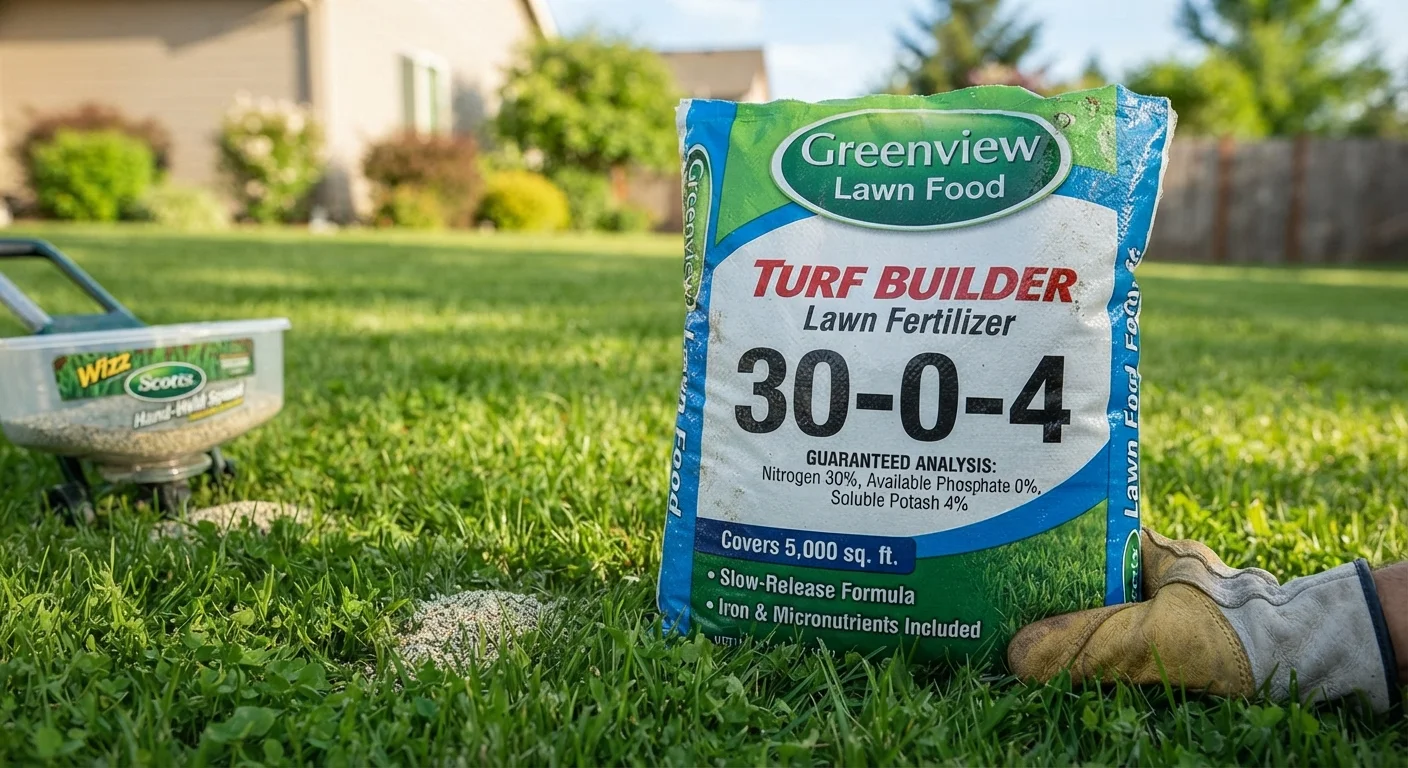
Pick up any bag of lawn fertilizer and you'll see a set of three numbers separated by dashes - something like 28-0-10 or 10-10-10. These numbers are always in the same order and always mean the same thing: nitrogen (N), phosphorus (P), and potassium (K). Together, they're called the N-P-K ratio.
Each number tells you what percentage of that bag's total weight is made up of that nutrient. A 50-lb bag labeled 20-5-10 contains 10 lbs of nitrogen, 2.5 lbs of phosphorus, and 5 lbs of potassium. The remainder is inert carrier material - fillers that make spreading more even and predictable.
Understanding these three numbers is similar in spirit to reading a nutrition label on food. Just as a food label tells you how much protein, fat, or carbohydrates are packed into a serving, the N-P-K label tells you exactly what's inside the bag - without any guesswork. If you've ever wondered about label literacy more broadly, our explainer on reading food labels uses the same plain-language approach.
3
Primary macronutrients in every fertilizer label
Nitrogen, phosphorus, and potassium are universally recognized as the three essential macronutrients for plant growth, and their ratio is required on all fertilizer labeling in the U.S.
~50%
Of a fertilizer bag that is active nutrient
In a typical 10-10-10 fertilizer, only 30% of the bag weight is active nutrient (10% each of N, P, and K); the rest is carrier material. Higher-analysis products pack more nutrient into less weight.
What Each Nutrient Actually Does
Nitrogen (N) - The First Number
Nitrogen is the nutrient most responsible for the lush, deep-green color and vigorous blade growth that most homeowners associate with a healthy lawn. It fuels the production of chlorophyll, the compound that makes grass green and drives photosynthesis. Lawns that are nitrogen-deficient typically look pale yellow or grow slowly during otherwise favorable conditions.
Because nitrogen moves through soil relatively quickly - either absorbed by roots or leached by rainfall - it needs to be replenished regularly during the growing season. This is why many lawn fertilizers have a notably higher first number compared to the other two.
Phosphorus (P) - The Middle Number
Phosphorus supports root development and energy transfer within the plant. It's especially important during the early stages of grass growth - when seeding a new lawn or trying to strengthen thin, patchy turf. However, most established lawns in the U.S. already have adequate phosphorus levels in their soil.
Many states now restrict or ban phosphorus in lawn fertilizers sold for established turf because excess phosphorus runs off into stormwater and contributes to algae overgrowth in lakes and streams. Always check your local regulations before buying a product with a high middle number.
Potassium (K) - The Third Number
Potassium acts as a general strengthener. It helps grass cells regulate water, improves tolerance to heat, drought, and cold, and bolsters resistance to disease and foot traffic stress. Think of it as the nutrient that helps your lawn hold up under pressure. It's particularly valuable heading into summer heat or winter dormancy.
Start With a Soil Test
Before buying any fertilizer, consider getting a basic soil test through your local cooperative extension service. Results typically tell you existing nitrogen, phosphorus, and potassium levels as well as your soil pH. This takes the guesswork out of choosing an N-P-K ratio and can prevent you from over-applying nutrients your lawn doesn't actually need.
Choosing the Right Ratio for Your Lawn
The right N-P-K ratio depends on your lawn's current condition and what you're trying to achieve. A general-purpose lawn fertilizer for an established, actively growing yard typically has a high first number, a low or zero middle number, and a moderate third number - something like 30-0-6 or 28-0-10.
If you're seeding bare patches or establishing new turf, a product with a higher phosphorus number may help roots take hold - but verify this is permitted in your area first.
The most reliable way to know what your lawn actually needs is a soil test. Local cooperative extension offices (affiliated with land-grant universities) often offer affordable testing. A soil test reveals your existing nutrient levels and pH, so you can select a ratio that fills real gaps rather than adding nutrients already present in excess. Keep in mind that even a perfectly chosen fertilizer won't perform well if your soil pH is off - nutrients become chemically unavailable to grass roots when pH is too high or too low. Our article on soil pH and plant nutrient availability explains this connection in detail.
A Few Practical Rules Before You Fertilize
Even with the right ratio selected, application matters just as much as product choice. Over-applying any fertilizer - even one with modest numbers - can burn grass blades, stimulate excessive thatch buildup, or send nutrients into nearby waterways.
- Always read and follow the label rate. More is not better with fertilizer.
- Fertilize when rain isn't imminent (unless using a product designed for application before light rain). Heavy rain right after application can wash nutrients off your lawn before grass roots absorb them.
- Apply to dry grass blades when using granular products, then water lightly to work the nutrients into the soil.
- Store unused fertilizer in a cool, dry location away from children and pets, in its original sealed bag.
A soil test, combined with a basic understanding of what those three numbers mean, puts you in a much stronger position to make an informed choice at the garden center - and to get results you can actually see in your lawn.