What's Actually Causing Your Tomatoes to Crack
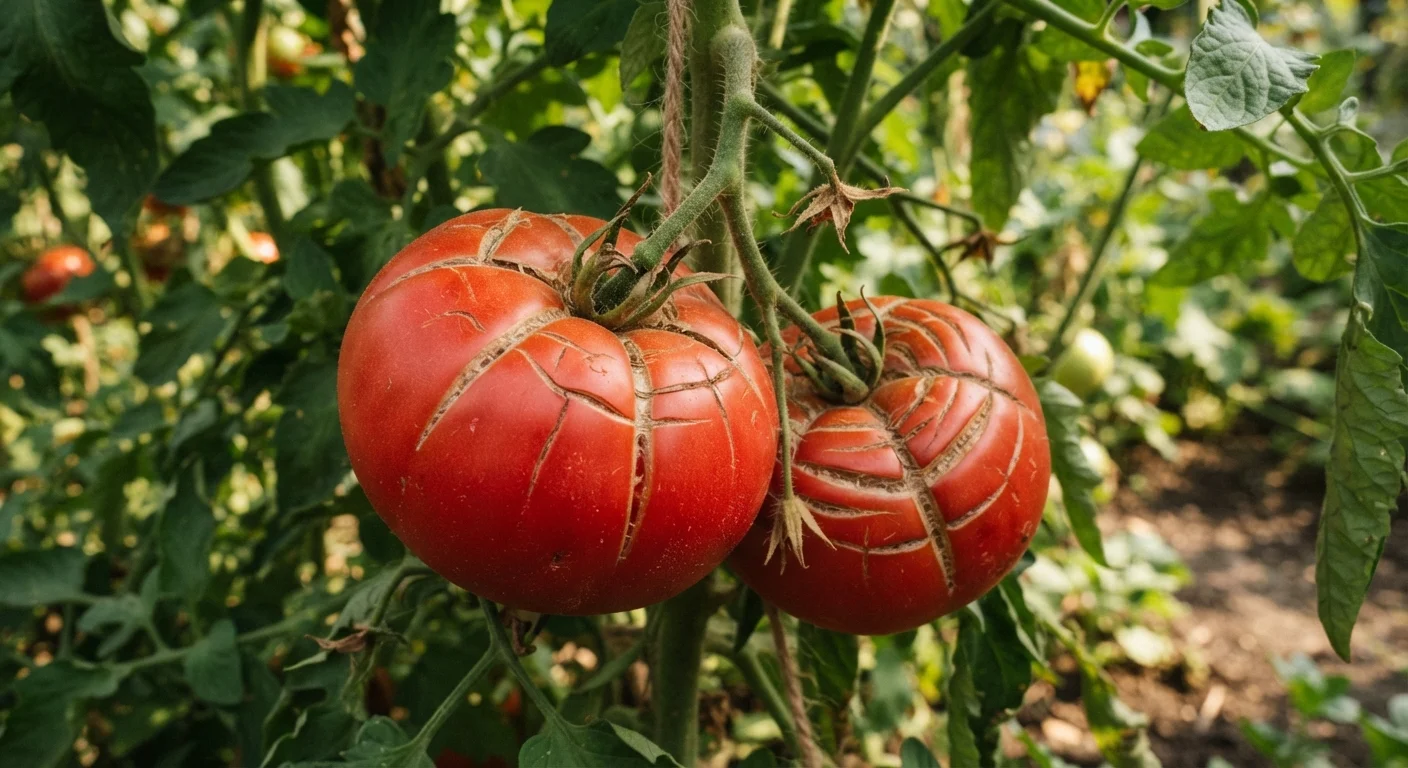
Tomato cracking - also called fruit splitting - happens when the inside of the tomato grows faster than its skin can stretch. The most common trigger is a sudden surge of moisture after a dry period. When tomato plants receive inconsistent water, the fruit responds dramatically to any large influx: the interior flesh expands rapidly, and the skin simply cannot keep up.
There are two main types of cracking. Radial cracks run from the stem end downward along the fruit. Concentric cracks circle around the top of the tomato. Both are caused by the same underlying issue - moisture fluctuation - though radial cracking tends to be more severe.
Understanding that this is a physiological response rather than a disease is important. No spray or fertilizer will fix it. The solution is entirely about soil and water management.
2-3 inches
Recommended mulch depth around tomato plants
University extension services commonly recommend this depth to stabilize soil moisture and reduce temperature fluctuations around roots.
1-2 inches
Water per week tomatoes typically need
Most cooperative extension gardening guides suggest tomatoes need roughly one to two inches of water weekly, including rainfall, for steady growth.
The Mistakes Behind Most Cracking Problems
Once you understand the cause, it becomes easier to trace the cracking back to specific habits in the garden. The mistakes below are the most common culprits - and each one is correctable with straightforward changes to your routine.
Watering inconsistently - letting soil dry out completely, then soaking it.
Why it happens: Many gardeners water by schedule or by sight, only reacting when plants look wilted. This creates a boom-and-bust moisture cycle that the tomato cannot handle.
Skipping mulch around the base of tomato plants.
Why it happens: Mulching feels like an optional step, especially for first-time gardeners focused on planting and watering rather than soil management.
Allowing tomatoes to stay on the vine too long before harvesting.
Why it happens: Gardeners often wait for fruit to reach full red color on the plant, not realizing that near-ripe tomatoes are especially vulnerable to cracking because their skin has already begun to thin and stretch.
Not accounting for heavy rainfall in the watering routine.
Why it happens: Gardeners often stick to a fixed watering schedule without adjusting for natural rainfall, effectively overwatering without meaning to.
Choosing crack-prone tomato varieties without knowing it.
Why it happens: Many popular heirloom varieties and large beefsteak-style tomatoes have thinner or more delicate skin, making them naturally more susceptible to splitting regardless of watering habits.
Overwatering Is Not the Same as Consistent Watering
A common overcorrection is to water heavily and frequently every day, which can waterlog roots and promote fungal disease. The goal is steady, even soil moisture - not saturated soil. Check a few inches below the soil surface before watering; it should feel slightly damp, not dry or soggy.
Building a Garden Routine That Prevents Splitting
Preventing tomato cracking is mostly about building steady habits rather than making dramatic interventions. Start by focusing on three fundamentals: consistent watering, mulching, and timely harvesting. These three steps alone address the vast majority of cracking in home gardens.
Consider installing a simple drip irrigation system or soaker hose if hand-watering is inconsistent. These tools deliver water slowly and directly to the root zone, which reduces the moisture spikes that cause splitting. Raised beds with well-amended, loamy soil also drain more evenly than dense clay, giving you more control over moisture levels.
Finally, keep a garden journal noting watering days and rainfall. Patterns become clear quickly, and you will be able to anticipate high-risk periods - like dry weeks followed by summer thunderstorms - and adjust your approach before the damage happens.
Cracked Tomatoes Spoil Quickly
Once a tomato cracks, bacteria and mold can enter through the broken skin within hours, especially in warm, humid weather. Pick cracked tomatoes immediately and use or preserve them right away. Do not leave them on the vine hoping they will heal - the damage is permanent and deterioration is fast.
Just as proper technique prevents failure in other home projects - much like understanding why caulk fails before it's applied - the same principle applies here: getting the fundamentals right from the start saves you from having to fix avoidable problems later.