
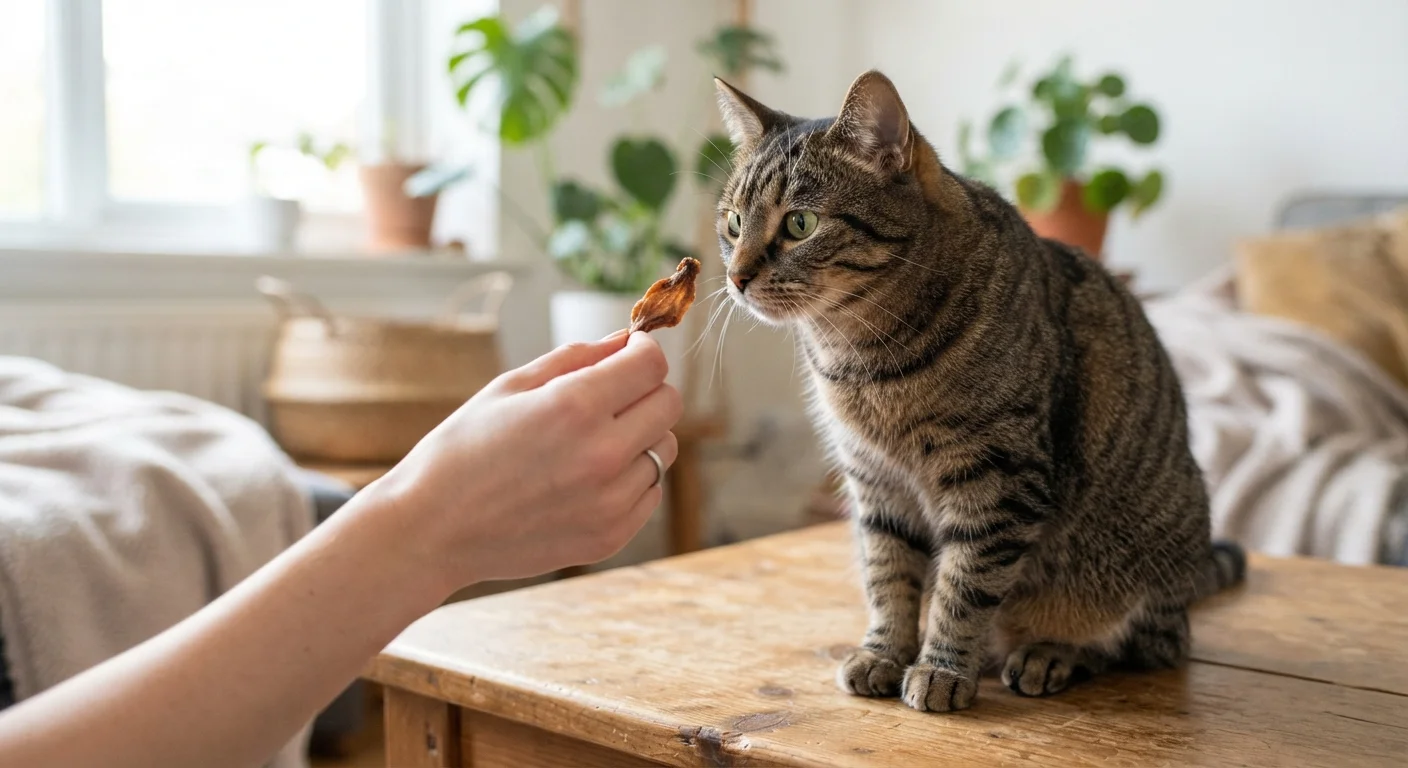
The Big Question: Are Cats Actually Trainable?
Ask most cat owners whether their pet can be trained and you'll likely get a laugh. Cats have a long-running reputation for being aloof, self-directed, and frankly uninterested in what humans want. But behavioral research tells a more nuanced story.
Studies in animal cognition have demonstrated that domestic cats (Felis catus) are capable of associative learning — the same foundational mechanism that makes dog training work. They can link a cue (like a word or a click) with a behavior, and they can learn that a specific action leads to a reward. Research published in journals covering animal behavior has also found that cats can recognize their own names and distinguish them from other similar-sounding words, even when spoken by strangers.
The honest answer is: yes, cats can be trained. The more accurate question is how to train them effectively — and that requires understanding what motivates a cat rather than trying to apply dog-training logic wholesale. For a deeper look at the underlying science of reward-based learning, see our guide to positive reinforcement.
Myth
Cats are too independent to be trained — they simply don't want to learn from humans.
Fact
Independence is a personality trait, not an inability to learn. Cats learn through motivation, not obedience.
The confusion stems from comparing cats to dogs, which have been selectively bred for thousands of years to follow human direction. Cats domesticated differently — they were never bred primarily for compliance. But independence and untrainability are not the same thing. When the reward is right, cats engage readily. The trainer's job is to find what the individual cat values most, whether that's a small piece of chicken, a fishing-rod toy, or a few seconds of play.
Myth
Cats don't respond to their names or understand human communication.
Fact
Research shows cats recognize their own names and can follow some human social cues, including pointing gestures.
A widely cited 2019 study published in Scientific Reports found that domestic cats could distinguish their own names from other nouns, including names of cats they live with, even when called by unfamiliar people. Separate research has shown cats can use human pointing gestures to locate hidden food — a social cognition skill that not all animals demonstrate. These findings suggest cats are paying more attention to us than their demeanor implies.
Myth
If a cat ignores you during training, it means the training isn't working.
Fact
Disengagement usually signals the reward isn't motivating enough, the session is too long, or the environment is too distracting.
A cat walking away from a training session is giving useful feedback. It rarely means the cat is incapable — it more often means the conditions aren't right. Common culprits include using a treat the cat finds only mildly interesting, training in a noisy or busy space, or pushing past the cat's natural attention threshold. Adjusting one variable at a time — treat value, location, or session length — typically resolves the problem quickly.
Myth
Scolding or spraying a cat with water is an effective way to stop unwanted behavior.
Fact
Punishment-based methods suppress behavior temporarily but often create fear and anxiety without teaching the cat what to do instead.
Aversive techniques like spray bottles, loud noises, or physical correction tend to make cats associate the punishment with the person delivering it rather than with the behavior itself. Over time, this erodes trust and can cause stress-related problems — including hiding, aggression, and changes in litter box use. Behavioral science consistently supports redirecting unwanted behavior toward an acceptable alternative and rewarding that instead. For more on why these methods often backfire, see our article on punishment-based training.
Myth
Only kittens can really learn — adult cats are set in their ways.
Fact
Adult cats retain the capacity to learn new behaviors throughout their lives with patient, consistent training.
While early socialization windows during kittenhood do matter for certain types of exposure and comfort-building, associative learning — the mechanism behind training — is not age-dependent in the same way. Adult and senior cats have successfully learned new behaviors in both research settings and everyday households. The timeline may be slightly longer, and sessions may need to be gentler, but the process is fundamentally the same.
What Training Methods Actually Work for Cats
Successful cat training relies almost entirely on positive reinforcement — rewarding the behavior you want so the cat is motivated to repeat it. Food treats are the most common reward, but some cats respond well to play, verbal praise, or brief petting. The key is identifying what your individual cat finds genuinely motivating.
Avoid Using Food Rewards Excessively
While treats are a powerful motivator, over-relying on them without gradually reducing frequency can make your cat treat-dependent — refusing to perform behaviors unless food is visible. Use a variable reward schedule over time, gradually replacing some treats with praise or play. Always account for training treats within your cat's daily calorie intake to avoid unintended weight gain.
Session length matters enormously. Cats have shorter attention spans for structured tasks than dogs do, and they fatigue quickly. Behavioral consultants and veterinary behaviorists generally recommend keeping sessions to two to five minutes, repeated two or three times daily. Ending on a successful repetition keeps the cat's association with training positive.
Clicker training — where a small clicking device marks the exact moment a correct behavior occurs — is particularly well-suited to cats because the precise timing helps the animal understand exactly what earned the reward. If you're weighing approaches, our comparison of clicker training and verbal cues breaks down the pros and cons of each method.
It also helps to train before mealtimes, when your cat is hungry and food rewards carry more value. Training a full, sleepy cat is an exercise in frustration.
79%
Cats correctly identified their own name
In a 2019 study published in Scientific Reports, approximately 79% of cats showed measurable responses to their own name versus other similar words.
2–5 min
Recommended cat training session length
Veterinary behaviorists and certified animal trainers consistently recommend keeping feline training sessions to two to five minutes to maintain engagement.
3x
More effective: reward-based vs. aversive training
A 2021 study in PLOS ONE found dogs trained with reward-based methods showed fewer stress behaviors and better task performance than those trained aversively — a pattern broadly consistent with feline behavioral research.
Practical Behaviors Cats Can Learn
Many owners are surprised by how broad the range of trainable behaviors actually is. Beyond the basics, cats have been documented learning a wide variety of skills:
- Sit, stay, and come — foundational cues that also improve household safety
- High-five and spin — simple tricks that build engagement and mental stimulation
- Carrier entry — a critical skill that reduces stress around vet visits
- Targeting — touching their nose to a stick or hand, which can be used to guide movement
- Accepting grooming or handling — particularly useful for nail trims and medical care
Even older cats can be introduced to new behaviors. Neuroplasticity — the brain's ability to form new connections — doesn't disappear with age. Expectations may need adjusting, but the learning capacity remains. Our guide to training older pets covers what typically changes and what stays the same.
If you're curious how cat training compares across other household pets, training techniques for different pets offers a useful side-by-side overview.