What Each Training Format Actually Involves
Before comparing the two, it helps to understand what you're actually signing up for with each option.
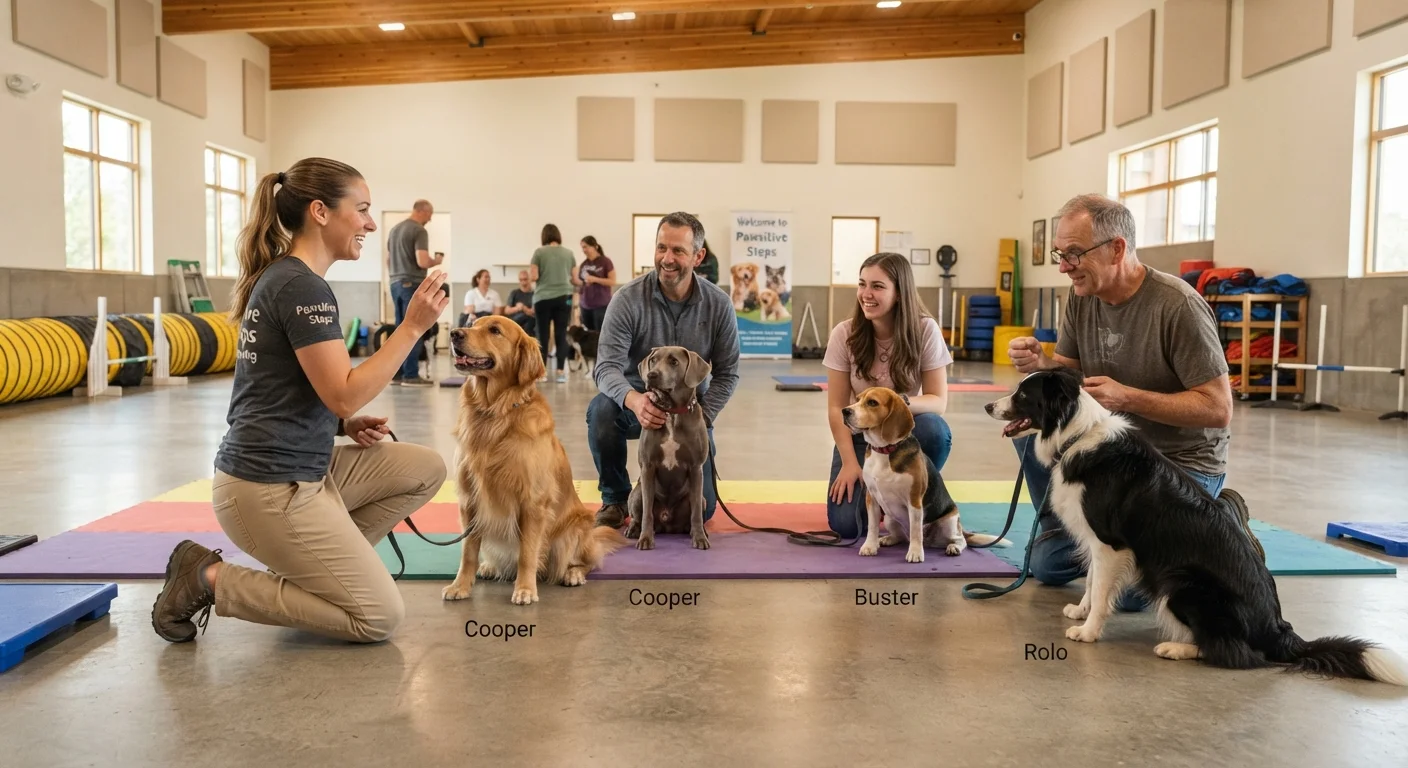
Group classes typically involve a certified trainer working with several pet-and-owner pairs simultaneously — often four to eight duos in a single session. Sessions are scheduled at fixed times and usually run as a multi-week course covering foundational behaviors like sit, stay, and leash manners. The shared environment is intentional: learning to respond to cues around distractions is part of the curriculum.
Private sessions are one-on-one appointments between a trainer, the owner, and the pet. The trainer designs each session around your specific pet's history, temperament, and problem behaviors. Sessions can happen at your home, at a training facility, or in any environment that makes sense for the issue you're addressing — such as a park for leash reactivity work.
Both formats can use positive reinforcement methods effectively. See our overview of training techniques that work across pet types for a look at the underlying principles that apply regardless of format.
Where Group Classes Have a Clear Advantage
Group classes aren't just a budget-friendly option — they offer genuine training benefits that private sessions can't fully replicate.
- Socialization exposure: Pets learn to focus and respond to cues despite the presence of other animals and unfamiliar people — a skill that matters enormously in daily life.
- Structured environment: A predictable weekly schedule helps owners build consistent training habits.
- Peer learning: Watching other owners work through the same challenges can normalize frustration and spark useful ideas.
- Cost efficiency: Because the trainer's time is shared, group classes are generally less expensive per session than private work.
Group classes tend to be an especially good fit for puppies and kittens who haven't yet established strong social skills, adult pets with solid temperaments who need basic obedience, and owners who are new to training and benefit from a structured curriculum.
Prepare Before the First Session
Arriving at any training session — group or private — without basic preparation can slow your pet's progress. Make sure your pet is comfortable with a leash, has had a chance to relieve themselves beforehand, and isn't overly hungry or overly full. A calm, focused pet learns much more effectively than one that is stressed or distracted.
Before your first group class, review our readiness checklist for pet owners to make sure you and your pet are prepared to get the most out of the experience.
When Private Sessions Make More Sense
Certain pets and situations simply aren't well served by a shared training environment. Private sessions are often the more practical — and more humane — choice in these cases.
| Group Classes | Private Sessions | |
|---|---|---|
| Cost per session | Lower (shared trainer time) | Higher (dedicated trainer time) |
| Socialization opportunity | High — built into format | Low — typically just owner and pet |
| Customization | Limited — follows set curriculum | High — tailored to your pet |
| Best for fearful/reactive pets | Not recommended | Strongly recommended |
| Scheduling flexibility | Fixed weekly schedule | Flexible by appointment |
| Pace of instruction | Group-determined pace | Set by pet's progress |
- Fear or anxiety: A pet who is overwhelmed by other animals or strangers will spend most of a group class in survival mode, not learning mode.
- Aggression toward other animals or people: Group settings can create safety risks and may reinforce reactive behavior through repeated exposure without proper management.
- Specific or complex behavioral problems: Issues like resource guarding, separation anxiety, or house training regression need individualized assessment and a tailored plan.
- Medical or physical limitations: Older pets or those recovering from injury may need a pace and environment that group classes can't accommodate. Our article on training older pets covers this in more detail.
Private sessions also suit owners who have irregular schedules, prefer to train inside the home, or want rapid progress on a single, well-defined goal.
Factors to Weigh Before You Decide
Running through a few key questions can clarify which format — or combination of formats — fits your situation.
- What's your pet's baseline behavior like?
- A calm, curious dog is likely a strong candidate for group work. A dog who barks constantly at other dogs or lunges at strangers probably needs private guidance first.
- What's your primary training goal?
- Teaching basic manners is well-suited to group classes. Resolving a specific behavioral concern calls for private attention.
- What's your budget?
- Private sessions carry a higher per-session cost. That said, targeted private work can resolve a problem faster, which may mean fewer sessions overall.
- How consistent can you be?
- Group classes require showing up on a set schedule for several weeks. Private sessions offer more scheduling flexibility.
It's also worth considering the training methods a trainer uses. Regardless of format, look for professionals who rely on science-backed, positive reinforcement approaches. Our article on why punishment-based training often backfires explains why this matters. And if you're wondering how rewards factor in, see our piece on the pros and cons of using food treats in training.
This article is for general informational and educational purposes only. For concerns about your pet's health, behavior, or safety, consult a qualified veterinarian or certified animal behaviorist.