Why "Stay" Is Harder Than It Looks
"Stay" asks a dog to do something that goes against their natural impulse to follow, explore, and react. Unlike commands that require action — sit, come, shake — stay requires sustained self-control. That's what makes it genuinely challenging, especially for younger or high-energy dogs.
Professional trainers often break the behavior down into three dimensions: duration (how long the dog holds position), distance (how far away the handler moves), and distraction (what's happening in the environment). These are known as the "three D's" of stay training, and the key principle is to work on only one at a time. Adding distance and distraction simultaneously is one of the most common reasons dogs struggle with this command.
Understanding stay through this framework helps you diagnose problems clearly. If your dog holds a great stay when you're close but breaks when you take two steps back, that's a distance problem — not a duration or distraction problem — and you can address it precisely. This approach is grounded in the same principles covered in our guide to positive reinforcement training, which explains why reward-based methods build lasting, reliable behavior.
What you will need
What You'll Need Before You Start
Teaching stay doesn't require special equipment, but a few items will make the process smoother and more effective. Gather what you need before your first session so you're not scrambling mid-training.
High-value training treats
Used to mark and reward correct behavior immediately after your dog holds the stay.
Clicker (optional)
Provides a precise, consistent marker signal at the exact moment your dog succeeds.
Flat-buckle collar or harness
Provides a safe, secure attachment point if you need to gently guide your dog back to position.
Long training leash (15–20 ft)
Allows you to practice distance safely without your dog being able to wander off.
Keep sessions short — 5 to 10 minutes is ideal. Dogs learn better in frequent, focused bursts than in long, fatiguing practice blocks. If you notice your dog losing focus, yawning excessively, or starting to avoid the training area, those may be signs of mental fatigue or stress. Our article on recognizing stress signals during training can help you read your dog's body language more accurately.
Step-by-Step: Teaching Stay
Follow these steps in order, spending as many sessions as your dog needs at each stage before moving forward. There's no set timeline — some dogs master the basics in a week, others need several weeks. Both are completely normal. For older dogs, progress may look slightly different; our piece on training older dogs covers what to expect and how to adapt.
Start With a Solid Sit or Down
Ask your dog to sit or lie down in a calm environment. Wait one second, then reward with a treat while they're still in position. This confirms the starting point before any stay cue is introduced. If your dog is shaky on sit or down, spend a few sessions polishing those first — stay cannot be stronger than the position it builds on.
Introduce the Stay Cue
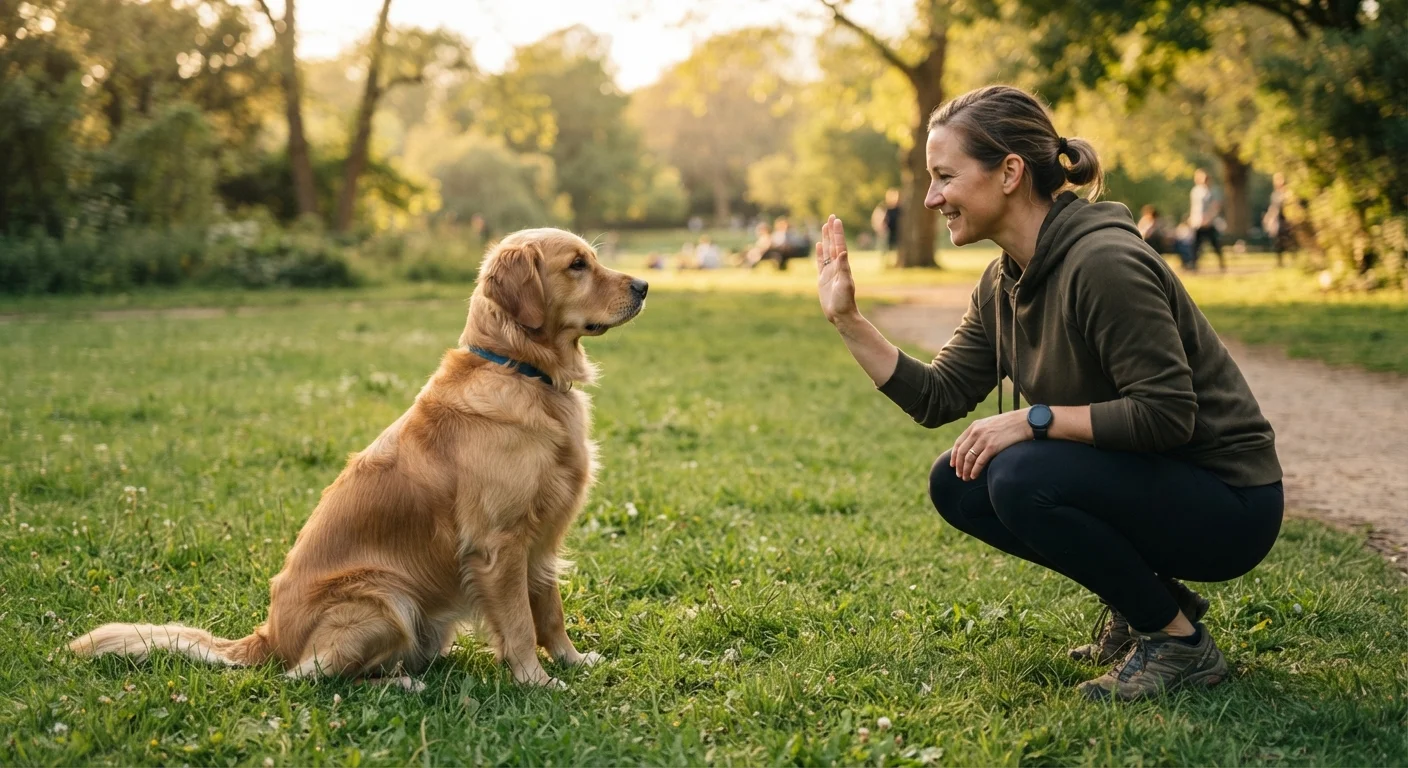
With your dog in a sit or down, say "stay" in a calm, even tone and hold your open palm toward them briefly. Wait just one to two seconds, then reward and immediately say your release word (e.g., "okay" or "free"). At this stage, you are simply teaching the dog that the word "stay" predicts a treat if they hold still.
Build Duration in Small Increments
Gradually extend the time between the stay cue and the reward: 2 seconds, then 4, then 6, and so on. Vary the intervals so they aren't always increasing — sometimes reward at 3 seconds after practicing 8 seconds, to keep the dog engaged. Aim for a solid 15–30 second stay before adding any distance. Reward generously for every success at a new time threshold.
Add Distance One Step at a Time
Once your dog reliably holds a 20–30 second stay, begin adding distance. Take one step away, pause, then return to your dog and reward — do not call your dog to you yet, as that teaches a different behavior. Gradually increase to two steps, then three, building to about six feet over multiple sessions. Return to your dog each time to deliver the reward before releasing.
Introduce Mild Distractions
Once your dog stays reliably with distance in a quiet room, begin adding low-level distractions: dropping a toy nearby, moving around more, or practicing in a hallway. Gradually progress to busier environments like the backyard, then a quiet park. At each new distraction level, shorten your distance and duration requirements and rebuild from there. This is the hardest phase — patience here pays off long-term.
Proof the Behavior Over Time
Proofing means practicing stay in enough different contexts — different rooms, outdoors, with visitors present — that it becomes a reliable default rather than a situational trick. Short sessions of 5–10 minutes several times a week will get you further than occasional long sessions. Celebrate consistent success at each stage before raising the bar again.
Never Punish a Broken Stay
If your dog gets up before being released, calmly guide them back to position and try an easier version of the exercise. Punishment or frustration during training can damage trust and create anxiety around the command. The goal is for your dog to feel safe and rewarded for holding position, not afraid of getting it wrong.
Common Pitfalls and How to Avoid Them
Even well-intentioned training can stall when small habits work against you. Inconsistent use of the release word, rewarding your dog after they've already broken position, or practicing only in one location are some of the most common culprits. Our guide on habits that undermine dog training progress goes deeper on these patterns.
Use a Consistent Release Word Every Time
Words like "okay," "free," or "release" work well — what matters is that you use the same word every single time. Without a clear release cue, your dog has no way of knowing when the stay is actually over, which makes the behavior harder to maintain reliably. Pick one word and stick to it from your very first session.
Don't Rush to Add Distraction Too Early
Many handlers jump to distractions — passing people, other dogs, outdoor environments — before their dog has a solid stay in a quiet setting. Adding complexity too soon sets dogs up to fail and can slow overall progress significantly. Build duration and distance indoors first, then layer in mild distractions gradually.
Stay is one of the most transferable obedience behaviors you can teach — it applies to doorways, vet visits, greeting strangers, and countless everyday situations. Building it methodically, with patience and consistent rewards, gives you a tool that genuinely improves your dog's safety and your shared life together. For a broader look at how stay fits into multi-pet households or different species, see our overview of training techniques across household pets.