
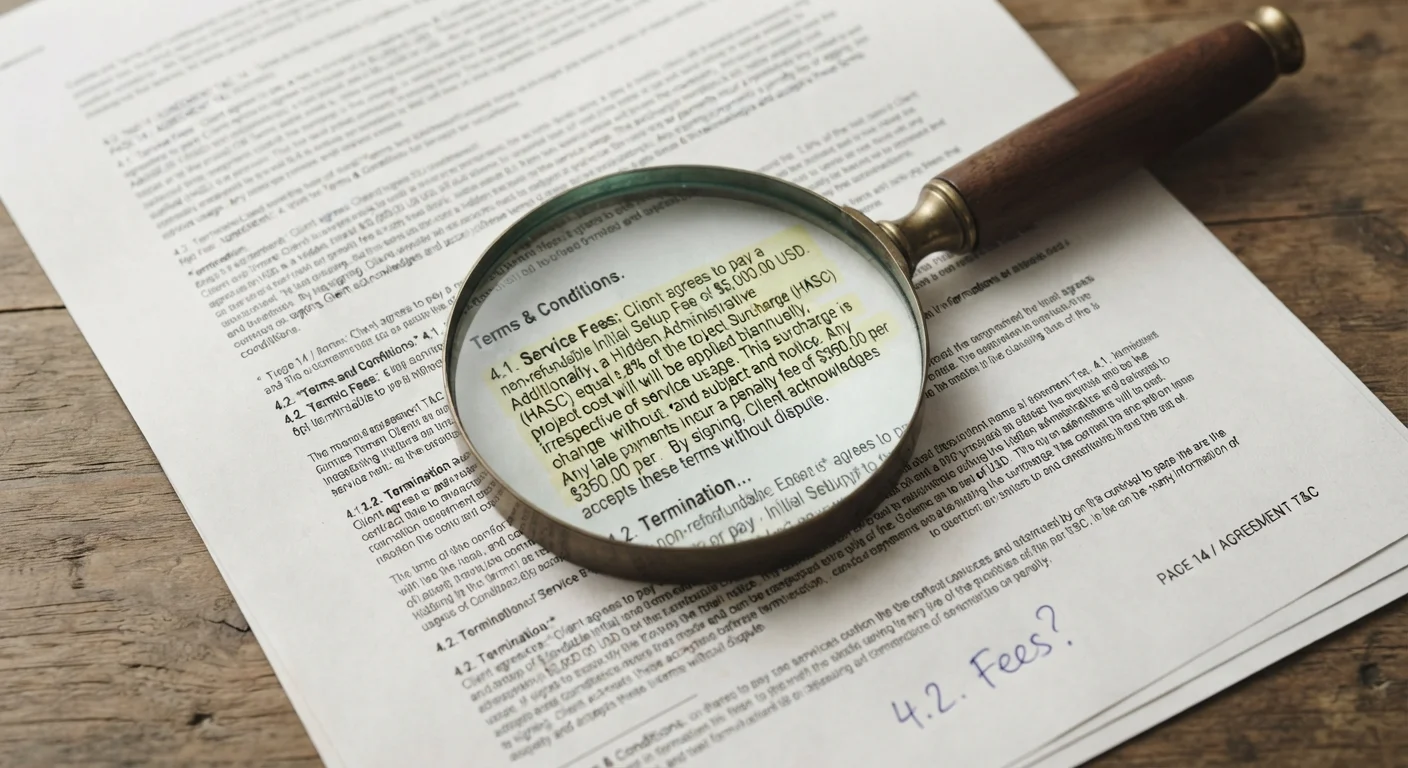
Why the Fine Print Actually Matters
Most shoppers focus on price and product features. Retailers know this, which is why the terms governing returns, fees, and subscriptions are routinely buried in low-contrast text, collapsed accordions, or links labeled "see details." These aren't accidents — they're structural choices that protect the seller's margin.
The consequences are real. A restocking fee can turn a $200 return into a $150 refund. An auto-renewal clause on a "free" trial can result in charges you didn't anticipate. A mandatory arbitration clause can limit your options if something goes wrong. Understanding these mechanisms before you buy is a concrete financial skill, not paranoia.
This checklist is designed to be used at the point of purchase — before you hand over payment — both online and in physical stores. Run through it in 15 to 30 minutes and you'll know exactly what you're agreeing to. For a broader pre-purchase framework, see our pre-purchase evaluation checklist.
Return Policy
Fees and Charges
Subscriptions and Auto-Renewals
Warranties and Coverage
Dispute Resolution and Legal Terms
What to Do With What You Find
Running through this checklist will sometimes surface terms that are genuinely dealbreakers. A 7-day return window on an expensive appliance, a mandatory arbitration clause, or a non-cancelable auto-renewal are all legitimate reasons to walk away or choose a competing seller.
"Final Sale" Means Exactly That
Items marked "final sale," "as-is," or "non-returnable" carry no implied right to a refund or exchange in most U.S. states. If you see this designation on a high-value item, treat it as a permanent purchase with no safety net. Defects discovered after purchase may still be covered under a manufacturer's warranty, but even that is worth verifying before you buy.
In other cases, you'll find terms that are simply unfavorable but manageable — a restocking fee you can accept, a shorter warranty than you'd prefer, or a store-credit-only refund policy. Knowing those limits before purchase lets you budget and plan accordingly rather than discovering them during a frustrating return conversation. Our guide on reading a return policy before it becomes a problem covers this in more detail.
Keep screenshots or printouts of the terms you reviewed. Policies can change after purchase, and having a timestamped record of what was in effect when you bought can matter in a dispute. If you frequently run into subscription traps specifically, see our dedicated piece on how free trials turn into monthly charges.
Browser "Find" function (Ctrl+F / Cmd+F)
Quickly search long terms-and-conditions pages for keywords like "restock," "arbitration," "cancel," and "auto-renew" without reading every line.
Screenshot or PDF capture tool
Save a timestamped copy of the policy terms at the time of purchase for reference if a dispute arises later.
Calendar or reminder app
Set auto-renewal cancellation deadlines immediately after signing up for any trial or subscription.
Credit card benefits summary
Check whether your card provides extended warranty or purchase protection that may already cover what a retailer's add-on warranty offers.