
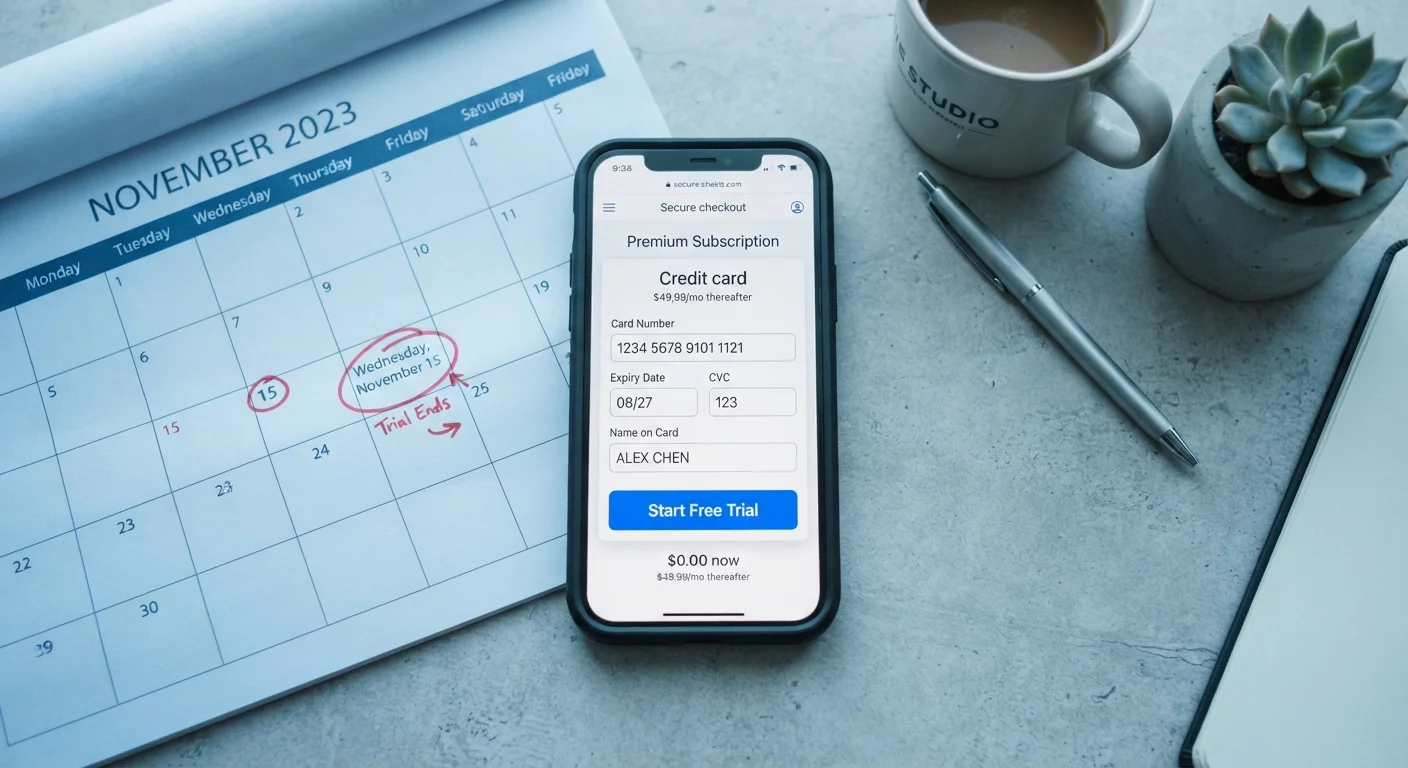
How the Free Trial Mechanic Actually Works
The offer sounds straightforward: enter your email, add a payment method, and get 7, 14, or 30 days of access at no charge. What the headline rarely emphasizes is the other half of that sentence — billing starts automatically when time runs out.
Companies structure trials this way deliberately. Consumer behavior research consistently shows that inertia is a powerful force: most people who start a trial intend to cancel but never get around to it. That gap between intention and action is the product companies are betting on when they offer a free trial.
The trial period itself is often compressed in ways that aren't obvious. A "7-day" trial that starts on a Friday ends on the following Friday — including the weekend days when you're less likely to be managing subscriptions. Some companies count the sign-up day as day one. Others send a cancellation reminder email so brief and easy to overlook that it functions more as a legal shield than a genuine notice.
When 'Free' Requires a Credit Card
If a trial is genuinely free with no conversion to a paid plan, most services don't need your payment information at all. The requirement to enter a card is almost always a signal that automatic billing will follow. Treat it accordingly — verify the billing terms before entering your card details, not after.
The Tactics That Keep You Subscribed
Subscription services don't rely solely on trial timers. Several design choices work together to raise the friction of canceling:
- No self-service cancellation: Some services require you to call a phone number during business hours, chat with a retention agent, or complete a multi-step survey before cancellation is confirmed. Every added step increases the chance you'll abandon the process.
- Prominent upgrade prompts, hidden cancel links: Account dashboards often feature large "Upgrade" or "Keep My Benefits" buttons while burying the cancellation link in small text under account settings.
- Pause instead of cancel: Retention agents frequently offer a discounted month or a pause option rather than honoring a cancellation request outright. These alternatives restart the clock on your next billing date.
- Email confirmations that look like spam: Billing confirmation emails are sometimes designed to blend in with promotional mail — minimizing the chance you'll notice a charge landed.
These are examples of what researchers call dark patterns — interface and process designs that prioritize company revenue over user clarity. See our field guide to dark patterns in online checkout for a broader look at how these designs appear across the checkout process.
42%
Consumers unaware of all active subscriptions
A survey by C+R Research found that 42% of respondents underestimated the number of subscriptions they were actively paying for.
$219/month
Average monthly subscription spend per U.S. consumer
The same C+R Research study estimated average monthly subscription spending well above what most consumers self-reported, reflecting how easily recurring charges accumulate unnoticed.
48 hours
Recommended cancellation buffer before trial end
Consumer advocates generally suggest canceling at least 48 hours before a trial expires to account for processing delays and multi-step cancellation flows.
How to Protect Yourself Before and During a Trial
Awareness of the mechanics is the first layer of defense. These practical steps add more:
- Set a cancellation reminder immediately. The moment you sign up, add a calendar alert for two days before the trial ends — not the last day. This gives you buffer time if the cancellation process takes longer than expected.
- Read the billing disclosure on the sign-up screen. Before entering your card, scroll down and look for the sentence that tells you what you'll be charged and when. If that sentence isn't visible, check the terms of service linked nearby. Our related article on the fine print retailers hope you never read explains what else to look for before committing.
- Use a virtual card number where available. Several major card issuers offer this. A virtual number tied to a low spending limit or a single transaction will decline a recurring charge automatically, giving you time to decide without urgency.
- Screenshot your cancellation confirmation. Don't rely on memory or a confirmation email alone. A screenshot with a timestamp is a clean record if a billing dispute arises later.
Set Your Reminder Before You Click Submit
Before you complete any free trial sign-up, open your calendar app and set a reminder for two days before the trial ends. Label it with the service name and the expected charge amount. This 30-second habit prevents the most common outcome: forgetting until the charge already appears.
Unchecked subscriptions compound quickly into a budget problem. The pattern of small recurring charges accumulating unnoticed is covered in depth in our article on subscription creep and budget drain.
Auditing What You're Already Paying For
If you've been signing up for trials over the past year or two, there's a reasonable chance at least one converted to a paid subscription without your active decision. A monthly review of your bank or card statements — filtering for amounts between $5 and $25 — will surface most recurring charges quickly.
When you find a charge you don't recognize, search the merchant name alongside the word "cancel" to find the fastest path to stopping future billing. Annual subscriptions are worth extra attention: they're often forgotten between billing cycles and can represent a meaningful lump-sum charge. The spending habits around these irregular charges are worth understanding — see our guide on irregular expenses that wreck budgets for context on working them into a monthly plan.
The broader habit of protecting your wallet from low-visibility costs is part of building smarter spending patterns over time. Explore more strategies at our Smarter Spending Habits hub.