Why 'Too Good to Be True' Is More Than a Cliché
Retailers and online sellers invest heavily in making offers look compelling. Most of the time, competition keeps pricing honest — but a reliable subset of deals is structured specifically to exploit shopping shortcuts your brain takes under time pressure or excitement. Understanding which signals reliably indicate a problematic offer lets you pause before committing, rather than regretting afterward.
The red flags below are not edge cases. Consumer researchers and regulatory agencies consistently document these patterns across industries — from electronics and supplements to travel packages and fashion. Each one is worth recognizing on sight. For a deeper look at how promotional pricing gets engineered in the first place, see why 'sale' prices aren't always what they seem.
The 'Original Price' Has No Verifiable History
One of the most documented retail tactics is setting a high reference price — sometimes called an anchor — that the item was rarely or never actually sold at. The "was $199, now $59" framing creates an impression of exceptional savings even if $59 is effectively the standard price. Price anchoring is well-documented in consumer psychology research and has been the subject of regulatory action in several U.S. states.
Before accepting a crossed-out price at face value, check the item's price history using browser tools or third-party trackers. If the 'original' price has almost no sales history behind it, the discount is largely cosmetic. Learn more about how this works in our breakdown of sale price tactics.
A crossed-out price with no sales history behind it is a number, not a discount.
Artificial Urgency Dominates the Page
Countdown timers, 'only 3 left' notices, and 'offer expires tonight' banners are pressure mechanisms. Some reflect genuine inventory or time constraints — many do not. Research into scarcity messaging has shown that these cues reduce deliberative thinking and increase impulsive purchases, which is precisely why they're used so liberally.
A practical test: revisit the page after the timer expires. If the countdown resets or the 'limited stock' warning persists unchanged, the urgency was manufactured. Genuine scarcity doesn't need a script. Dark patterns at checkout often work the same way — pressure by design.
If the countdown timer resets after it expires, the urgency was manufactured.
The Seller or Brand Is Difficult to Verify
Legitimate sellers operating in competitive markets generally have verifiable business information: a traceable address, a working customer service channel, and a consistent brand presence that predates the current promotion. When a deal comes from a storefront with no history, a domain registered within the past few weeks, and contact details limited to a web form, that absence of accountability is a structural risk — not just an inconvenience.
Check business registration if you can, look for the seller's name across multiple platforms, and search for consumer complaints. If none of that information exists, the seller has no track record to stand behind.
No verifiable business information means no accountability if something goes wrong.
Reviews Look Scripted or Follow Suspicious Patterns
Review fraud is a documented problem across major e-commerce platforms. Warning signs include: all reviews posted within a short window, heavily similar phrasing across multiple reviewers, a rating distribution that's almost entirely five-star with a sudden cluster of one-star reviews, and verified-purchase badges that appear on accounts with no other activity.
Cross-reference reviews on independent platforms when possible, and look for reviews that describe specific use cases, failures, or product limitations — those tend to come from real buyers. Flat praise with no specifics is easy to generate and easy to fake.
Real buyers mention specific problems; scripted reviews rarely describe anything going wrong.
The Return Policy Is Buried, Vague, or Punishing
A generous, clearly stated return policy reflects seller confidence in the product. Policies that are hard to locate, written in ambiguous language, require the buyer to pay return shipping on a heavy item, or restrict returns to a 7-day window effectively transfer all the risk to the buyer. When those terms are buried two clicks deep on a deal that's prominently advertised, it's worth reading them before — not after — you complete the purchase.
This matters especially for categories where quality can only be assessed after use: food products, supplements, electronics, and apparel. A deal with no real return path is a gamble, not a bargain.
A return policy buried in fine print often signals the seller isn't confident in what they're selling.
Vague Claims Replace Specific Product Details
Legitimate products in most categories can be described with specifics: materials, dimensions, certifications, country of origin, ingredient lists, or technical specifications. When a listing relies heavily on lifestyle imagery and superlatives — 'revolutionary,' 'premium quality,' 'as seen on TV' — while omitting concrete details, that vagueness is informative in itself.
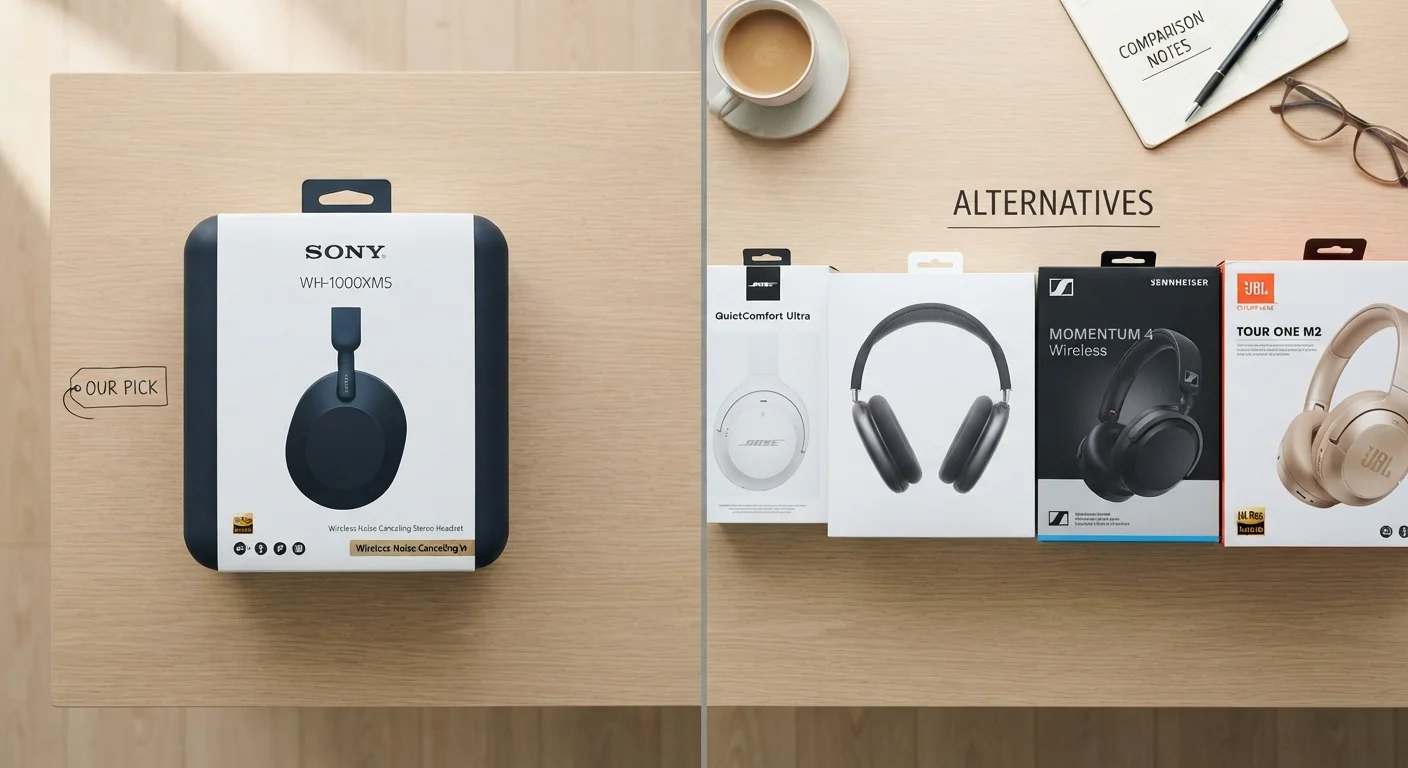
Packaging follows the same rule. Reading the label carefully often reveals that front-of-box claims are marketing language with little substance behind them. Real value is usually describable in plain terms.
Superlatives and lifestyle images are cheap; specific, verifiable details take real confidence.
Fees Appear Only at Checkout
A price that looks attractive at the product page can look very different by the time shipping, handling, 'processing fees,' or mandatory add-ons are applied. This pattern — sometimes called drip pricing — is prevalent enough that several consumer protection agencies have moved to regulate it. The headline number captures attention; the full cost is revealed only once the buyer has already invested time and intent in the purchase.
Before assuming a deal is genuinely priced well, calculate the total delivered cost. That's the only number worth comparing. For a fuller picture of how checkout design can cost you money, see our field guide to dark patterns at checkout.
The only price worth comparing is the total delivered cost — not the headline number.
Putting It All Together Before You Buy
No single red flag guarantees a bad deal, but combinations are highly predictive. An offer with artificial urgency, an unverifiable seller, and a no-returns policy is almost never worth the risk — regardless of how steep the stated discount appears. Slow down, check a few of the signals above, and your confidence in any purchase goes up considerably.
Use a Simple Pre-Purchase Checklist
Before completing any purchase that triggered a red flag, ask three questions: Can I verify the seller independently? Do I know the total cost including all fees? Is there a clear, fair return path if the product doesn't meet expectations? If any answer is 'no,' that gap in information is the deal's real cost.
For a step-by-step process to confirm a price is genuinely lower than usual, see how to verify a deal is actually a deal. And if you want to build lasting habits that protect your budget across every shopping category, the Smarter Spending Habits hub is a good next stop.