
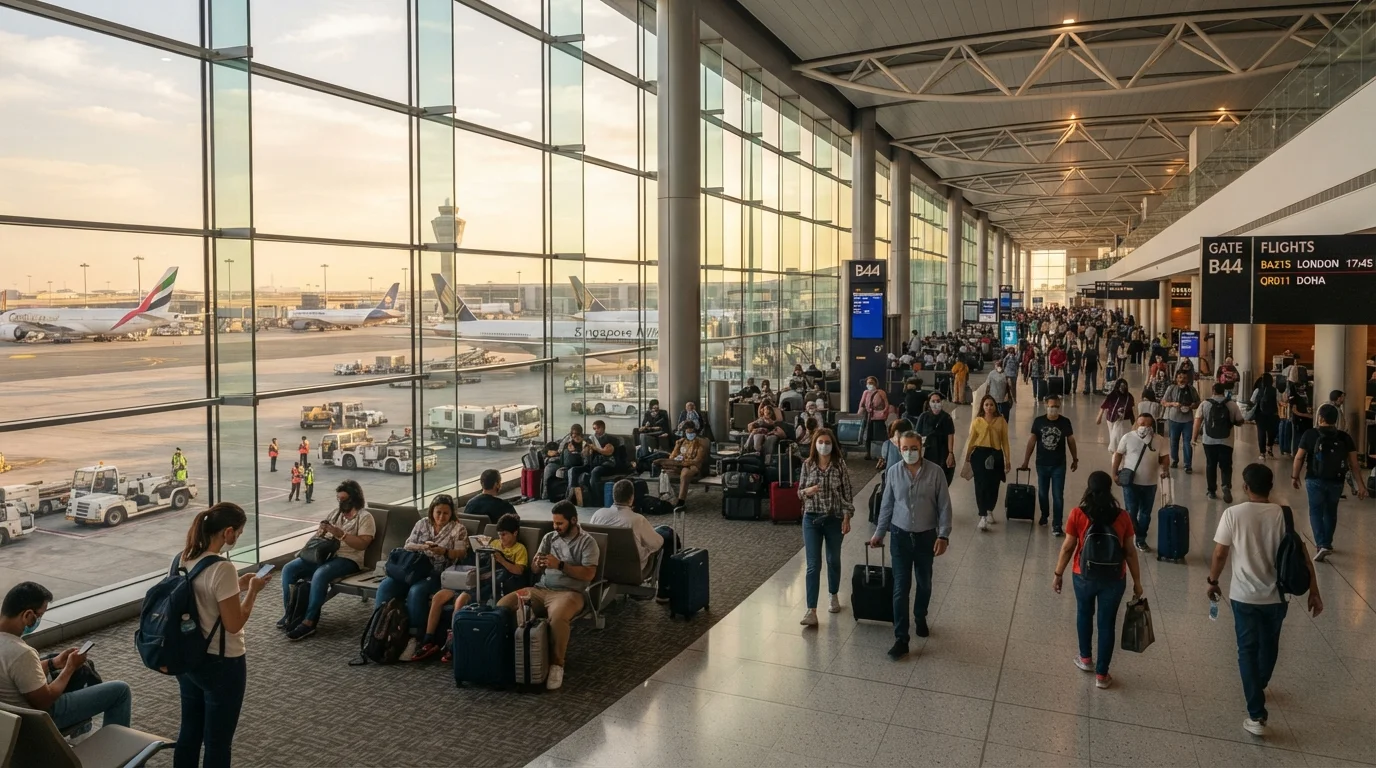
Why Layover Length Matters More Than You Think
When booking flights, most travelers focus on price and departure time — and layover length becomes an afterthought. That's a costly assumption. Connection time is one of the most consequential decisions in any itinerary, yet it rarely gets the attention it deserves.
Airlines publish a Minimum Connection Time (MCT) — the shortest window they consider operationally viable at a given airport. But viable doesn't mean comfortable. MCT calculations assume everything goes right: your inbound flight lands on time, the gate is nearby, and no security re-screening is needed. Real travel rarely cooperates that neatly.
As part of your broader trip planning process, it's worth treating your layover window the same way you'd treat your daily itinerary — with a little breathing room baked in. Building flexibility into your schedule pays dividends at every stage of a trip, including in the airport.
Booked as Separate Tickets? Know the Risk
When you book two separate one-way tickets instead of a single itinerary, the airline operating your first flight has no obligation to rebook you on the second if you miss the connection. This is a meaningful distinction. Booking within a single itinerary — even on a codeshare — generally gives you more protection when disruptions happen. Always confirm your booking type before assuming you're covered.
The Real Pros of a Longer Layover
A longer connection — generally anything over two hours domestically or three hours internationally — gives you room to move. Here's where it actually works in your favor:
Genuine protection against delays and disruptions
Flight delays are common — the U.S. Bureau of Transportation Statistics consistently shows that a significant portion of domestic flights arrive late. A longer layover absorbs minor delays without causing a missed connection.
Time to clear customs and re-check bags
On international itineraries, customs processing alone can take 30–90 minutes. A longer connection ensures you clear every checkpoint without sprinting.
Opportunity to rest, eat, and recharge
A two-to-three-hour layover allows travelers to decompress between flights, find a real meal, and arrive at their destination less exhausted.
Easier access to airport lounges
Many lounges require a minimum stay to make them worthwhile. A longer layover makes it practical to use lounge access for showers, quiet seating, or complimentary food.
Reduced rebooking stress if something goes wrong
When connections are comfortable, travelers have time to address problems at the gate rather than scrambling to customer service lines after a missed flight.
Airports like Dallas/Fort Worth, Chicago O'Hare, and Atlanta Hartsfield are sprawling. A tight 45-minute connection at one of these hubs means a genuine sprint; a 90-minute window means a brisk walk. Two hours means a sit-down meal and a bathroom stop. That's not wasted time — that's comfort.
The Real Cons: When Layovers Cost You
Longer isn't always better, and even moderate layovers have downsides worth naming honestly.
Adds significant time to total travel day
A four-hour layover can turn an eight-hour journey into a twelve-hour ordeal, which matters most on shorter trips where every day counts.
Airport food and shopping add unplanned costs
Airports are designed to encourage spending. A long wait makes it harder to resist overpriced dining, retail, and drinks — expenses that quietly inflate your travel budget.
Fatigue accumulates in airport environments
Noise, artificial lighting, limited seating, and dry air make airports draining places to spend extended time, particularly for older travelers or those with young children.
Short layovers carry genuine missed-flight risk
A connection that looks fine on paper can evaporate with a 20-minute inbound delay, a distant gate assignment, or an unexpectedly long jet bridge queue.
Rebooking on missed connections isn't guaranteed
When the itinerary was booked as separate tickets rather than one booking, airlines have no obligation to rebook you if you miss a connection — leaving you to purchase a new fare.
Airport time also has a sneaky cost to your travel budget. If you're sitting in a terminal for four hours, the temptation to eat, shop, and buy overpriced coffee is real. Our piece on common pre-arrival spending traps covers exactly how airport dining and kiosks quietly drain your funds before your vacation even starts.
~20%
U.S. domestic flights arriving late
U.S. Bureau of Transportation Statistics data consistently shows roughly one in five domestic flights arrives behind schedule in any given year.
60–90 min
Typical U.S. customs processing time
Processing times at major U.S. international airports can range widely; peak periods and busy entry ports can push times to 90 minutes or beyond.
International Layovers: A Different Beast
Connecting through an international airport — especially when re-entering the United States — adds layers that domestic travelers rarely encounter. Customs and Border Protection processing, baggage re-check, and TSA re-screening can easily consume 60 to 90 minutes on their own, even at moderately busy times.
If your international connection is under two hours, you're taking on real risk. Many travel professionals suggest three hours as a working minimum for U.S. re-entry connections, with more buffer during peak seasons or at known bottleneck airports like JFK or LAX.
Long haul travel also takes a physical toll that affects how you function in a connecting airport. A stopover that gives you time to walk, hydrate, and eat a proper meal can genuinely reduce fatigue — relevant context if you've been reading about staying healthy on long-haul flights.
How to Choose the Right Layover for Your Trip
There's no universal right answer, but there are smart defaults. Consider these factors when evaluating your connection options:
- Are you checking bags? Add at least 30 minutes to your mental minimum, especially internationally.
- Which airport? Single-terminal airports (like Portland or Salt Lake City) allow faster connections than multi-terminal hubs.
- What time of day? Morning flights run more on time; afternoon and evening flights absorb delays from earlier in the day.
- How much does missing this connection cost you? If the next available flight isn't until the following morning, the case for a buffer grows considerably.
For short city trips where every hour counts, a tight connection might feel worthwhile — but read up on making the most of limited time in a city before assuming you can't spare the extra hour at the airport. Arriving frazzled after a missed connection costs far more time than the layover itself.
Travel schedules, airport policies, and airline rebooking procedures can change. Always verify current connection requirements with your airline and check official airport maps before you travel.