Why Long-Haul Flights Are Harder on Your Body Than You Think
A flight from New York to Tokyo runs roughly 14 hours. That's a full workday spent in a pressurized metal tube cruising at 35,000 feet — and the physical toll is more significant than most travelers realize until they land feeling completely wrecked.
Commercial aircraft cabins are typically pressurized to the equivalent of 6,000–8,000 feet of altitude. That lower oxygen level is one reason you may feel fatigued faster, and it can amplify the effects of alcohol and sleep deprivation. Add in cabin humidity that frequently drops below 20% (well under the 30–60% range considered comfortable indoors), and you have conditions designed to dry out your skin, eyes, and respiratory tract.
None of this means long-haul travel is inherently dangerous for healthy adults — but understanding the environment helps you prepare for it. If you're also weighing whether a long flight is the right choice for your trip, our guide to flying vs. driving walks through how to think about that decision.
The Practices That Actually Help
General health guidance from aviation medicine and travel health organizations points to a consistent set of behaviors that reduce discomfort and support wellbeing on long flights. Here's what's worth building into your routine:
Drink water consistently throughout the flight — don't wait until you feel thirsty.
Thirst is a lagging indicator of dehydration. At altitude, your body loses moisture faster than usual through respiration alone, and by the time you feel parched, you're already mildly dehydrated. Mild dehydration contributes to headaches, fatigue, and impaired concentration.
Get up and move your legs at least once every two hours.
Prolonged sitting reduces blood flow in the lower extremities, which can cause swelling and, in some higher-risk individuals, increase the chance of a deep vein thrombosis (DVT). Simple movement — walking the aisle or doing in-seat ankle rolls — helps keep circulation active.
Use a saline nasal spray to keep your nasal passages from drying out.
Dry cabin air desiccates the mucous membranes in your nose and throat, which are part of your body's first line of defense against airborne pathogens. Keeping them moist supports their normal function and reduces discomfort.
Equalize ear pressure consciously during descent — don't just push through the pain.
Cabin pressure changes most rapidly during descent. If your Eustachian tubes don't equalize naturally, the pressure difference across your eardrum causes pain and can temporarily muffle hearing. Active equalization prevents this.
Limit alcohol and caffeine, especially in the first half of the flight.
Both alcohol and caffeine have diuretic effects, meaning they promote fluid loss — the opposite of what your body needs in a dry cabin. Alcohol is also metabolized differently at altitude and can intensify fatigue and disrupt the quality of any sleep you get.
This article is for general informational purposes only and is not medical advice. Travelers with chronic health conditions, circulatory concerns, or recent surgeries should consult a qualified healthcare provider before undertaking long-haul travel.
Managing Sleep and Jet Lag Before You Even Board
Jet lag isn't just feeling tired — it's a genuine disruption to your circadian rhythm, the internal clock that governs sleep, digestion, and hormone release. Research in sleep science consistently shows that pre-trip sleep adjustments — shifting your bedtime by 30–60 minutes in the direction of your destination's time zone — can blunt the worst effects. Our deeper look at how time zones affect your body explains the biology in plain terms.
Light exposure matters too. Seeking morning light upon arrival (if you're traveling east) or staying in bright light through the early evening (if heading west) helps your body recalibrate faster. Melatonin is sometimes discussed as a sleep aid for jet lag — but dosage, timing, and appropriateness vary by individual, so talk with a healthcare provider before relying on it.
For mental wellness more broadly, the anxiety and overstimulation of long travel days are real. Building in buffer time — before and after a major flight — goes a long way. See our guide to itineraries that leave room to breathe for practical ways to structure your trip without burning out on day one.
What to Pack to Support Your Health in the Air
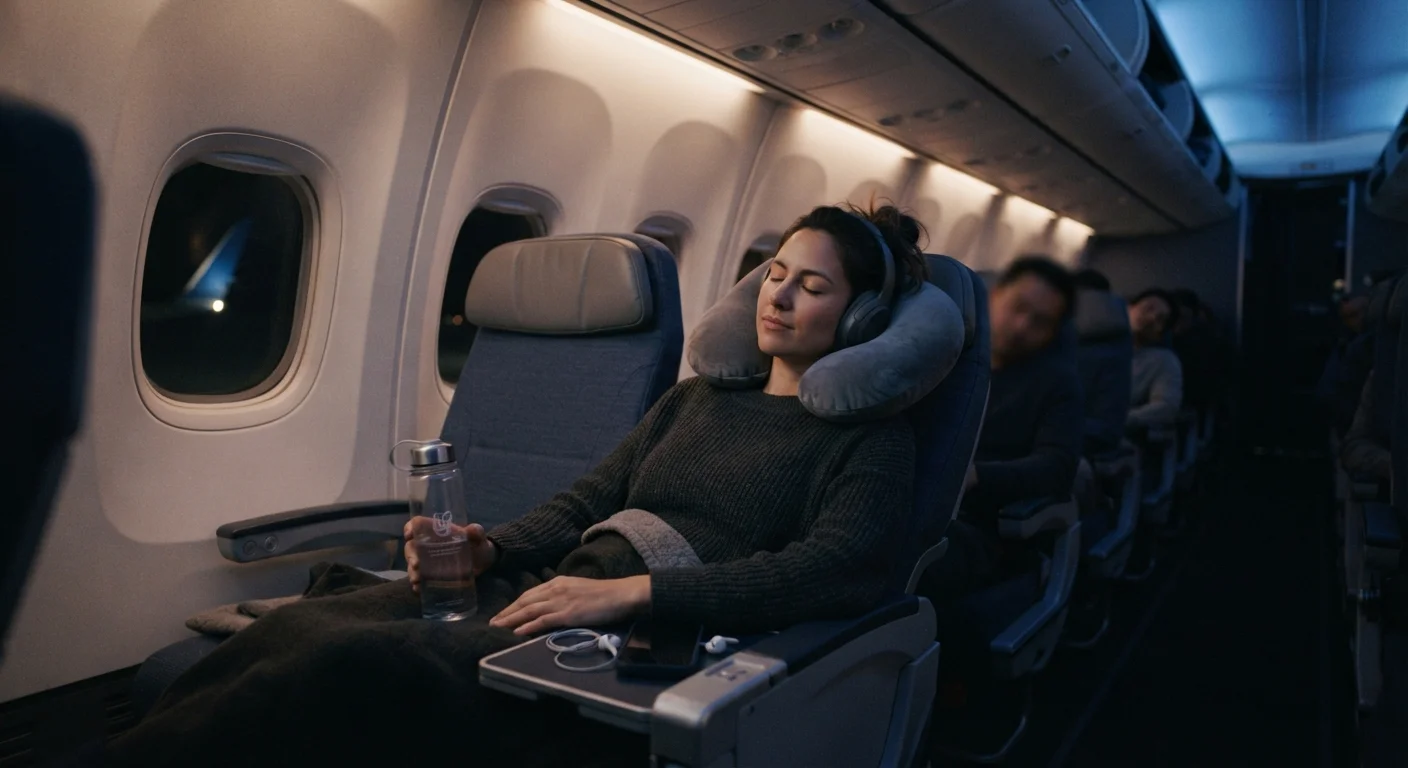
Your carry-on can do a lot of work here. A reusable water bottle you can refill after security, a travel-sized moisturizer, lip balm, and lubricating eye drops all address the dryness that's essentially unavoidable at altitude. Compression socks — which come in a range of styles and sizes — are widely recommended by travel medicine professionals for flights over six hours, especially for passengers who have any history of circulation concerns.
Noise-canceling headphones or quality earplugs reduce the low-frequency drone of the engines, which contributes to fatigue over long flights. A neck pillow and an eye mask help create conditions for sleep even in economy. None of these items need to be expensive to be effective — they just need to be in your bag. For a broader look at what belongs in your carry-on, our carry-on packing guide covers the most common mistakes travelers make before they even reach the gate.
If you have a long layover between legs, use that time intentionally — walk the terminal, rehydrate, and resist the urge to sit for another hour. Our piece on making the most of airport layovers covers how to think about connection time as a recovery window rather than wasted time.