
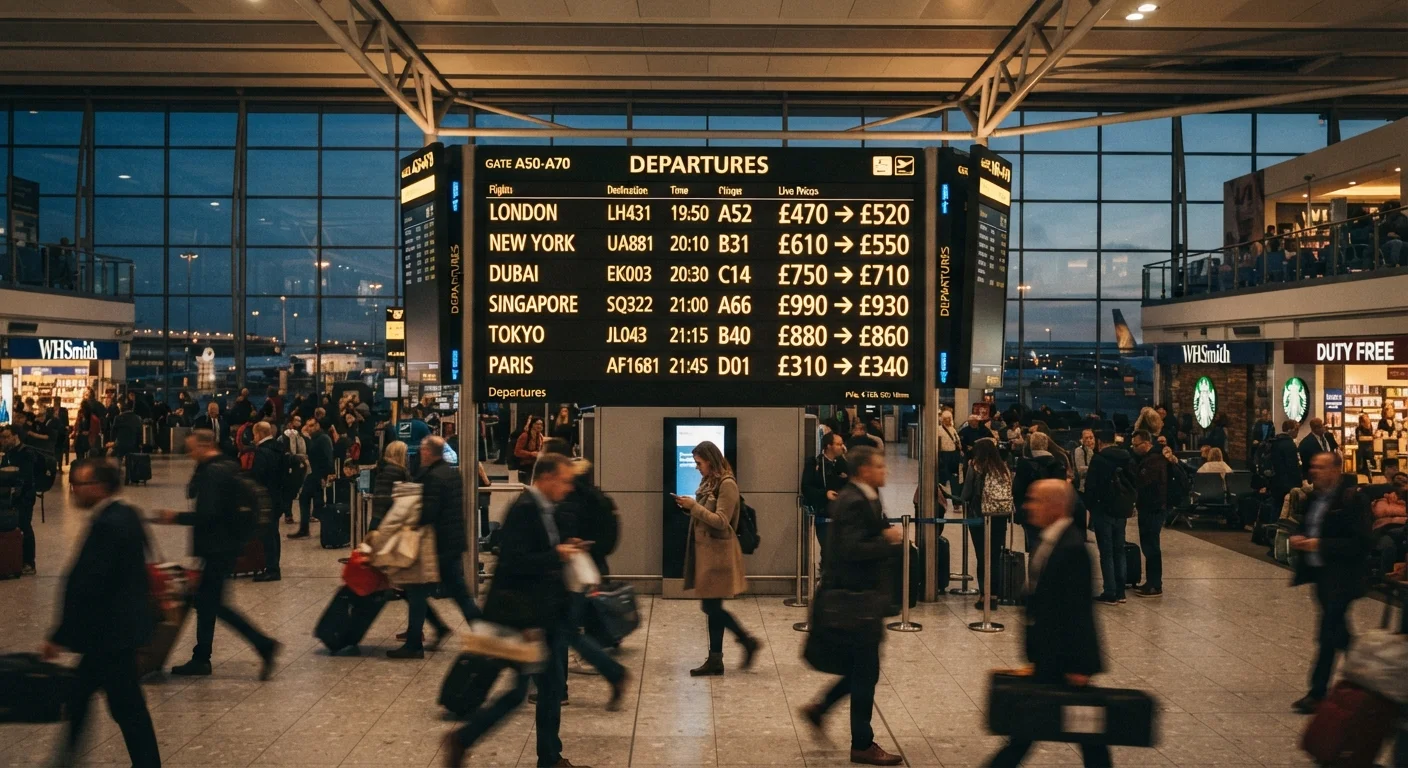
Why Flight Prices Move So Much
If you've ever searched a flight, closed the tab, and returned an hour later to find a different price, you've experienced dynamic pricing firsthand. Airlines don't post one fixed fare and leave it there. They manage hundreds of fare levels simultaneously — and their automated systems adjust which seats are available at which price in real time.
The core driver is supply and demand. Each aircraft has a finite number of seats, and airlines have learned that different travelers will pay very different amounts for the same seat depending on how urgently they need to fly. Business travelers booking close to departure are typically less price-sensitive than a family planning a vacation months out. Airlines structure their pricing to capture value from both groups.
Fare classes — sometimes called fare buckets — are the mechanism. The cheapest tickets are released in limited quantities. Once those sell, available inventory shifts to a higher price tier, even if the flight is still weeks away. Think of it like a concert: early tickets may be affordable, but by the time the show is sold out in cheap seats, only premium tickets remain.
3–8 weeks
Typical sweet-spot booking window for domestic U.S. fares
Based on aggregated research from travel data analysts, this window often yields competitive pricing before cheap inventory sells through.
~47%
Of travelers report booking flights without a clear price strategy
A commonly cited consumer survey finding suggesting most travelers book on intuition rather than timing knowledge.
2–6 months
Advance booking window often cited for international flights
Travel researchers generally recommend beginning searches for international trips 2–6 months out to access a wider range of available fare classes.
What Actually Drives the Price Up or Down
Several variables push fares in either direction at any given moment:
- Time until departure: Fares generally trend upward as a flight approaches, particularly in the final two weeks before departure when remaining seats carry a premium.
- Route competition: Routes served by multiple airlines often see more competitive fares than monopoly routes. If one carrier is the only option between two cities, expect higher baseline prices.
- Day of the week you're flying: Flights departing on Fridays and Sundays tend to be pricier because they align with peak leisure and business travel. Mid-week departures — especially Tuesday and Wednesday — often carry lower average fares.
- Season and holidays: Thanksgiving, spring break, summer, and major holidays create demand spikes that push prices up well before the travel dates. The lead time required to find reasonable fares is longer during these windows.
- Seat fill rate: Airlines monitor how quickly their planes are booking. If a flight is ahead of its expected fill pace, prices rise. If it's lagging, the system may release cheaper inventory to stimulate demand.
Understanding these levers helps you see pricing as a system, not a lottery — even if you can't predict exact outcomes. This connects to a broader truth about how sellers set prices to influence perception, something worth being aware of across many purchasing situations. For a deeper look, see how retailers use pricing psychology to shape what feels like a deal.
Flexibility Is Your Biggest Fare Lever
If you can shift your departure or return date by even one or two days — especially away from Friday and Sunday — you'll often see noticeably different fare options. The same applies to departure airports: checking a secondary airport within reasonable driving distance can reveal significantly lower starting prices on the same routes.
Booking Windows: When Fares Tend to Be Lower
Research on domestic U.S. airfare trends — including analyses by travel researchers and consumer data from booking platforms — consistently points to a general pattern: fares are often lower somewhere in the 3–8 week window before a domestic departure. Too early, and airlines haven't released competitive inventory. Too close to departure, and cheap buckets are gone.
For international flights, that window generally expands. Planning 2–6 months ahead is commonly cited as giving travelers the widest range of fare options, particularly for peak-season destinations in Europe or Asia.
That said, no window guarantees a low price, and every route behaves differently. A less-traveled domestic route might stay affordable until a week before departure. A popular Caribbean destination during winter will see fares climb much earlier. Treat booking windows as a framework for when to start actively searching — not a fixed rule.
It's also worth knowing that the question of when to buy versus when to wait applies in many buying decisions beyond travel. The real trade-offs behind timing purchases are explored in this look at full price versus waiting for a sale.
How to Search Smarter (Without Gaming a System That Won't Be Gamed)
No trick will consistently beat the airline pricing system. But a few practical search habits can help you get a clearer picture of what's out there:
- Use flexible date views. Most flight search tools show a calendar or grid of fares by day. Shifting a departure or return by even one day can reveal meaningfully different prices on flexible itineraries.
- Check multiple route options. Sometimes flying into a nearby secondary airport and driving a short distance costs significantly less than flying directly into the major hub.
- Search in incognito mode if you prefer — but know it's mostly about privacy, not price. Price changes are inventory-driven, not personalized to your browsing history.
- Set a fare alert and decide on a ceiling. Rather than watching fares obsessively, decide what price you'd be comfortable paying. If the fare hits that number, book it. Waiting indefinitely for a lower price can backfire.
The most powerful tool you have is flexibility — in dates, departure airports, and the willingness to fly mid-week. Travelers locked into specific dates for a Friday-to-Sunday trip have fewer options and generally pay a premium for that constraint.
Prices, availability, and fare patterns described in this article are general in nature and subject to change. Always verify current fares directly with airlines or booking tools before making any travel decisions.