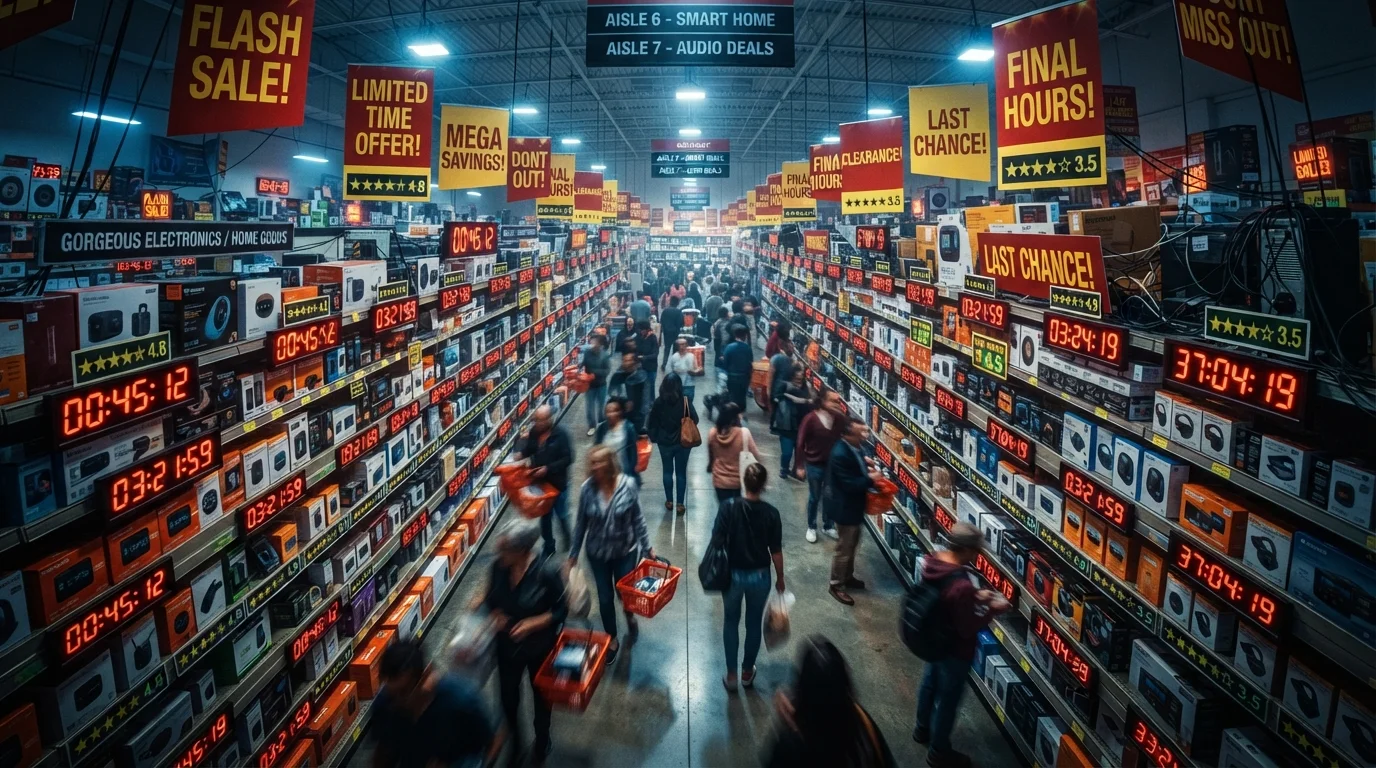
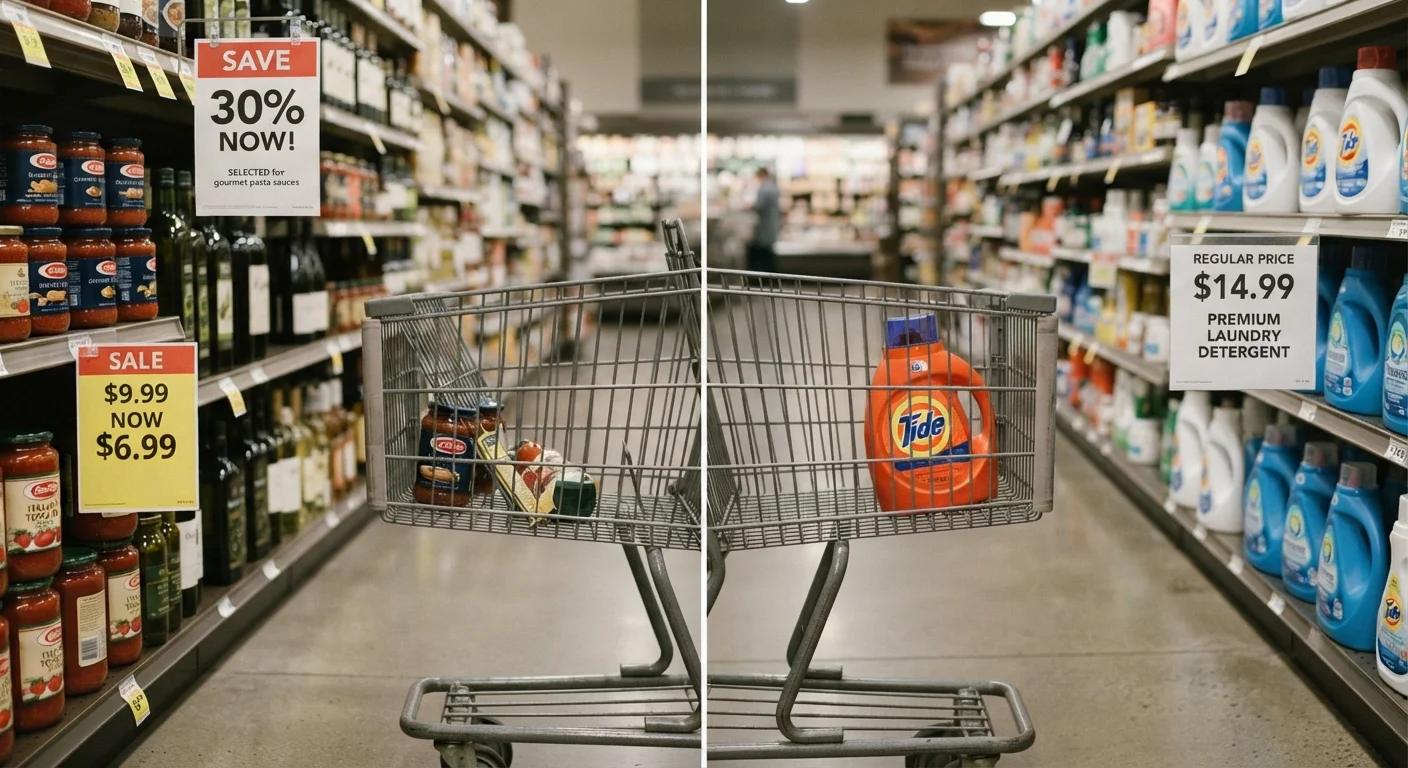
Why This Decision Is Harder Than It Looks
On the surface, waiting for a sale seems like the obvious move. Pay less, save money, done. But the real calculation involves more variables than a single price tag — timing, availability, your actual need, and whether the "discount" is real in the first place.
Retailers are highly sophisticated at creating the impression of savings. Before deciding to wait, it's worth understanding what you're actually waiting for. As our guide to real vs. theatrical discounts explains, reference prices are frequently inflated before a markdown, meaning the savings you're anticipating may be smaller than advertised.
This article breaks down the honest trade-offs on both sides so you can make a deliberate call instead of a reactive one.
The Case for Paying Full Price
Immediate access when timing matters
Paying full price means you get the item when you actually need it. Delayed access has a real cost — especially for tools, appliances, or anything replacing something broken.
Avoids availability risk on in-demand items
Popular or seasonal items can sell out before a sale arrives. Buying at full price secures the product when it's reliably in stock.
Eliminates time spent monitoring prices
Tracking prices across stores and waiting for deals takes consistent effort. Paying full price trades that time cost for simplicity.
Reduces risk of incidental overspending
Buying outside of a promotional environment makes it easier to stick to what you planned. Sale events are designed to expand your basket, not just fulfill it.
Paying full price isn't a failure of frugality — in some situations, it's the smarter financial decision. Consider these scenarios:
- You need it now. If the item solves an active problem — a broken appliance, a time-sensitive gift, a work necessity — the cost of delay is real. Days or weeks without it has a value that a future discount may not offset.
- Availability is uncertain. For seasonal products, limited-run items, or anything with volatile inventory, waiting for a sale may mean the item is gone when the price drops.
- Your use starts immediately. A cost-per-use framework shows that the sooner you begin using something, the lower the effective cost per use — even at full price.
The Case for Waiting for a Sale
Potential savings on predictable discount cycles
Categories like furniture, bedding, and major appliances tend to go on sale at consistent points in the year. Shoppers who know these windows can save meaningfully without much effort.
Useful for non-urgent, high-consideration purchases
When you don't need something immediately, waiting gives you time to compare options and confirm you're making the right purchase — not just a reactive one.
Can reduce regret on large purchases
Knowing you paid a lower price tends to reinforce satisfaction with a purchase. For big-ticket items, a verified discount can reduce post-purchase second-guessing.
Sale windows often bundle additional perks
Some promotional periods include extended return windows, free delivery thresholds, or bundled accessories that add genuine value beyond the price drop.
Risk of buying items you don't actually need
Sale pricing lowers the psychological barrier to purchase. Many people buy things at a discount they would have passed on at full price — spending money that wasn't allocated to begin with.
Many "sales" don't reflect real price drops
Retailers frequently inflate reference prices before markdown events. Without price history data, it's difficult to tell whether a 30%-off sticker reflects an actual reduction.
Waiting carries its own opportunity cost
Time spent without the item, mental energy tracking deals, and the stress of uncertainty all carry costs that rarely get counted against the eventual savings.
Waiting does have a legitimate upside — but it requires patience and some knowledge of how pricing cycles actually work.
Categories like consumer electronics, furniture, and seasonal apparel have fairly predictable discount windows. If you're not in a hurry and you know when those windows open, waiting can translate to genuine savings rather than theater. The same logic applies to travel: airline pricing follows patterns that reward flexible, informed shoppers.
The key qualifier: you need to know what the item normally sells for before a "sale" price means anything. Price-tracking tools and historical data can help verify whether a discount is real.
How to Verify Whether a Discount Is Real
Before waiting for a sale, check the item's price history using publicly available price-tracking tools — many browser extensions log historical prices on major retail platforms. If the current "full price" was introduced shortly before a sale event, the markdown may be largely cosmetic. A genuine discount shows a meaningful, sustained drop from the item's typical selling price over time.
The Hidden Costs of Deal-Chasing
Waiting for sales carries costs that rarely appear on a receipt. The most common is incidental spending: shoppers who enter a sale environment to buy one discounted item often leave with several unplanned ones. Research in consumer behavior consistently shows that promotional contexts increase overall basket size, sometimes erasing the savings from the targeted item entirely.
There's also a cognitive tax. Monitoring prices, comparing windows, and second-guessing timing decisions takes real time and mental energy. For low-cost items, that overhead often exceeds the value of the discount. Our piece on shopping under pressure covers how sale environments are specifically designed to reduce careful thinking.
Finally, waiting can produce a false sense of discipline. Buying something you don't need at 40% off is still spending money you didn't plan to spend. See also: how loyalty programs create similar traps.
~$450
Average extra spent during sale events
NRF consumer surveys consistently find that shoppers who enter promotional events to buy a specific item spend significantly more than planned on unrelated purchases.
64%
Shoppers who buy unplanned sale items
According to Statista consumer research, nearly two-thirds of shoppers report purchasing something not on their list during a sale event.
A Simple Framework for Making the Call
Instead of defaulting to either strategy, run through three questions before deciding:
- Is the need genuine and time-sensitive? If yes, pay now. The opportunity cost of waiting is real.
- Is the discount verifiable and predictable? If you can confirm the item has historically discounted at a known time and the markdown is real, waiting has merit. If you're speculating, you're gambling.
- Will waiting change your behavior? If there's a good chance you'll buy more than planned during a sale, the math may work against you before you even reach the register.
For purchases where you're genuinely unsure, the 24-hour waiting rule is a useful reset: it separates need-driven purchases from impulse ones without requiring you to track pricing cycles. And when evaluating any deal you do encounter, the Spotting True Value hub offers a broader toolkit for reading pricing honestly.