
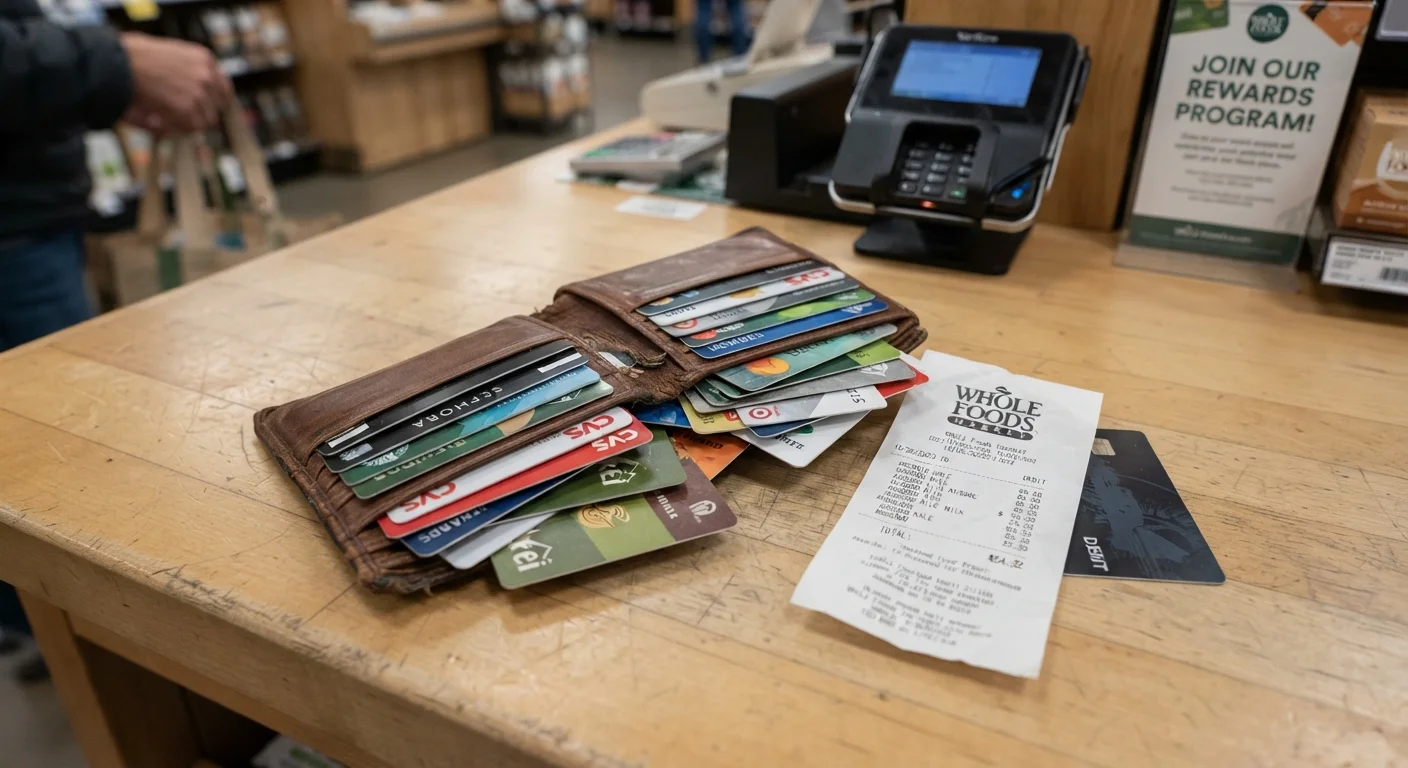
How Loyalty Programs Actually Work
Loyalty programs are structured incentive systems retailers use to encourage repeat business. You earn points, stamps, or miles by spending, then redeem those for discounts, free items, or perks. On the surface it looks like a straightforward exchange. Underneath, the design is more deliberate.
Retailers invest in these programs because they increase purchase frequency and average order size — behaviors that benefit the store first. The reward structure is calibrated so the cost of those rewards is offset by the additional revenue generated. Understanding this baseline helps you evaluate whether any given program actually serves your interests.
Programs vary widely in structure. Some offer flat percentage returns. Others use tiered systems where higher spenders unlock better benefits, which is designed to make you spend toward a threshold. Still others bundle perks with a paid membership fee. Each design choice reflects what the retailer wants you to do, not necessarily what's financially rational for you. See the Spotting True Value hub for a broader framework on evaluating retail pricing tactics.
The Real Benefits — When They Show Up
Captures value on spending you'd do anyway
When you shop at a retailer regularly, a free loyalty program essentially gives you a rebate at no behavioral cost. Grocery and fuel reward combinations are a well-documented example of this working in the consumer's favor.
Access to member-only pricing and early offers
Many programs offer exclusive pricing windows or early access to markdowns. If those discounts apply to items already on your list, the timing benefit is real without requiring additional spending.
Free perks like shipping or returns
Programs that waive shipping fees or extend return windows reduce friction and can offset costs that non-members pay, provided you shop frequently enough to use those perks.
Predictable savings on routine purchases
For high-frequency categories like groceries or fuel, consistent accumulation and redemption can produce a reliable percentage reduction in household spend over time.
The clearest case for joining a loyalty program is when you're already spending at a retailer consistently and the program costs nothing to join. In that scenario, you're capturing value on purchases you'd make anyway. Grocery programs with fuel discounts, for example, can produce meaningful savings for households with predictable weekly spending patterns.
Free shipping thresholds and member-only pricing are also legitimately useful when they apply to items on your actual shopping list — not items you added to hit a minimum. The important distinction is whether the benefit fits your existing behavior or requires changing it.
The Trade-Offs and Spending Traps
Encourages spending beyond your actual needs
Threshold-based rewards — earn a bonus after spending $200 this month — are explicitly designed to push shoppers past their natural spending level. The extra spend typically exceeds the reward value.
Points expire before they're redeemed
Expiration policies mean a substantial share of earned points is never redeemed. Unredeemed rewards deliver no value to the consumer regardless of what was spent to earn them.
Suppresses comparison shopping
Loyalty membership creates psychological attachment to a single retailer, making shoppers less likely to check competitors' prices. The resulting price gap can easily exceed whatever rewards were earned.
Paid memberships require careful math
Annual fee programs only deliver net value when actual redemptions exceed the fee — a bar many members don't clear, especially in years when their shopping patterns shift.
Program terms can change without meaningful notice
Retailers may reduce point values, tighten expiration windows, or restrict redemption categories at any time. Past value earned under old terms doesn't guarantee future returns.
Data collection is part of the exchange
Loyalty programs generate detailed purchase history that retailers use for targeted marketing. Shoppers exchange behavioral data for rewards, which is a trade-off worth acknowledging explicitly.
The most common loyalty program trap is spending to earn rather than earning on spending. If a reward requires reaching a point threshold, some shoppers will make purchases they wouldn't otherwise just to get there — a net financial loss even if a reward is eventually unlocked.
Expiring points are another structural friction point. A Consumer Financial Protection Bureau analysis of card reward programs noted that terms and redemption conditions are often complex enough that many consumers fail to redeem before value lapses. Points that expire unused return zero value regardless of how much was spent to accumulate them.
There's also a price-anchoring effect: members sometimes assume they're getting a good deal because they're earning points, even when the base price at that retailer is higher than a competitor's. This connects directly to a pattern described in where shoppers consistently overpay. Loyalty membership can suppress comparison shopping — which is often where the bigger savings actually live, as explored in brand loyalty vs. informed switching.
Paid Membership Programs: Run the Numbers First
Before paying an annual fee for a loyalty program, tally what you actually redeemed from similar programs over the past year — not what you earned, but what you used. If you can't recall redeeming meaningfully, a paid tier is unlikely to change that pattern. The fee is a guaranteed cost; the rewards are conditional.
Paid loyalty programs add another layer of calculation. If you're paying an annual fee for enhanced perks, the program only delivers net value if your actual redemptions exceed the cost of membership — not just in theory, but based on what you've historically redeemed.
How to Use Loyalty Programs Without Being Used by Them
A few concrete habits change the math significantly. First, only join programs at stores where you already spend regularly — not because a sign-up bonus looked appealing in the moment. Second, set a calendar reminder to check and redeem your points balance at least quarterly, especially if points expire.
Third, don't let rewards drive purchase decisions. Ask yourself: would I buy this if there were no points attached? If the answer is no, the "reward" is costing you money. This connects to broader principles around intentional spending covered in buying with intention.
Finally, watch for program devaluations. Retailers can and do change point values, expiration rules, and redemption rates — usually without prominent notice. If a program substantially changes its terms, reassess whether membership still makes sense for your actual habits. Pairing loyalty card use with a credit card that offers cash back compounds that effect, but only if you're already paying balances in full — the risks of carrying a balance are covered in the real cost of putting it on the card.
~$360
Average unredeemed loyalty value per U.S. household
Research from loyalty industry analysts has consistently estimated that American households leave hundreds of dollars in unredeeemed reward value on the table annually due to expiration and inattention.
57%
Shoppers who joined a program due to sign-up bonus
Consumer behavior surveys have found that a majority of new loyalty program enrollees cite a one-time sign-up incentive as the primary motivation — a factor that doesn't predict long-term value.