Why Plastic Feels Different Than Cash
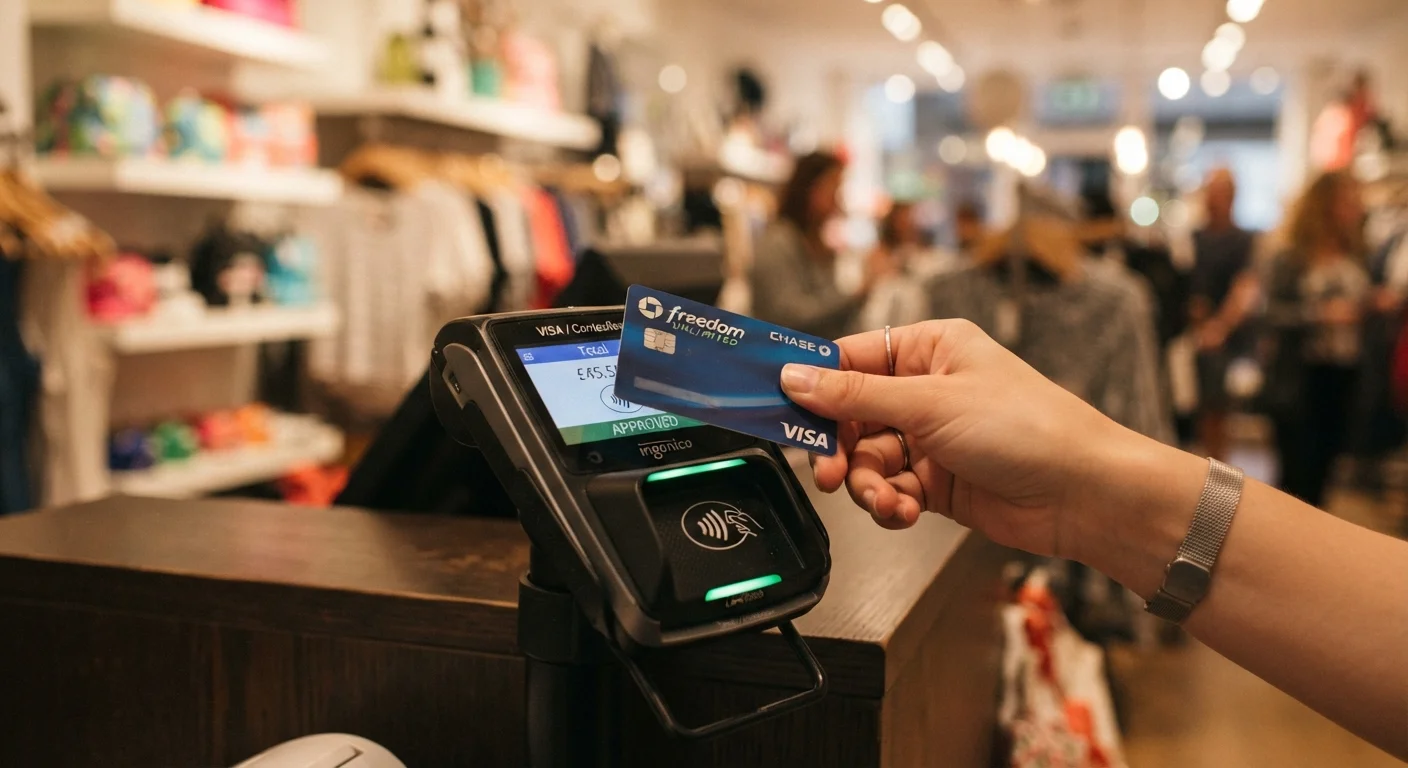
There is a reason retailers and payment networks have invested heavily in making card transactions as frictionless as possible. Tap-to-pay, one-click checkout, stored card details — every reduction in friction is also, for the consumer, a reduction in spending awareness. When no physical object leaves your hand, the brain registers the transaction differently.
Behavioral economists call the discomfort of spending money the pain of paying. Cash maximizes that sensation: you see the bills, count them out, and hand them over. A card swipe — or a phone tap — compresses all of that into an action that takes under a second and leaves nothing visibly diminished in your wallet. The purchase feels almost abstract.
This isn't a character flaw. It's a documented pattern across a wide range of consumers. Understanding the mechanic is what allows you to work around it. See related patterns in common spending myths that compound this effect.
Try the 'Cash Equivalent' Mental Check
Before a non-essential card purchase, briefly ask yourself: 'Would I hand over this amount in cash right now?' If the answer is hesitation rather than yes, that's useful information. This simple reframe partially restores the pain-of-paying signal that card transactions suppress — no app or budget spreadsheet required.
The Invisible Accumulation Problem
Individual card transactions often feel small and manageable. A $12 lunch here, a $9 streaming charge there, a $34 impulse buy at checkout. None of these feels alarming in isolation. But credit cards are uniquely good at hiding cumulative totals until the statement arrives — by which point the spending is already done.
This is compounded by the way card statements present information. A lump-sum total at the end of a billing cycle doesn't deliver the same psychological weight as watching your cash wallet empty over the same period. Most people, when asked to estimate their monthly card spending, underestimate it.
~83%
Americans who own at least one credit card
According to the Federal Reserve's Survey of Consumer Finances, the majority of U.S. households carry at least one credit card, making card-spending psychology a nearly universal consumer issue.
$6,000+
Average U.S. credit card balance per holder
Federal Reserve and industry data consistently show average revolving balances in this range, meaning a significant portion of card users carry debt month to month rather than paying in full.
12–29%
Typical credit card APR range in the U.S.
The Consumer Financial Protection Bureau tracks average APRs, which have risen in recent years; the exact rate varies by card type, issuer, and applicant creditworthiness.
The practical consequence: purchases that seemed justified in the moment look different in aggregate. A budget that felt intact week-to-week can show real strain when the full month is visible. This is why certain spending patterns persist even among financially aware consumers — the feedback loop is delayed.
When Convenience Becomes a Financial Cost
Carrying a balance is where the cost of card convenience becomes mathematical rather than just psychological. Any purchase not paid off in full by the due date begins accruing interest at the card's annual percentage rate (APR). That rate, expressed annually, translates to a monthly charge applied to the outstanding balance.
A $300 purchase paid off immediately costs $300. The same purchase carried on a revolving balance for several months at a common APR can cost meaningfully more by the time it's retired. For a detailed look at how that math compounds, our guide on minimum payments and their true cost walks through concrete scenarios.
This dynamic is especially relevant for categories where card spending tends to run highest — travel, dining, and retail. If you're evaluating whether a purchase is genuinely worth its price, the cost-per-use framework is a useful check before you tap. For travel-specific pitfalls, pre-trip spending traps are worth reviewing before you book anything on a card you won't pay in full immediately.
APR vs. Interest Charged: An Important Distinction
Your card's APR (annual percentage rate) is the yearly rate used to calculate monthly interest. You are only charged interest if you carry a balance past the due date — most cards offer a grace period during which no interest accrues on new purchases if the previous balance was paid in full. Understanding this distinction clarifies exactly when the cost of card convenience becomes a literal financial cost.
Practical Ways to Close the Perception Gap
You don't need to abandon card use to spend more deliberately. The goal is to restore some of the awareness that frictionless payments remove.
- Set a weekly check-in. Review your card transactions every seven days rather than waiting for the monthly statement. This keeps running totals visible and reduces end-of-month surprises.
- Use a single card for discretionary spending. Spreading purchases across multiple cards makes totals harder to track. Consolidating optional spending to one card simplifies the picture.
- Pause before tap-to-pay. The speed of contactless payment is precisely what reduces spending awareness. A two-second mental check — do I need this, and can I pay it off this month? — costs nothing and creates a micro-moment of intentionality.
- Distinguish between convenience and carrying a balance. Cards used as a payment tool and paid in full monthly are a different financial instrument than cards used as short-term credit. The financial difference between these two habits is substantial.
None of these approaches requires willpower alone — they work by changing the information environment so spending is harder to lose track of. For a broader look at the fundamentals of credit, understanding how cards are structured helps clarify when they work for you and when they work against you.
This article is for general informational and educational purposes only and does not constitute personalized financial advice. Consult a qualified financial professional for guidance specific to your situation.