What Is a Monroney Label - and Why Does It Exist?
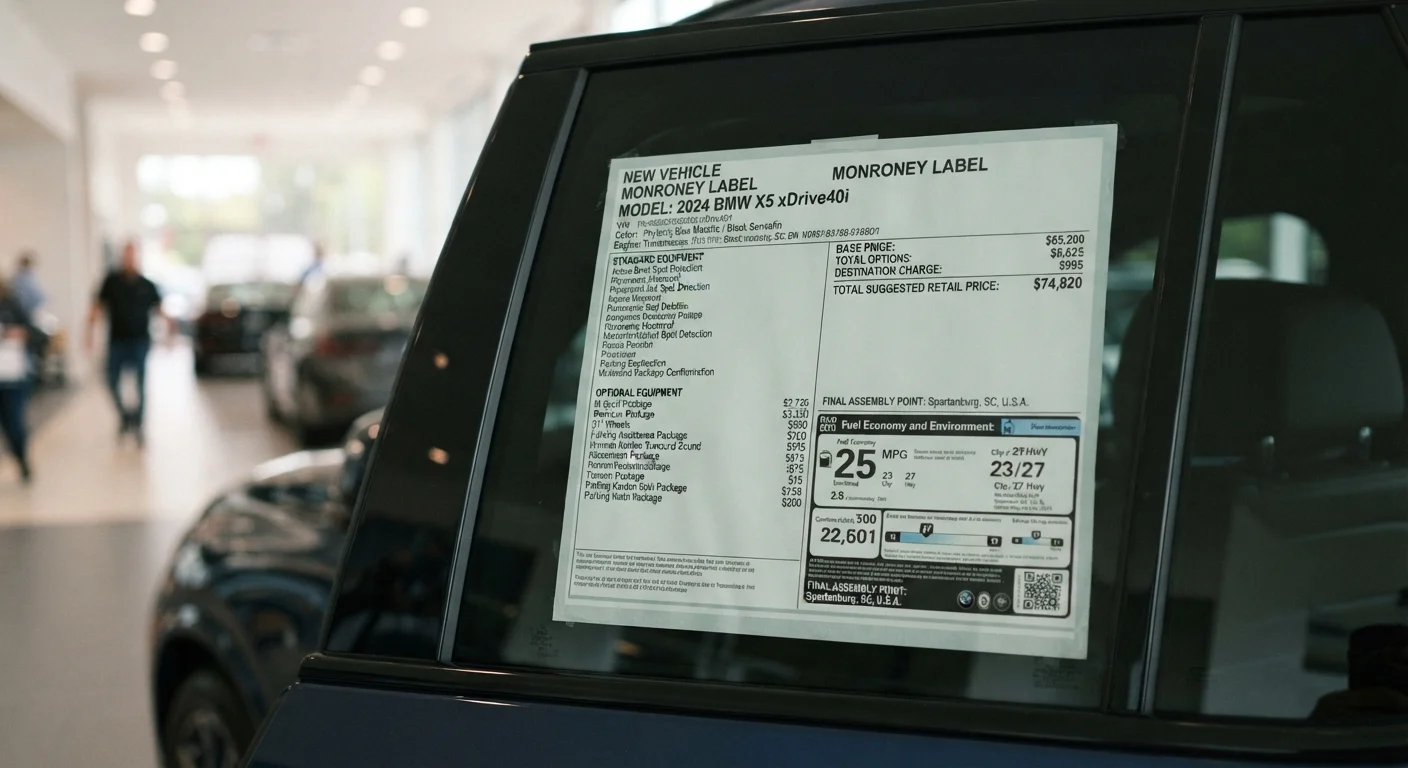
The window sticker you see on every new car at a dealership is formally called a Monroney label, named after U.S. Senator Mike Monroney, who sponsored the Automobile Information Disclosure Act of 1958. That law requires manufacturers to affix a standardized price and specification label to every new passenger vehicle - and it's illegal for anyone other than the buyer to remove it before the sale.
The label isn't a sales tool. It's a federally mandated disclosure document, which means everything on it follows a standardized format designed to let you compare vehicles objectively. Think of it the way you'd think about any regulated disclosure label - the goal is transparency, not persuasion. Just as reading a product label carefully can cut through marketing noise on retail packaging, reading a Monroney carefully can cut through dealership noise.
Section-by-Section Breakdown
Vehicle Identification and Base Price
At the top of the label, you'll find the make, model, trim level, and model year, followed by the Manufacturer's Suggested Retail Price (MSRP) for the base vehicle. This is the price before any options are added. The MSRP is a suggestion - actual transaction prices can be above or below it - but it's the legally required starting point for every line-item price on the label.
Installed Options and Packages
Below the base price, each factory-installed option or package is listed individually with its own price. Common entries include technology packages, premium audio systems, driver-assistance features, and appearance upgrades. These are options the manufacturer added before the vehicle reached the lot. Add-ons installed by the dealer after delivery - paint protection film, nitrogen-filled tires, pinstriping - do not belong on the Monroney label. Dealers sometimes attach a separate supplemental sticker for those items. Always distinguish between the two.
Destination and Delivery Charge
This is a fixed, non-negotiable fee set by the manufacturer to cover shipping the vehicle from the factory to the dealership. It is the same for every buyer of that model, regardless of where the dealer is located.
Total MSRP
This is the sum of the base price plus all installed options plus the destination charge. It is not the out-the-door price - taxes, registration fees, dealer fees, and financing costs are separate and will raise the final number.
Fuel Economy Section
The EPA fuel economy estimates appear in a prominent box, showing city, highway, and combined MPG (or MPGe for electric and plug-in hybrid vehicles). These figures come from standardized EPA test cycles, not real-world driving. Actual economy will vary based on driving habits, terrain, and climate. The label also shows an estimated annual fuel cost based on a national average fuel price and assumed mileage - treat that figure as a general comparison tool, not a precise prediction.
Safety Ratings
If the vehicle has been tested by the National Highway Traffic Safety Administration (NHTSA), its star ratings appear on the label. Ratings cover overall, frontal, side, and rollover protection. Not every vehicle on sale has been tested yet - a blank rating field means no data is available, not that the vehicle is unsafe.
Standard Equipment
A text block near the bottom lists features included in the base trim: powertrain specs, standard safety systems, interior features, and warranty coverage. This section helps you verify that what a salesperson describes as standard is actually standard for the trim you're purchasing.
What the Sticker Doesn't Tell You
The Monroney label is comprehensive for what the manufacturer controls - but it leaves several important costs unaddressed. Dealer markups (sometimes called market adjustments) are not required to appear on the Monroney. They show up on that separate supplemental sticker, which has no federally standardized format. Similarly, financing terms, dealer fees, and tax are negotiated separately and won't appear until you reach the finance office.
The label also says nothing about long-term reliability, owner satisfaction, or real-world performance in your specific climate. For those factors, independent owner surveys and third-party testing organizations publish data you can consult before making a decision.
Understanding a vehicle's labels and indicators is a broader skill worth developing. In a similar vein, learning to read your car's own built-in signals - like dashboard warning lights - gives you a more complete picture of what your vehicle is communicating at every stage of ownership.