How Lenders Translate Your Score Into a Rate
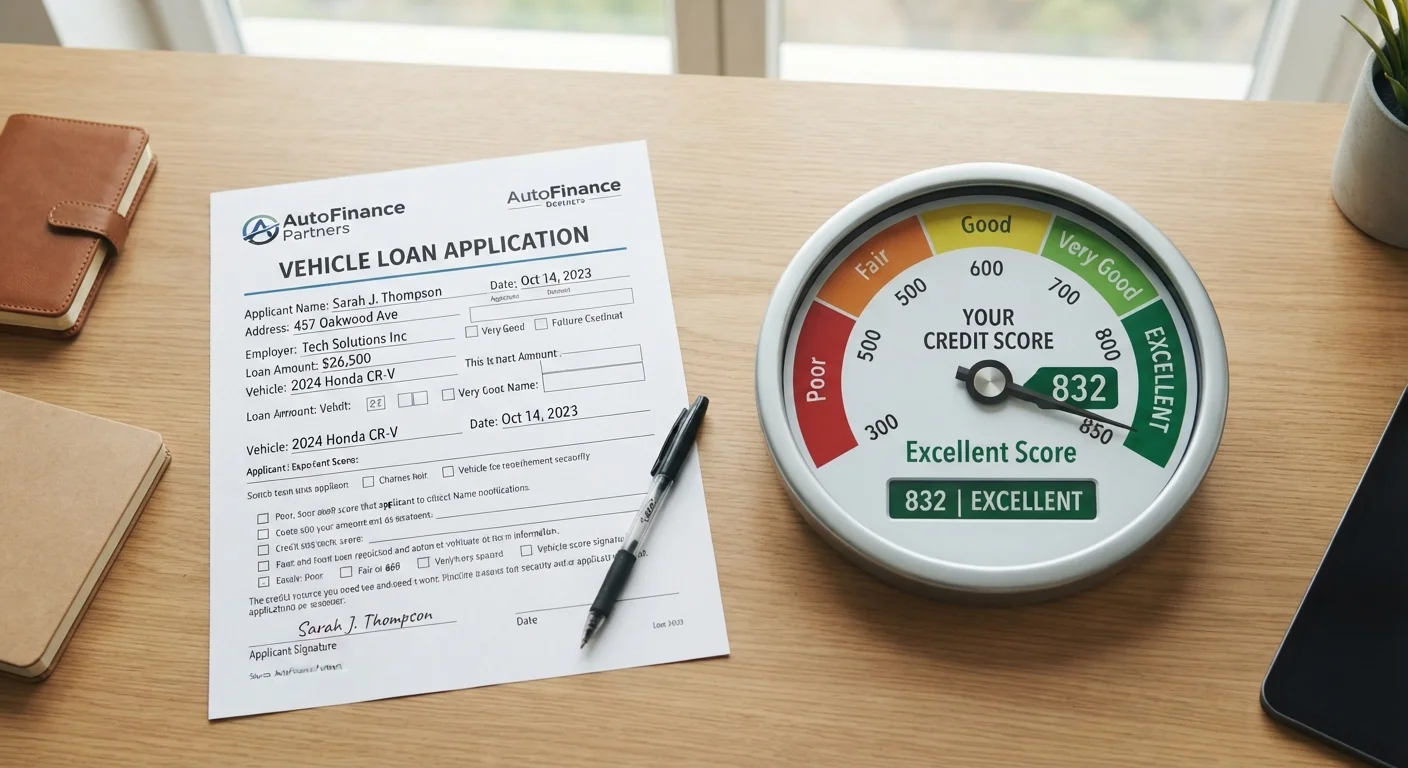
Auto lenders do not offer a single rate to everyone. Instead, they group applicants into credit tiers - bands defined by score ranges - and assign an interest rate range to each tier. Borrowers at the top tier typically receive the advertised low rates you see in promotions; borrowers further down the scale are offered progressively higher rates to compensate the lender for the added risk.
While exact tier definitions vary by lender, a common general structure looks like this:
- Super-prime (roughly 720 and above): Lowest available rates
- Prime (roughly 660-719): Competitive rates, slightly above the floor
- Near-prime (roughly 620-659): Noticeably higher rates
- Subprime (below 620): Significantly elevated rates; some lenders decline applications in this range
It's worth knowing that lenders also use industry-specific credit scores. As noted above, FICO Auto Score versions are common in vehicle lending, and those numbers can differ from the general scores shown on consumer apps. For a deeper look at how scores are built, see Credit Scores Decoded.
~5-18%
Typical auto loan rate range by credit tier
Experian's State of the Automotive Finance Market reports consistently show wide rate spreads between super-prime and subprime borrowers.
$11,000+
Potential extra interest paid in subprime vs. super-prime
Illustrative calculation on a $28,000 / 60-month loan comparing a 5% and 18% rate - figures are approximations for educational purposes.
~65%
Share of new vehicle loans from prime/super-prime borrowers
According to Experian automotive finance data, borrowers with scores above 660 consistently account for the majority of new vehicle loan originations.
The Real Cost Difference Across Credit Tiers
Abstract rate differences become concrete when you look at total dollars paid. Consider a straightforward example: a $28,000 auto loan with a 60-month term.
| Credit Tier | Approximate Rate | Monthly Payment | Total Interest Paid |
|---|---|---|---|
| Super-prime | 5% | ~$528 | ~$3,700 |
| Prime | 8% | ~$568 | ~$6,100 |
| Near-prime | 12% | ~$623 | ~$9,400 |
| Subprime | 18% | ~$711 | ~$14,700 |
Note: These figures are illustrative approximations for educational purposes and do not represent any specific lender's current rates.
The difference between the top and bottom tiers in this example is more than $11,000 in interest alone - on the exact same vehicle at the exact same price. That gap underscores why your credit standing deserves attention before you walk into a dealership or submit a loan application.
For a plain-language explanation of loan terms like APR and loan term length, see Auto Loan Terms, Decoded.
Other Factors Lenders Consider Alongside Your Score
Your credit score is influential, but it doesn't tell the whole story. Lenders typically evaluate several other variables when pricing a loan:
- Debt-to-income ratio (DTI): How much of your monthly income is already committed to existing debt payments. A high DTI can work against you even with a good score. See what DTI means and why lenders care.
- Loan-to-value ratio: How much you're borrowing relative to the vehicle's value. A larger down payment lowers this ratio and can improve your terms.
- Loan term: Longer terms typically carry slightly higher rates because the lender's risk exposure stretches over more time.
- Vehicle type and age: Used vehicles often attract higher rates than new ones, partly because they are harder to value and resell.
Rate-Shop Without Hurting Your Score
When you apply for multiple auto loans within a short window - generally 14 to 45 days depending on the scoring model - most credit models count those inquiries as one. This means you can gather quotes from several lenders to find the most competitive offer without compounding the impact on your score. Get all your applications in quickly rather than spreading them over several months.
Understanding how each factor interacts helps you approach the process strategically. You may not be able to change your credit score overnight, but you can influence your DTI, down payment, and the loan term you request. It's also worth knowing why your score may differ across platforms - lenders may see a different number than you do.
Steps You Can Take Before Applying
A little preparation before you apply can meaningfully affect the rate you're offered - and therefore your total cost of ownership.
- Pull your credit reports. You're entitled to free reports from each of the three major bureaus. Review them carefully for errors - a misreported late payment or an account that isn't yours can unfairly lower your score.
- Understand what's driving your score. The five factors that shape your score - payment history, credit utilization, length of history, credit mix, and new inquiries - each play a different role. Knowing your weak spots helps you focus improvement efforts.
- Pay down revolving balances. Credit utilization is one of the fastest-moving score factors. Reducing card balances before applying can lift your score relatively quickly.
- Shop multiple lenders. Rate-shopping within a short window (typically 14-45 days) is treated as a single inquiry by most scoring models. Compare offers from banks, credit unions, and dealer financing - see how dealership financing compares to your own lender for guidance on the structural differences.
This article is for general informational purposes only and does not constitute financial or lending advice. Rates, terms, and lender requirements vary. Consult a qualified financial professional for guidance specific to your situation.